



This paper is published by the Institute of Political Action, which has already done much to promote the cause of Social Credit, particularly in French Canada.
The Social Credit Movement in French Canada was inaugurated the day when its present Director, Mr. Louis Even, having seen the light of Social Credit, decided that such an enriching truth should be made known to the French-speaking population of Canada.
That was in the early months of 1935, and the only Social Credit literature then available was in English. Mr. Even wrote and published some articles on the subject in a study group organ of small circulation, "Le Moniteur", a French version of "The Instructor", issued by the Harpell printing firm of Garden City Press, Gardenvale, Que.
In 1936, Mr. Even himself edited in pamphlet form, "Les Cahiers du Crédit Social", published at irregular intervals, according as finances permitted.
Several readers showed enough interest to join in the circulation of the pamphlets and in the propagation of Social Credit ideas.
Two Foundations:
After the gropings of these first years, during which the declaration of war in the Fall of 1939 threatened to paralyze a movement still in its infancy, Mr. Even and his most faithful and most zealous associate, Miss Gilberte Côté (today Mrs. Côté-Mercier), decided on a double foundation, which they had been considering for several months:
1. An institution adopting, and adapting to the movement, the structure and methods very efficiently used in the religious orders; — This institution to be called The Institute of Political Action.
2. A regular paper, the official organ of the Institute, which would carry:
a) Social Credit articles for study by the average man;
b) An appeal to convinced Social Crediters to enter action and build up a vigorous movement;
c) News of each activities as are carried on by members of The Institute.
The paper to be named Vers Demain.
These foundations were carried out without any financial investment. No shareholders would ever have any claim on the funds which might be raised to operate the paper and the movement. No money assets; but much was expected from human capital, from the collaboration of such associates as had appreciated the leadership of the Founders and were determined to stand by them and their enterprise for the promotion of Social Credit in French Canada.
In fact, the Institute of Political Action was organized and duly chartered as a non-profit corporation. Its headquarters are at 4885 Chabot Street, Montreal.
Since 1939, the Social Credit Movement in French-speaking Canada has been led by the Institute of Political Action. And with remarkable success, in spite of apparently insurmountable obstacles, in spite of severe blows from many quarters, and also in spite of a disastrous all-out venture in the electoral field.
Although carried out seriously and with a hopeful enthusiasm, particularly in 1948, this electoral experience was not quite in line with the original policy envisaged for the Institute of Political Action, which was channel energies to pressure politics as being more efficient than election politics. It was precisely for the purpose of practising pressure politics that, back in 1941, the Institute organized the Union of Electors.
It is often under the name of "Union of Electors" that our Social Credit Movement is mentioned in the press. But the Institute of Political Action remains the real organism and the inner core of the movement. The Institute itself inspires electors to unite and go into concerted action on those policies on which they agree. The Institute also guides the electors in such action. We believe in enlightened and orderly action — not in blind mob action — for beneficent and durable results.
Besides its two founders, the Institute has presently a dozen men devoting all their time to the cause of Social Credit. Most of them as missioners, going from one place to another, from one district to another, according to programs assigned to them by the direction of the Institute.
These missionaries carry on their work much along the plan of the instructions given by Our Lord to His disciples for preaching the Gospel. Not that we consider Social Credit as a religion; Social Credit is not a religion. But because the method is efficient, and because Social Credit, as understood by the Institute, is worth a great deal of unselfish work on the part of its promoters. Our Social Credit missionaries never take a room in a hotel. They sleep and eat in the houses where they happen to be carrying the message of Social Credit. If unwelcome in a house, they simply go to the next door.
This body of full-time men is by no means the only force at work. Answering a call made to all, an imposing number of fervent Social Crediters, men and women, devote many of their leisure hours, more particularly week-end hours, to canvassing from house to house for the cause and for its organs, "Vers Demain" and "Social Credit".
At the present time, more than 800 such persons, enlisted as "Conquerors", are individually pledged to such work, each one intent on raising at least three subscriptions per week for either the French or the English organ of the Institute.
As can be seen, the Institute of Political Action has its members centre their activities on the expansion of the Social Cerdit paper. The canvassers are advised to avoid taking too much time in trying to explain at length the doctrine of Social Credit. An understanding of Social Credit is better obtained by personnal study and meditation.
The function of the canvasser is more properly to convince his prospect to undertake such study by subscribing to the organ, where he will find information on both the doctrine and the movement. The argument need not be far-fetched: the anti-social effects of the present financial system, its inadequacy to distribute to all, the fruits of progress, are obvious. Social Credit is offered as the appropriate remedy, because, it conforms finance to facts, and because its dividend to all would guarantee security against destitution and against constant worry in a world of plenty.
Why Stress Subscriptions:
This method is found to produce many good results. Among them:
1. It protects the soundness of the message against any possible distortion, from either the inefficiency of the canvasser or the misconstruing of the message by the prospect;
2. It causes the interested hearer to supply a healthy effort of his own toward understanding Social Credit; each issue of the organ to which he will have subscribed will bring him substantial contribution from the message;
3. It also gets the interested person to contribute his little part to the Social Credit Movement. The proceeds of subscriptions, unreduced by commissions of any kind, help to cover the necessary expenses of the paper and of the expansion of the propaganda.
4. The mounting number of subscribers in a district is an unmistakable indication of the growth of the movement in the area. This in itself is a powerful pressure, in favour of the cause, on the members of Parliament and other elected representatives of the people in that district.
The photo below shows members at work.
Social Crediters of French Canada in Action
1. It is Saturday. A group of Social Crediters of Arvida prepare to leave, on a week-end mission for the cause. They will sleep far from their homes, and won't return before very late Sunday night.
2. At the door of the church of St. Léon, on Sunday. As people come out after Mass, a Social Credit missioner (Antonio Mignault) stands on the steps and addresses the crowd. After a short presentation of the message, he announces to the population that they will receive the visit of Social Crediters at their home in the course of the afternoon.
3. On the wharf of Anse St-Jean, a little port on the Saguenay River, 50 miles of Arvida. One of the visitors, Henri Poirier, explains simply the Social Credit message to young men, and, they are certainly interested.
4. After a day's work at Anse St-Jean. The results are compiled: 60 subscriptions to the French Social Credit paper, Vers Demain.
5. The Arvida boys: each one is worth a whole battalion.
6. At the sanctuary of Lac Bouchette. A brief halt and a bit of prayer won't spoil the day.
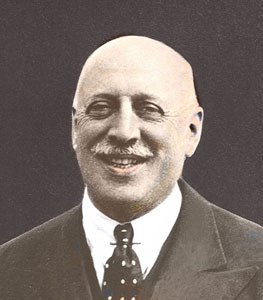
First International Conference on Douglas Social Credit and Catholic Social Teaching
On May 21st and 22nd, 2026.
Scholars, students, clergy and the public who are interested in the renewal of economic thought are invited to the 1st International Conference on Douglas Social Credit and Catholic Social Teaching
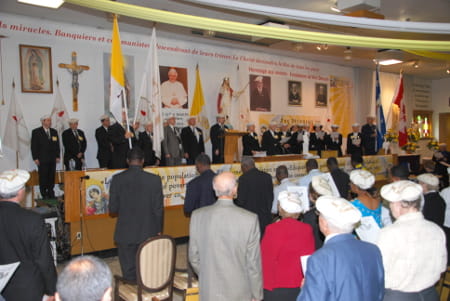
Rougemont Quebec Monthly Meetings
Every 4th Sunday of every month, a monthly meeting is held in Rougemont.

 Subscribe