



In recent issues we have examined the development of our modern power-driven productive machine, and noted that the distributive system has failed to keep pace with the productive machine, with the result that modern society is burdened with man-made financial depression (amidst physical abundance) and ever-mounting financial debt.
Let us now examine the development and working of our monetary system.
One of the first advances made in the early stages of community life was the division of labour. One man would confine himself to growing corn, another would raise cattle, another would spin and weave cloth.
This led to the necessity of exchanging goods and services. The first foundation of trade was laid by a system of barter; but this proved a very cumbersome arrangement, especially for the cattle trader forced to drive his herds around the country. One of these traders, faced with this problem, devised a simple expedient. Instead of taking his cattle about with him, he armed himself with a number of leather discs, with a mark on them identifying him with the discs. Each disc represented one head of cattle, and these he would exchange for other products he wanted, promising the recipient that on presentation to him of one leather disc he would deliver one head of cattle.
It is noteworthy that the foundation of this arrangement is CONFIDENCE, and that the issuer of the discs (money) was the creator of the real wealth (cattle) against which they were issued.
This arrangement grew in popularity, and soon extended into other transactions, the traders finding it more convenient to trade with the discs than to redeen them each time. And so these discs began to circulate as "money".
Later gold, and other less valuable metals with intrinsic value, replaced these leather discs. However, it soon became apparent that the indiscriminate issue of "money" reduced its exchange value in relation to goods, and that because money was a claim to the country's wealth, its issue was a sovereign power which should be exercised by the titular head of the State.
Thus the issue of money was transferred from the actual producer of goods to the sovereign authority in the State.
The next important step in the evolution of our modern monetary system took place in England during the 17th century. It was the custom for traders to deposit their gold money and plate with the goldsmiths for safekeeping, receiving in return a receipt. When they required their gold, they presented their receipt in exchange for it. But gradually it became the practice for traders to exchange their receipts for their purchases. As in the case of the leather discs, these receipts soon gained an "exchange value" equivalent to the gold they represented.
Traders who were short of money would go to the goldsmiths for temporary loans, and the goldsmiths, finding they always had an amount of gold on deposit which was not claimed, would lend this out. Soon they found they did not need to lend the actual gold, but merely a "receipt". And experience taught them it was safe to issue receipts for several times the amount of gold they had in their vaults, as only a percentage of the gold was demanded at one time. This practice was most profitable, giving them interest on gold which they did not possess, and soon became the customary system of banking the goldsmith no longer being merely a custodian of gold, but a "creator" of "the receipts" (money), which were the foreunner of our present-day bank notes or bills. Thus, inasmuch as modern banking grew out of the goldsmiths' lending what did not belong to them, and issuing and lending receipts against something they did not possess (more "receipts" than there was gold), was the modern banking practice conceived in a fraud.
This is in no way a condemnation of the very important and excellent bookkeeping and safekeeping service rendered by our banks throughout the communities today; but it is a significant aspect of the system which has developed and engulfed society in debt, taxes and periodic financial depression.
The next important development came when the then-established banks found that instead of requiring their depositors to withdraw actual money in the form of coins or "bank notes" (the IOU's of the goldsmiths which had become the kind of "money" in most general use), it was a great convenience to allow them to write "orders-to-pay" authorizing their bank to transfer money credited to their accounts to the accounts of other customers. This was the foreunner of the modern "cheque."
Like the goldsmiths who preceded them, the bankers soon found that under this arrangement only a fraction of the money on deposit was ever drawn out. Most transactions were carried out merely by the transfer of figures from one account to another, without the actual money being withdrawn. Like the goldsmiths, they were not slow to take advantage of this state of affairs. When customers came to them for loans, they found that bankers would lend them several times the amount of actual tangible money which they had on deposit. Because these loans were for the most part used in transactions involving the transfer of figures from one account to another by means of cheques without involving the use of coins or "bank notes." In this way, they were able to create credit, which performed all the functions of money, and thus to charge interest on "money" of their own creation. which did not actually exist in any tangible form.
It should be noted that at this point control of the monetary system and exercise of the sovereign power of issuing money passed further into the hands of private interests.
Professor F. A. Walker defines money as "any medium which has reached such a degree of acceptability that no matter what it is made of, nor why people want it, no one will refuse it in exchange for his product."
It should be noted that money is not itself wealth, but merely a medium of exchange (regardless of what it is made) to enable us to exchange wealth.
Perhaps a better definition of "money" is: "A claim on goods and services." Note that the money is not the "goods," but only the ticket to "claim" them.
Looking back to pre-war years and Depression, we note that we were not short of the "goods," but only of the tickets to claim them. Rather absurd, isn't it!
There are three distinct kinds of money in general use today:
(a) Coins metal discs of silver, nickel, copper and alloys, which pass from hand to hand in transactions involving small amounts.
(b) Bills - printed paper notes of convenient size with distinctive designs to indicate the various denomination which, in Canada, range from one dollar upwards.
(c) Deposit Currency or Credit - a kind of money which does not exist in any tangible form, but consists of entries in bank ledgers which are transferred from one account to another by means of "orders to pay" known as "cheques."
It should be noted that "a" and "b" are created by the government for the private banks; but that the private banks alone have the prerogative to create this "financial credit" referred to in "c". And it is important to remember that "cash" constitutes less than 10 percent of our total money, as over 90 percent of business is carried on with "deposit currency or credit," sometimes known as "cheque-book money."
"It cannot be beyond the power of man so to use the vast resources of the world as to ensure the material progress of civilization. No diminution in those resources has taken place. On the contrary, discovery, invention, and organization have multiplied their possibility to such an extent that abundance of production has itself created new problems."
His Late Majesty, King Georges V.
To be continued next issue
Study Session on Economic Democracy And Annual Congress
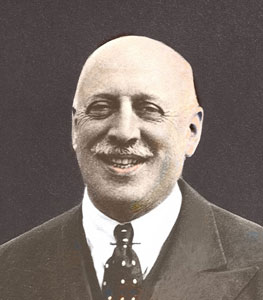
Discover C.H. Douglas’s proposals for economic and social renewal with the Pilgrims of St. Michael in Rougemont, Quebec Canada from Sept. 23 through September 28 2026.
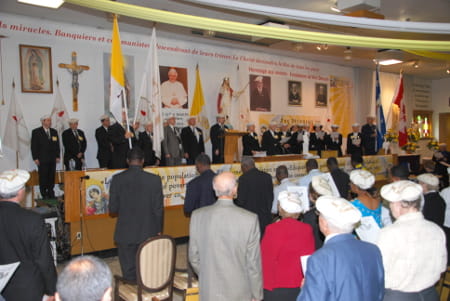
Rougemont Quebec Monthly Meetings
Every 4th Sunday of every month, a monthly meeting is held in Rougemont.
 Subscribe