



Private property is threatened by those who should protect it
There is more than one way of abolishing private property. Under Communist rule the state simply seizes your property. You are humiliated, outraged - and justifiably so - and you anathematize such a regime. But you're not surprised. After all, the dissolution of private property is openly proclaimed in the Communist programme.
But in our capitalist countries this end is attained in a different fashion. Here, always and everywhere, the right to private property is proclaimed to be a sacred thing. And yet the number of those who once owned property, and no longer do, is very considerable; and even larger, the number of those who should own property a home, truly and in fact, their own and do not.
The idea is, that in our capitalist countries, while the ownership of private property is extolled, burdens are laid upon the owner, as such, which he cannot possibly bear. He is loaded with taxes which show no tendency to diminish, only to increase.
When the proprietor can no longer pay the taxes, his house is set up for auction. Then the big financial companies snap them up for a song.
And who is it that heaps these taxes upon the proprietor? Who is it that, in this fashion, aids and abets this concentration of property into the hands of a few? It is those, who in open forum, declare themselves heart and soul in favour of private ownership. Who are they? None other than the representatives of the people, elected to administer and protect the property of their electors.
The municipality maintains a police force to prevent robbers from breaking down the door of your house and making off with the goods inside. But this same municipality lays upon you heavier and heavier taxes until it finishes by seizing the very house itself.
Obviously the spoken intent of these so-called administrators is not to plunder you of your property as in the Communist lands. But the end result is the same.
You are bled white by successive blood-lettings instead of being decapitated with a single blow; that's the only difference.
This unremitting increase of taxes on private property results in large part from the ever-mounting interest on the public debt.
Municipalities get into debt when they undertake improvements; when, with the labor of their populations, they build water systems, dig sewers and lay down roads and sidewalks. All municipalities are in the same situation. As a result, the more the people of a country toil to enrich the common heritage, the more indebted this same people becomes to the financiers who build nothing.
And that is the reason why Crediters, who denounce this subjugation to the dictatorship of financiers, are so set against all increase of and any new borrowing which only serves to plunge the community deeper into debt thus in turn necessitating future increases in taxation.
Now, at the present time there is evidence that an epidemic of municipal borrowing is rampant throughout the land. And everywhere, side by side with it, there is a rash of new property evaluations,, which evaluations serve as a base for estimating property taxes.
The tax on properties is the principal source of revenue for municipal governments. Nevertheless it is the first tax which should be abolished. Private property is, with the family, the very foundation of a healthy society. It is private property which makes of the individual a sound citizen and a champion of law and order. Then why penalize it with taxes? Why increase the rate of taxation every time the owner improves upon his property? Is not the improvement of private property simultaneously the improvement of the municipality in which it is located?
The man who remains a tenant, placing his money in the bank instead of buying a house, does not have this capital taxed. But a house, into which a man has invested his money, and which is perhaps his only asset, this house is taxed. And the tax is levied in money. Money is demanded of him when very often all he has is the house. And if he can't raise the money his house is confiscated.
This is the fashion in which they abolish private property here. This is the manner in which they discourage private ownership imposing heavier and heavier taxes upon proprietors. This is how the would-be proprietor is dissuaded from realizing his ambition to own a home. And, finally, this is how a society of tenants comes into being.
The fact ─ an established fact ─ that these debt-spawning loans are increasing on every side, that everywhere mounting property evaluation rolls appear, followed by higher property taxes, indicates that there is under way an all-out attack on the institution of private property. And what is its purpose? Its purpose is to concentrate all private property, like money, into the hands of a few; to form a class of property-less people, "have-nots", who may more easily be swayed by a few "haves", who, in turn, are amenable to the dictates of the financiers.
We do not attribute these nefarious schemes to our municipal law makers and administrators. They are not the strategists behind this general attack on private property. They are not the instigators. They are only the tools - albeit unwittingly and unwilling to admit the fact ─ of the real instigators. They are driven to borrowing and to increasing the taxes by the existing financial system which lays hold of the fruits of the people's labor for itself.
Our municipal administrators insist that this is unavoidable.
Furthermore, the city fathers regard with malevolence the opposition set up by Social Crediters, because the Crediters are becoming increasingly vigilant of municipal affairs and rouse up the property owners whenever there is question of a new municipal loan, or whenever propaganda is set in motion to persuade the people to accept a new roll of increased evaluations.
The mayors and the city councillors protest that they need money. True enough. They add that the only way to get it is through new taxes and debts. That, too, is true under the prescriptions of the present financial set-up. But Social Credit does not accept these prescriptions. And these regulations will never change as long as the people acquiesce to them. If they are never challenged, the financial dictators will continue to enforce them with increasing stringency. Each and every public loan, regardless of where it is made, only serves to strengthen the hold of the financiers on the people, and as a result it is the public at large which suffers for each, single case.
Obviously, the only solution is to change the financial system. First, it must be recognized by all that the capacity to produce goods or wealth is the common property of the people, a bounty in which everyone, and not the finan- ciers alone, has a right to share. Then, following upon the acceptance of this truth, the present financial system should be abolished and replaced by one constructed according to the principles proposed by Social Credit.
The municipal governments deny that they have the authority necessary to make such a change. That is admitted. But it's no excuse for accepting without a word of protest the commands of the financiers. Why do they not raise their voices to demand of the provincial governments the establishment of Social Credit in the Province and from the Federal government, the establishment of Social Credit throughout the whole of Canada?
We, as Social Crediters, have no more than municipal governments the power to effect such a change. But we can speak out and we are making our voices heard. The municipal administrators can do the same; but they won't. We ask them to add their voices to those of the Crediters, by the due process of proposing in council a demand for the establishment of Social Credit and then voting for the proposal. Instead, they are quite content to empty the pockets of the taxpayers, thus "endangering the very existence of private property" to use the words of a Quebec government minister who himself is convinced of the senselessness and cruelty of the present financial rule.
Social Crediters have not on every occasion succeeded in preventing municipal borrowing, or the institution of higher evaluation rolls, or the increase of property taxes. They have been successful in some localities, unsuccessful in others. They can succeed in one place at one time, and fail the second time. But wherever and whenever necessary, they'll always fight. When Social Crediters suffer an apparent reverse, they are left with the knowledge that the battle hasn't been entirely in vain. Every individual conflict strengthens the Social Credit movement and adds to its experience. And in turn, each battle weakens the position of the adversary by exposing it to the full view of the public eye.
Each clash forces the municipal councils to realize, with greater clarity, the pitiable state to which they have been reduced in playing the role forced on them by the money men. The final result can only be to lead our public men in turn to denounce the system which has made them the tools for the gradual abolition of private property.
So the Crediters have conducted, and are conducting still, splendid pitched battles in a number of cities and town, more particularly, up to this time, in the province of Quebec. It is because in Quebec, throughout a period of years, in practising Union-of-Electors methods, they have developed the know-how in directing such campaigns.
Among these fights was the Crediters'struggle against the municipal loan being negotiated by the city of Quebec. The ultimate victory did not go to the Crediters. But they did succeed in forcing the municipal council to submit the projected loan to a referendum of the property owners. This had the effect of opening the eyes of many citizens to the true character of the situation.
The outcome in the battle at Levis, on the south shore of the St. Lawrence across from Quebec, was much the same. The intervention of the town police to forbid the distribution of circulars against the loan, and the arrest and arraignment of four of men for such distribution, only gave more publicity to this gallant fight.
But the results in Sherbrooke were more favorable. Last October the Crediters were able to block a very large municipal loan. Not only did they force the city council to hold a referendum, but they were able to swing the referendum itself against the loan.
The same complete victory was repeated at Magog last September, at Giffard near Quebec city, and in sundry other localities.
Another round took place a few weeks later in the important city of Sherbrooke; the council produced a budget increasing existing taxes and imposing new levies. But, again, Social Crediters unleashed an attack of a scope and fury unparalleled in the history of that city. This battle was reported in our February issue of this paper.
At Granby, another city of considerable importance in the province of Quebec, the municipal administration received the shock of the year when it was confronted with the signatures of 500 home-owners who were opposed to a new roll of evaluations almost double that of the previous. As elsewhere it was the resident Crediters who had seized the initiative and succeeded in organizing this opposition in the space of a few days.
Ville Jacques-Cartier, a town of 35,000 souls lying on the south shore of the St. Lawrence across from Montreal, was subjected a few months ago to evaluations of such proportions that the resultant property tax increases simply could not be borne. Our subscribers of that time will remember the account, in this paper, of the fight put up by Social Crediters against these ruinous increases. The battle there is still raging to this day.
In Montreal itself, Social Crediters led in the victorious fight against the increase of municipal taxes in 1951, and again in 1953 against the proposed roll of evaluations. They have likewise taken up arms against the greatly increased evaluations proposed in December of 1955. And in spite of the fact that the council had voted in the majority for acceptance of the new roll, the fight against it went on. Social Crediters carried it right to the floor of the Private Bill Committee of the Quebec Legislative Assembly and before the Upper House (the Legislative Council). Not a complete victory this time; but much else was gained throughout the procedure, and no one, in Montreal, or in the whole Province, dares deny the growing dynamic force of Social Credit.
In their opposition, Social Crediters have absolutely no desire to stand in the way of a municipality's march towards better things. They do not wish to hinder the realization of projects necessary to the public welfare. But they do oppose most vigorously the methods used to finance these undertakings. And they will continue to fight against these methods with unflagging determination and, we are sure, in ever-increasing numbers.
Study Session on Economic Democracy And Annual Congress
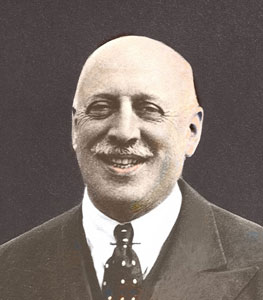
Discover C.H. Douglas’s proposals for economic and social renewal with the Pilgrims of St. Michael in Rougemont, Quebec Canada from Sept. 23 through September 28 2026.
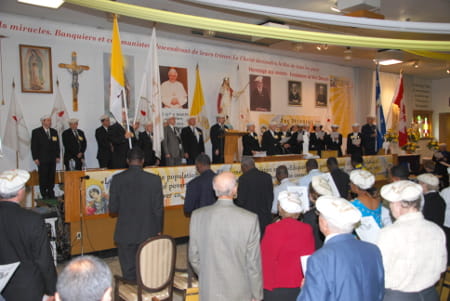
Rougemont Quebec Monthly Meetings
Every 4th Sunday of every month, a monthly meeting is held in Rougemont.


 Subscribe