



To combat a perversion
The Union of Electors, through its members and its two publications, Vers Demain and The Union of Electors, teaches the doctrine of Social Credit. The Thompson-Caouette group calls itself the "Social Credit" party. Why, then, does our movement attack so vigorously this party?
We've given the reason many times for this opposition. Yet there seem to be many minds still confused by it... Certain people consider our movement as a party presenting candidates; which we are not. The Social Credit movement of the Union of Electors does not present candidates. It has an entirely different aim.
There are likewise those who think that the Thompson-Caouette party is truly representative of genuine Social Credit. It is not. The only thing about it which has any relation to Social Credit is the name. Not only is it not Social Credit, it is actually a factor working towards the demolition of authentic Social Credit.
There are others who become quite irritated because we do not support this political party. They insist that we should and bring forward all kinds of preposterous arguments why we should.
Unfortunately, the manner in which Thompson and Caouette presented the "Social Credit" party to the country during the election campaign - dressing it up in various fashions so as to suit everyone's taste – can only give but a very pitiful picture of Social Credit to the country.
The Union of Electors, through its two publications and by other means, has chosen as its work the education, the instruction, the formation of the individual. It has also the duty of watching over and defending this grand doctrine given to the world by Major C.H. Douglas.
If there are today in Canada, especially in French-Canada, large numbers of true Crediters working towards the veritable goal of Social Credit, it is because of the work of the movement through Vers Demain and the other publications issued by the Institute of Political Action.
Réal Caouette broke from the ranks of the Union of Electors because this movement refused to lower Social Credit to the level of a mere political party with all that would be entailed in such a degradation — betrayal of principles, compromise with the truth, the base appeal to passions, all of which are diametrically opposed to the true doctrine of Social Credit...
It is precisely because the Union of Electors has remained true to the principles of the doctrine of Douglas that it attacks and denounces that group which has prostituted this doctrine and attempted to make of it a mere vehicle to carry them to political power and profit.
The founder of the Social Credit school, Major Clifford Hugh Douglas, was a man of genius, infinitely superior to the vain and inflated little men such as Réal Caouette, Laurent Legault, Gilles Grégoire, Gérard Perron, Gilbert Rondeau and others of such ilk. Douglas certainly understood Social Credit in its very essence, something which cannot be said for the individuals mentioned above who have usurped the name of Social Credit. Now Douglas declared quite categorically that Social Credit was not something to be tied in with the ballot box. For him they were things contradictory. He as much as said once when addressing an audience of Social Crediters in England: "If you elect a Social Credit party, supposing you could, I may say that I regard the election of a Social Credit party in this country as one of the greatest catastrophes that could happen." And again: "Nothing would suit our common enemy more than to see us chasing after the will-o'-the-wisp of a political party'.
But Thompson, Caouette and company feel that they are better suited to pronounce upon what true Social Credit is than is the founder of Social Credit himself. And they insist upon trying to combine those two contradictories: Social Credit and the ballot box. Obviously it is authentic Social Credit which must be sacrificed to the election box, since it is for the ballot box that these individuals have formed a "Social Credit" party.
Moreover, in what does this party differ from the other parties? Like the others it is a group of men seeking the power of government in the land. But this is certainly not Social Credit. Social Credit is not interested in seeing power concentrated in the hands of a group, but rather Social Credit would redistribute power so that it might lie in the hands of individuals and families. What did the Thompson-Caouette party have to offer to individuals and families in its program?
Like the other parties, this group depended upon money to achieve what it wanted. This party declared that it was prepared to spend a million and a half in the election campaign only for advertising and publicity. Have you any idea what such a sum of money represents?
The movement of the Union of Electors, thanks to those who labour so arduously taking subscriptions, was able for 6 months to finance a quarter of an hour each week over 10 television stations. This cost $1,700 a week. When people hear this they exclaim: "Well, that's certainly expensive!". And $1,700 is a goodly sum of money. So you have some idea what a million and a half represents. With that amount of money we could have carried on our broadcasts over these 10 stations for 17 years, once a week, without stopping!
That's what a million and a half represents. That's what Thompson, Caouette and company planned to spend in a period of some six weeks to try and put themselves and their followers into seats of parliament where they would be utterly useless as far as the welfare of the people would be concerned.
Furthermore, how can men who have been elected to parliament through the power of money be in any position to wage war against financial dictatorship — which is one of the avowed aims of authentic Social Credit?
What has such an expenditure achieved? Nothing really. The majority of the candidates of this "Social Credit" party are unkowns, with no hope of garnering votes for the party; chosen simply to throw dust into the eyes of the voters and those seeking the truth; giving nothing more than bulk to a skeleton party, whose leaders were well aware that no number of so-called "Social Credit" candidates could be elected, but who hoped by this display of numbers to influence voters to elect the chiefs of this "party". Like the other parties they relied on money to get their people elected.
And what about their programm? Did it contain at least a few of the doctrines and principles which had been set down by Major Douglas, the founder of the Social Credit school?
— Not one! There was absolutely nothing in their program which could be linked with the philosophy of Douglas. Oh yes, they spoke at some length about finance, of aid to the municipalities through the Bank of Canada. But these were matters affecting the body politic. Nothing was said about relief for the individual. Not a word about family allowances, for example, which are, after all, a form of dividend since it is money attached to the individual (the child) and not to employment.
And what did the Thompson-Caouette alliance have to say about the Social Credit dividend? They put it aside, as did Solon Low in 1957 and 1958, reckoning that they could attract more votes by remaining within the framework of the existing system.
Of course, Thompson did have a word to say about the dividend during a conference with the press: He could not promise the monthly dividend because Canada was not capable of providing it; we had, said he, to increase first of all our social capital!
In the middle of the depression, in 1935, Aberhart and the pioneers of the Social Credit movement in Alberta, found that Canada was perfectly capable of bestowing upon each citizen, without any reservations or conditions, the right to $25 worth of goods each month, as a form of social dividend. But Thompson finds that Canada, in 1962, is too poor to afford this.
Thompson seems inclined to follow the theories of the ex-governor of the Bank of Canada, James Coyne, who persisted in maintaining that Canadians should "live within their means" under the existing financial system which simply means, in effect, that Canadians should produce but not have the means of purchasing that which they produce.
As for Caouette: he simply trots along behind Thompson. Not a word about family allowances; not a word about the Social Credit monthly dividend. He too is quite happy to remain bogged down in the existing system.
Caouette said that the government must adhere to a balanced budget. And if the government cannot finance a project then it should wait.
Major Douglas, on the other hand, wrote an entire chapter against the balanced budget. When you demand that a budget be balanced, you are in fact, he wrote, supporting the theory that all money "belongs to the banking system". And, he added, no economic security is possible as long as a government gives in to the demands of a balanced budget. A balanced budget is one of those conditions laid down by Finance, a condition which is completely divorced from the economy. So says Douglas.
But was Caouette in any way concerned with the true doctrine of Douglas? Not a bit. The only thing he was concerned with was getting himself elected. Criticizing the government (Conservative) and its deficit budgets seemed to Caouette the best way of attracting voters who, unfortunately, seem to respond to the appeal to their passions rather than an appeal to their reason.
Douglas has said that in a Social Credit economy, where finance would have to conform to realities, the dividend would gradually replace revenue from employment. Caouette, for his part, has placed in his programm what he calls, "the workers' charter". He looks for the workers' votes; so he cannot tell the workers, who know little or nothing about Social Credit, that salaries and wages will give way to the dividend.
The right of "contracting out", the right to associate with or disassociate from according to choice, which is one of the principles of Social Credit, was passed over without comment by Caouette, because he did not wish to offend the unions. For unions stand for obligatory membership. He who would seek the votes of the unions must support this stand even if he is personally against it.
Asked by the newspapers to comment on unemployment, Caouette replied that under his government unemployment would disappear because Social Credit would create employment. This is a very curious type of Social Credit! A very curious stand to be taken by one who poses as the leader of a "Social Credit" party!
Thompson and Caouette have besmirched the name of Social Credit by attaching it to the ludicrous hodge-podge which they have had the gall to present to the electorate.
The utter confusion sown in the minds of the people through the presentation of Social Credit as a business of elections while ignoring or disfiguring its financial proposals, and contradicting its philosophy, plus the disillusionment which follows upon realization that a Social Credit society cannot be instituted through winning or contesting an election — these and many other reasons only confirm what our movement has said through its publications, that "the formation of a political party under the name of Social Credit, is the surest device for bringing upon the authentic movement very serious harm". Douglas has said this before us, and events have proven him correct.
But those who are filled with ambition for power and a sense of their own importance persist in this destructive work. We would be remiss in our duty as true Social Crediters if we did not, upon every occasion, take up the pen to place the people on guard against these politicians who parade under a false face. Their vanity has already made dupes of too many, and their parasitism has already caused harm to too many.
Study Session on Economic Democracy And Annual Congress
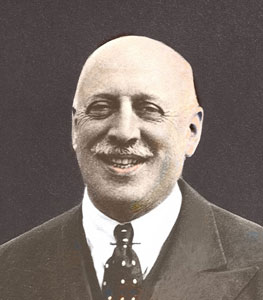
Discover C.H. Douglas’s proposals for economic and social renewal with the Pilgrims of St. Michael in Rougemont, Quebec Canada from Sept. 23 through September 28 2026.
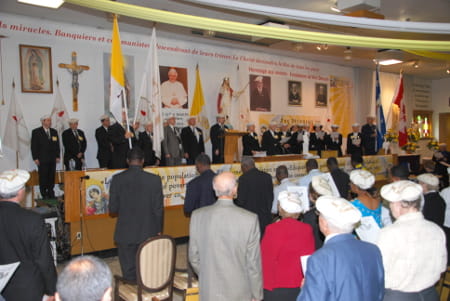
Rougemont Quebec Monthly Meetings
Every 4th Sunday of every month, a monthly meeting is held in Rougemont.


 Subscribe