



The following item, appearing in the March, 1962, issue of Canada Month, was taken from the Vancouver Province.
"We British Columbians have the greatest fiabilities and the highest provincial spending, per capita, in Canada. Before we get in any deeper we want to know where we are going and why. The debt summary... should sober those who have been listening to Premier Bennett's claims that we are debt free.
"'The fact is the public debt which the province guarantees is $1.3 billion.
"This is he greatest debt load per capita in Canada. (Emphasis ours - Ed.). And it doesn't include the Peace power project which has been conservatively estimated to cost $800 million.
"Annual interest charges on our present debt amount to $61 million a year, also the heaviest per capita in Canada." (End quote).
* * *
We have at times been reproached for condemning the formation of "Social Credit" parties; for deploring and attacking any attempt to lower the grand philosophy of Social Credit to the level of party politics.
No political party, even a Social Credit party, can achieve the necessary reform of society required by Social Credit teachings. A party is primarily concerned with garnering a plurality of votes and taking over the power of government. Social Credit cannot be legislated until the weight of the people is thrown behind it. The people will not support it until they understand it. And understanding comes only with education.
Hence the first task of those who would work towards the founding of a Social Credit community, is to educate the people to Social Credit doctrine and Social Credit activity. That is what the organization of the Union of Electors is doing.
Political parties have done nothing to advance the true cause of Social Credit in Canada. The federal party of Solon Low did nothing during the years it spent in Ottawa. It is now a thing of the past.
The party in Alberta has held the reins of government and has the name of a Social Credit government. It may be a "good" government as far as administration is concerned under existing norms. Certainly, it hasn't been hurt by the wealth which has flown in as a result of oil discoveries, But what has it done to propagate the knowledge of Social Credit in either Alberta or elsewhere in Canada? Nothing!
British Columbia's Social Credit party is such in name only. Our people working in the West have found few traces of any real movement for the spread of Social Credit teachings.
The plight in which British Columbia finds itself only shows that putting a "Social Credit" party in power accomplishes very little unless there is an educated and determined people behind it, forming a true Social Credit movement. And if the people are educated in Social Credit there is no need for a Social Credit party. The people will make their will known to their representatives, whatever their party color. And the people will see to it that their will is carried out,
E. M.
Nothing is more remarkable than the arrogation by Labour Socialists — not by the average craftsman, who is normally tolerant - of a monopoly of civic virtue, associated with the proposition that anyone who is, or was, fully successful in the orthodox activities of the past hundred years, unless that success was achieved as a Trades Union official or a Socialist polítician, is reprehensible. We think that we have made our condemnation of certain aspects of "capitalism" fairly clear, but it has never seemed reasonable to suggest that given certain canons of society, those who fail to live under them were, for that reason, more admirable than those who succeeded. Almost the only remark ever made by Dr. Buchman which attracted us was his retort to a gibe that he and his followers confined their activities to the well-to-do: "Well, God is a millionaire, isn't he?"
There is no dubiety as to the origin of this arrogance — it is in the doctrines behind the French Revolution, and in particular the conception of "equality", which has the curious effect of nourishing the most profound hatred of quality as well as a claim to be a judge of it. The French Revolution was a bourgeois upheaval, and its psychology was that of the Fabian Society. In consequence, while it would be infantile to lay the blame for the present chaos to the debit of anyone specific class, a disproportionate number of its fallacies have been propagated by such persons as Mr. H. G. Wells.
There is, of course, a very real sense in which "of him to whom much is given, much will be required", and it is a matter which may well give food for thought to a number of successful industrialists, not because they have become rich, but because they know, or ought to know, why nearly every one could become rich in the economic sense. The distinction is vital. Nearly every step in the progress of the world has come from the "privileged" classes, and the equalitarian doctrine is expressly and consciously designed to frustrate disinterested effort - the only effort which can save mankind.
C. H. Douglas in "Week to Week. Notes", June 1, 1946 as quoted in The Social Crediter, March 3, 1962 (Emphasis supplied).
An internal combustion engine that does away with the conventional crankshaft, connecting rods, radiator, valves and camshaft is announced by a small British firm. Mr. William Selwood, managing director of the Southampton firm which has developed the engine, and which bears his name, said yesterday that it would be particularly suitable for cars and helicopters. At present, taking all ideas into account, "the power/weight radio of this new engine is without rival".
- Daily Telegraph, April 28, 1961 as quoted in The Key, Autumn, 1961
In the week finishing March 22, members of L'Union des Electeurs took 2,512 subscriptions for our French-language paper, Vers Demain.
The vicious campaign against Portugal is being intensified, with the Washington policy-makers giving every aid to the Communists. Unless the campaign can be halted, competent observers believe that the Salazar regime will be so undermined economically that it will not survive. (It is interesting that Portugal has no international loan commitments). This could enable the Communists to get a foothold on the Iberian Peninsula.
The campaign by the arch-hypocrite, Nehru (invited to speak at the World Council of Churches meeting in New Delhi) against Goa, added fuel to the anti-Portuguese campaign. The wretched British Government refused the Portuguese request for staging facilities for troop movements. How different it was at the height of the crisis of the Battle of the Atlantic when the British Ambassador called upon Doctor Salazar and requested the use of the Azores as a base against the U-boats. Dr. Salazar wasted not a moment in acceding to this request, made under the Anglo-Portuguese Treaty of Alliance. This decision played a vital part in the defeat of the U-boat campaign. But when Dr. Salazar asked the Macmillan Government to help him under the Treaty of Alliance, it sullied Britain's national honour by turning its back on its ancient ally.
The New Times, February 9, 1962
Money comes into being as a debt which is loaned to us at interest by the private banking system. The economic blood circulating in the veins of business is the blood-money of debt.
J. C. Larkin, From Debt to Prosperity, p. 25
Study Session on Economic Democracy And Annual Congress
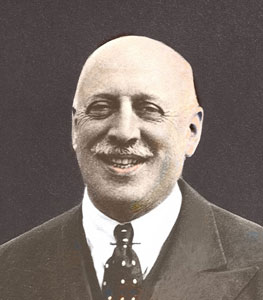
Discover C.H. Douglas’s proposals for economic and social renewal with the Pilgrims of St. Michael in Rougemont, Quebec Canada from Sept. 23 through September 28 2026.
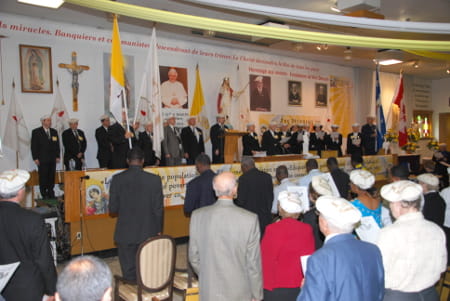
Rougemont Quebec Monthly Meetings
Every 4th Sunday of every month, a monthly meeting is held in Rougemont.

 Subscribe