



Social Crediters speak much of the money system; of financial credit which serves as money; of the restriction of credit. They condemn the restriction of financial credit in the face of the physical possibilities of filling needs. They demand a money system which will serve instead of hindering.
The insistence by Crediters on these points lead them to be treated as people who think that money is true wealth, who attribute to it a magic power which will bring forth production out of nothing, replacing farms, mines, factories, transportation, professional services, etc. Nothing could be further from the truth. Social Crediters, better than anyone else, know how to make the distinction between wealth and money; between wealth, which is a reality, and money which is nothing more than a numerical representation of this wealth; between the source of wealth and the origin of money.
If money is a representation in figures of wealth it is also a permit to activate the means of production from which issues wealth, or to draw upon the products and services offered which are wealth when they meet and fill needs. But this permit is not wealth no more than is the permit to drive a car on the highway, the car or the highway; no more than a theatre ticket is the theatre or the seat therein; no more than a railway ticket is the train.
A permit has no value unless that to which it gives permission, exists. An automobile license would have no value if there were no autos or no roads on which to drive them. A theatre ticket would have no value if there were no theatre or no plays to present in the theatre. A railway ticket would be useless if there were no trains.
On the other hand, what would an automobile owner, be likely to think, if, on asking for a license for his machine, he were told that he could not have one because there were no more?
Or, imagine the following scene. You present yourself at the ticket counter in the railway station:
- "A ticket for Toronto, please."
- We're so sorry, but there are no more."
- No more! Are the trains filled to capacity?"
- Not at all. Only about one quarter of the seats are taken. We have plenty places on the train. But we have no tickets."
You'd be justified in thinking this company was run by imbeciles.
You can see the importance of a permit when the thing to be utilized exists. And you can see the importance of money to permit the use of production offered for use or for the mobilization of means to realize potential production. And if money is refused, or is rationed, when there is an abundance of products and services available, are we not right in thinking that the money system is controlled by idiots or malefactors?
Now, once again, it is not money which is the true wealth. And, inasmuch as it is a permit to obtain goods and services, money plays a role which is directly the opposite to that of the producer of goods. The permit to consume is a permit to destroy.
I buy from a farmer a sack of potatoes worth $2.00. The potatoes constitute real wealth, coming from the earth and the work of the farmer. My $2.00 is my permit to obtain goods, whatsoever I choose, to the value of $2.00. I apply this money to potatoes. This wealth, produced by the farmer, is going to be consumed by my family. That is, destroyed. My $2.00 was a permit to destroy this wealth.
There is no doubt but that this permit was an asset; without it I could not have laid hold of this wealth of nutrition. But it is also a fact that my $2.00 did just the opposite of production. It the $2.00 was an asset for me it was a liability with regard to this wealth.
What is true of my $2.00 with respect to the sack of potatoes is true of all the money in the country with respect to all the real wealth of the country.
In any national balance sheet which conforms to economic realities, you must classify as assets all production and every source of the production of wealth; and classify as liabilities all money and every source of money which confers an effective demand, a right to this wealth.
This is what Major Douglas has done in that one of his works which he always called his favorite, The Monopoly of Credit, on page 22 of the 3rd edition, where he presents a balance sheet for "Great Britain Limited", as follows:
| ASSETS | LIABILITIES |
| (Population. Education. Morale) i.e. Human potential. | National Debt |
| Policy | Bankers (Potential creators of effective demand) |
| Organization | Insurance Companies (Mortgage and Bondholders) |
| Natural resources | Cash at call |
| Developed power | Taxation for Public Services |
| Plants (Railways, Buildings, Tools, etc.) | |
| Public Services | |
| Goodwill (Tradition, reputation, etc.) | |
| Work in Progress | |
| Consumable Goods |
This form of balance sheet is certainly not in conformity with the usual manner of presenting the national balance sheet, but it is, without doubt, in complete conformity with the true and real nature of facts. The Social Credit view of things is always related with economic realities which is evidently something orthodox economists and political hacks lack.
It is absurd to pretend that the financial credit issued by the banks is based upon species (metal money) or script money (bank notes) owned by the banks. Such money is a liability. A liability is never based upon a liability.
If the banks maintain a certain proportion between tangible money and money which appears as figures in the ledgers, it is only because of the percentage of cheques presented to the bank for cashing instead of deposit. But neither financial credit nor paper or metal money would have any value unless they had some corresponding asset.
In a paper read before a Social Credit seminar held at Melbourne, Australia, last September 24, Mr. W. R. Browning, a long-time Crediter and one of the first to write on Social Credit in Australia, spoke as follows:
"A bank loan is of worth only if the community has already produced wealth and services which it can buy. Therefore the only natural limit to the creation of credit is the ability of the community to honour that credit. From this angle, the whole resources and wealth of the community may be considered as assets against which all money and credit are a liability."
Which is what we have been explaining above. Mr. Browning then adds:
"Whatever is physically possible is financially possible."
If this has not come to pass in practice, if things physically possible, and wanted by the community, are not realized, through the fault of the financial system, this is simply because the controllers of money and credit have created an artificial obstacle.
Mr. Browning then goes on:
"From every angle, the community is therefore the ultimate owner and creditor of all credit created by the banks. This moral relationship should be legally expressed. Just as the borrower is in debt to the bank, so the bank should be indebted to the public and this relationship should find expression in a system of National Bookkeeping.
"The banks, whether private or Commonwealth (national), should be indebted to the Treasury for every loan granted, and released from that indebtedness when the loan is repaid. By this means both the Commonwealth and the Trading banks would become agents of the Government on behalf of the public, and the financial sovereignty of the government firmly established."
Mr. Browning proposes neither the confiscation nor the nationalization of the banks. He does not even suggest that there should be any change in the method of granting loans through the creation of credit. But he does insist that the banker cease to consider himself proprietor, owner, of the financial credit which he issues. This financial credit is nothing more than the expression in figures of the real credit which belongs to the community. It is a permission, a permit, to make use of the country's capacity to produce, which is after all, a good appertaining to the nation and not to the banker.
When the banker creates and lends out financial credit, it is community wealth, community goods which he is expressing in figures, figures which the community has agreed to recognize as being of the same value as money. So it is clear that in fact it is the community, the population of the country, which lends through its intermediary, the banks. The bank is only the agent of the community, or if you wish, the agent of the Treasury, a community service administered by the government.
That which the banker lends is neither his own money nor that of the depositors. It is the credit of the nation, of which the Treasury is the duly authorized depositary and guardian. Thus the Treasury is the creditor and the banker is the Treasury's debtor, for the amount thus inscribed under the loan made by the banker. Since this credit is then loaned by the bank to a borrower, the banker becomes the borrowers creditor and the borrower becomes the bank's debtor. But what is loaned is always the property of the community.
When the borrower reimburses the bank he ceases to be the bank's debtor. Cancelled by repayment, this amount of credit ceases to be a liability on the goods of the community. Thus, the banker himself is freed from indebtedness to the Treasury.
All such transactions should be set forth in a system of national accounting drawn up by the Treasury or by the Bank of Canada functioning as the agent of the Treasury.
The techniques of such a system should present no problem once the decision was taken and the necessary orders given. If the system is able to foist on the nation a system of accounting which falsifies facts, it is certainly capable of instituting a system which will be a true mirror of physical realities in the realm of economics. As far as the people and their representatives, the government, are concerned, their is no question of finding experts, but rather of taking the decision.
We shall return to this subject.
Study Session on Economic Democracy And Annual Congress
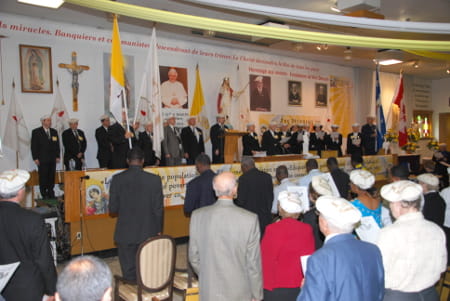
Discover C.H. Douglas’s proposals for economic and social renewal with the Pilgrims of St. Michael in Rougemont, Quebec Canada from Sept. 23 through September 28 2026.
Rougemont Quebec Monthly Meetings
Every 4th Sunday of every month, a monthly meeting is held in Rougemont.

 Subscribe