



"We are sometimes told today that we have more than enough money. But few of us believe this to be true, and this statement does not really fit in with the facts. It is not true, for here are large stocks of goods which have not been sold, and which would have been sold if we had enough money to buy them. And most goods could have been produced, and would have been produced in larger quantities had there been a sufficient demand for them. This means, had people had more money to spare to buy them.
"When economists tell us that we have too much money, what they mean is that inflation has occurred, and they suppose that the cause of that has been too much money. They suppose that prices have risen because suppliers have put up their prices having found that there is more money about: but the increase of prices is more likely due to higher wage bills etc. And this may mean that purchasing power has diminished rather than increased, on balance. At any rate, judging by the number of businesses which have suffered a loss of trade this year it should be obvious that we are suffering from a shortage of purchasing power, and not the other way round.
"We are not alone in this view. The economist Sir Roy Harrod has recognised that this is liable to take place, in his "Policy against Inflation", he says,'The most important principle is that monetary policy, along with other measures of economic policy should be regulated so as to equate the total demand for goods and services to the supply potential of the economy.' That is to say, to ensure that the amount of purchasing power that the people together have, shall keep pace with the ability of the community to produce the things that the people want. Note, 'the most important principle'. And also, 'supply potential': that is all that can be produced, not merely what has been produced.
The above quotation appears in "Money — The Decisive Factor," a book sponsored by The Economic Research Council. This shows that this most important need is being recognised by other groups.
"The question then arises, 'How are we going to ensure that there shall always be the right amount of money issued?'.
Most people still think that the government issues all money. Actually the government issues very little; it only issues the coin. The Bank of England issues the notes, and some other forms of money, while the trading and other banks issue all the rest, which is by far the greater part. This issue is somewhat regulated by the Treasury through the Bank of England, but the regulation is a hit and miss affair and is subject to policy rather than to scientific calculation or estimate based upon sufficient data. The fact is that no means have been set up to collect the information necessary to the correct issue of money; and there is no office to calculate what this should be.
"The formula is now more for unemployment," less for inflation less when our foreign credits" diminish'. Both producers and would-be consumers should understand that this is not getting down to fundamentals.
"The sort of thing that is needed is fairly obvious. It might well take the form of a National Credit Office empowered to gather data of the productive capacity on which to exactly calculate the issue of money needed. That is the amount of money needed to enable our purchasing power as a community to keep pace with our ability as producers to provide goods and services!
Taken from an article, The Supply of Money --"The Life-Blood of the Nation, by A.J. W. Chavasse, in "The Key, Summer, 1961 edition.
"Social Credit is the way to take Christianity - seriously."
Bryan W. Monahan
Study Session on Economic Democracy And Annual Congress
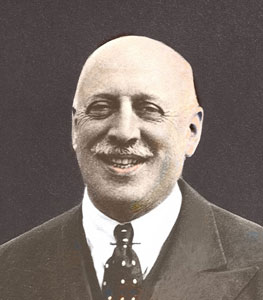
Discover C.H. Douglas’s proposals for economic and social renewal with the Pilgrims of St. Michael in Rougemont, Quebec Canada from Sept. 23 through September 28 2026.
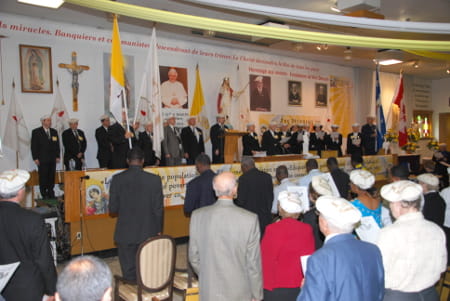
Rougemont Quebec Monthly Meetings
Every 4th Sunday of every month, a monthly meeting is held in Rougemont.

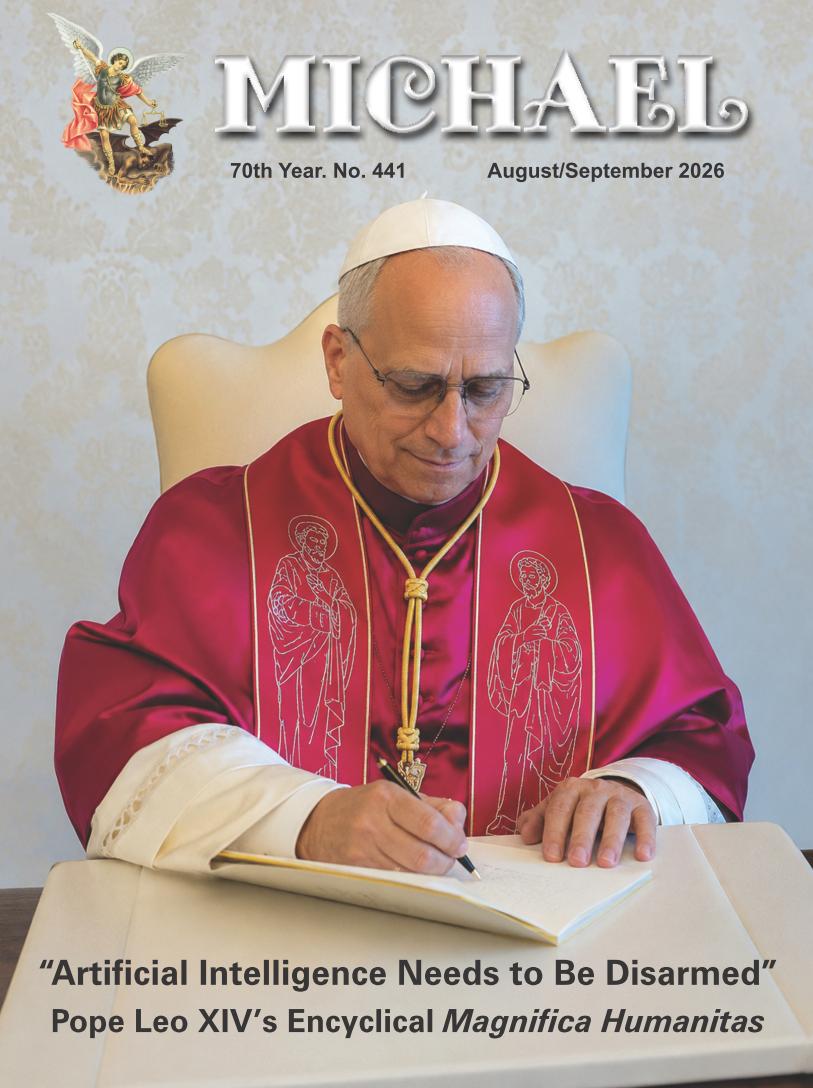 Subscribe