


At this time of the year when income tax returns are due, some will complain that the tax burden has become higher and higher. People will be told "Render to Caesar the things that are Caesar's...". The biblical passage is used to mollify the public but the far-reaching meaning of the Gospel passage is not presented. They imply that no matter what the State (Caesar) requires in payment for taxes, we must comply without complaint.
In the following article, Louis Even sheds light on the true meaning of this Gospel passage, which actually puts a limit on Caesar's demands, and thus opens up unsuspected possibilities.
The Pharisees, anxious to entrap Jesus in His words, sent their followers to Him, along with the Herodians who were supporters of Rome, to pose the question: "Is it lawful to pay tribute to Caesar, or not?" (Matthew 22:17)
In those days, the "tribute" was different from the income tax paid by citizens today. The tribute implied subjugation: it was an obligation exacted by the conqueror upon the vanquished, as Rome had conquered Palestine by force.
Our Lord answered by first exposing the trap prepared by the Pharisees: "Hypocrites, why do you thus put Me to the test?" He then asked them to show Him the coin of tribute, on which was engraved the image of Caesar. Then he said to them: "Render, therefore, to Caesar the things that are Caesar's, and to God the things that are God's."
Usually, those who quote this line of the Gospel do it to stress the duty to pay taxes. And they do so with much eloquence. Most of the time, they quote the first part of the text only — that which concerns Caesar. The latter part, concerning God, is usually passed over in silence, because these speakers are so preoccupied with the importance of Caesar today.
Even when people quote the first part, they seldom draw attention to the limitative nature of the words "what is Caesar's". We say "limitative", because Caesar does not own everything. But apparently, if one listened to the "tax preachers", one should give to Caesar all that he demands. Caesar usually has a hearty appetite, caring little whether there are things that are due to those he robs via taxation.
You understand that Caesar means the government, or more precisely, governments, since there are as many Caesars as there are levels in the political structure of a nation. In Canada, there are municipal Caesars, provincial Caesars, and a federal Caesar. And before long, to top it all off, perhaps we will also be afflicted with a supranational Caesar with universal jurisdiction.
The result of this hierarchy of Caesars, stretching higher and higher, has been the extraction of larger and larger "tributes". The ears of these Caesars have become more and more distant from the voices of the people, while their sticky fingers reach down into every strata of society, taking much of our incomes and squeezing all they can from every economic transaction.
But does something belong to Caesar simply because he demands it?
In a speech delivered in the House of Commons on July 6, 1960, during the debate on the Canadian Bill of Rights, Noel Dorion, the MP for Bellechasse, Quebec (a few months after he became a minister in the Conservative cabinet) quoted the reply of Jesus to the Herodians. However, Mr. Dorion did not use it in favour of taxes. On the contrary, the topic debated in Ottawa that day was human rights, and not the rights of Caesar. Mr. Dorion rightly remarked:
"It is Christ who really set forth the first charter of human rights, summing it up in these succinct words which, after two thousand years, are still timely: Render to Caesar the things that are Caesar's, and to God the things that are God's."
Mr. Dorion did not elaborate further on this statement. But considering the subject of the debate, he certainly meant that man, the human person, belongs to God, and not to Caesar; that Caesar does not have the right to encroach upon what belongs to God; that Caesar must respect the dignity, freedom, and the rights of each and every citizen. This includes the right to life and to those conditions which will permit the full development of the person. The rights of Caesar are limited by the fundamental rights of the human person.
Dorion saw in the words of Our Lord a limitation to the power of Caesar, instead of a justification for any kind of tax. This is because he quoted it in full: "Render, therefore, to Caesar what is Caesar's, and to God what is God's."
To Caesar what is Caesar's — no more than that; and, everything does not belong to Caesar.
It is precisely to protect the citizens from the all-powerful state, to make Caesar the guardian of the rights of individuals — at least in principle — that, on August 4, 1960, the Canadian Parliament unanimously voted to adopt a Bill of Rights, however incomplete it was.
In presenting this bill, on July 1, 1960, Prime Minister Diefenbaker himself stressed its purpose: "To keep and safeguard the freedom of the individual from the governments, even the all-powerful ones. Why? Because the individual, the human person, is sovereign before Caesar. Diefenbaker knew it, and he said: "The sacred right of the individual consecrates him sovereign in his relationship with the state."
Pope Pius XI wrote in his encyclical letter, Divini Redemptoris: "The human person ought to be put in the first rank of earthly realities." In the first rank, therefore before any other institution, before any Caesar.
Pope Pius XII wrote in his letter to the chairman of France's social works on July 14, 1946:
"It is the human person that God put at the top of the visible universe, making him, in economics and politics as well, the measure of all things."
Still, one must render to Caesar what is Caesar's. Render to him not all that he wants or can seize, but only what belongs to him.
So, what belongs to Caesar? We think it can be defined as follows: what is necessary to carry out his functions.
This definition seems to be implicitly accepted by Caesar himself, by the government, since the government says to those who complain about the burden of taxes: "The more services people demand, the more means the government needs to provide these services."
This is true. But in order to carry out his proper functions, Caesar must not have recourse to means that prevent people and families from carrying out their particular functions.
Besides, in order to increase his importance, Caesar is always tempted to take over functions that normally belong to families, and not to the state. Moreover, the citizens would not need the help of Caesar so much if Caesar first removed the obstacle that only he can remove: the artificial obstacle created by a financial system that is not in keeping with the huge physical possibilities that could satisfy the basic material needs of every individual and family in our country.
Because Caesar does not correct this situation, Caesar goes beyond his proper role and accumulates new functions, using them as a pretext for levying new taxes — sometimes ruinous ones — on citizens and families. Caesar thus becomes the tool of a financial dictatorship that he should destroy, and the oppressor of citizens and families that he should protect.
The life of the individual does not belong to Caesar, but to God. Life is something that belongs only to God, something that not even the individual can suppress or shorten deliberately. But when Caesar puts individuals in conditions that shorten their lives, then Caesar takes what does not belong to him; he takes what belongs to God.
The human person and the family are a creation of God, and Caesar must not destroy nor undermine this fact. He must, on the contrary, protect against whoever wants to encroach upon their integrity and rights.
To deprive a family of its home because it cannot pay the property taxes is to act against the family and against God. Caesar does not have that right.
How many other infringements on the rights and belongings of individuals and families could be mentioned!
But Caesar has indeed some functions to carry out that cannot be entrusted to individuals. There are some services and goods that can only be obtained from Caesar — for example, an army to defend the country in the event of war; a police force to keep order against those who disturb it; the building of roads, bridges, and a public means of communication between various towns in our country. Caesar must have the means to provide the population with these services.
Certainly, but what does Caesar need to provide these services? The state needs human and material resources. It needs manpower.
Caesar needs one part of the productive capacity of our country. In a democratic system, it is up to the elected representatives of the people to determine what part of the country's capacity to produce should be used for the needs of Caesar.
If one thinks in terms of realities, one must admit that there is no difficulty whatsoever in giving Caesar one part of the country's productive capacity, while leaving at the disposal of private needs a capacity to produce that can easily meet all the normal needs of the citizens.
Let us use the verb "to tax" in the sense of "making rigorous demands on." One can say then that private and public needs tax or make demands upon the productive capacity of a nation. When I demand a pair of shoes, I tax the capacity to produce shoes. When the provincial Caesar has a kilometre of road built, it taxes the capacity to build roads for the length of one kilometre. Yet, with today's ample productive capacity, the construction of roads does not hinder the production of shoes.
It is only when one stops considering the situation in terms of realities, and instead expresses oneself in terms of money, that difficulties arise. Taxes then take on another appearance and "make rigorous demands" on wallets. If Caesar takes $60 from my income as a contribution to his road, then he deprives me of the equivalent of a pair of shoes, so that he may build his road. Why is that, since our country's productive capacity can supply the road without depriving me of a pair of shoes? Why? Because the money system falsifies the facts.
— "But Caesar must pay his employees, he must pay for the materials he uses," some will say.
— Certainly. But, when all is said and done, what does Caesar do when he pays an engineer $400, for example? He allows this engineer to buy $400 worth of goods or services to make demands on the productive capacity of our country for the value of $400. So, in order to meet the needs of the engineer, is it necessary to deprive me of the right to buy a pair of shoes? Cannot our country's capacity to produce meet the needs of the engineer without reducing the production of shoes?
That is the whole point: as long as the productive capacity of the country has not been exhausted, there is absolutely no need to tax the private sector in order to finance the public sector.
The productive capacity of our country is far from being exhausted, since today's problem is precisely that of finding jobs for people and machinery.
If the means of payment constitute a problem, it is because they do not correspond to the capacity of production. The'tickets'(money) that allow us to draw on the productive capacity of our country are smaller in amount than the capacity to produce.
This shortage of'tickets'is an unjustifiable situation, especially when today's money system is basically a system of figures, a bookkeeping system. If the monetary bookkeeping does not correspond to the production capacity, it is neither the fault of the producers nor of those who need what is produced.
It is the controllers of the money and financial credit who ration money in spite of an unused productive capacity that is waiting to be used.
The citizens alone cannot correct this falsification of realities by the financial system. But Caesar can! Since Caesar is the government, since he is charged with taking care of the common good, he can — and must — order the controllers of the financial system to put their system in tune with reality.
As long as Caesar refuses to make this correction, he makes himself the servant, the tool of the financial dictatorship; he gives up his sovereign function and the taxes he demands, because of this financial falsehood, are actually not owed to him. "Modern taxation is legalized robbery," said Clifford Hugh Douglas. Caesar has no right to rob, even if the function is made legal.
Nobody denies Caesar the right to tax the productive capacity of our country for public needs — at least, as long as the part he takes leaves enough to meet the demand of private needs. There again, it is the job of the governments to see that this happens.
Private and public debts are the best proof that the productive capacity of a country is only partially used. The population cannot collectively pay, and consume, all that is produced.
This debt that represents created goods, plus the sum of the privations caused by no production due to the lack of money, represent the sacrifices required by the financial dictatorship, or in other words, by Mammon.
Mammon is not a legitimate Caesar. We must render nothing to Mammon, because nothing belongs to him. Mammon is an intruder, a usurper, thief and tyrant.
Mammon has become the supreme sovereign above Caesar, above the most powerful Caesars in the world. Caesar has become the instrument of Mammon, a mere tax collector for Mammon.
If Caesar needs one part of the productive capacity of our country to carry out his function, he also must be watched by the population; he must be reprimanded when, instead of being an institution at the service of the common good, he lets himself become the servant and lackey of financial tyranny, Mammon.
Today's great disorder spreads like a cancer in spite of the fantastic progress in production which should have freed men from material worries. Everything is connected with money as though money were a reality. The disorder lies in the fact that a cabal of private individuals have been allowed to regulate the conditions of the issue of money, not as accountants of reality but for their own profits, to strengthen their despotic power over all economic life.
There is another occasion that is quoted less often than the coin of the tribute, where Jesus had to deal with taxes. This time, it was not about a tribute to the conqueror, but the didrachma — a tax established by the Jews themselves for the maintenance of the Temple (Matthew 17:24-26). Those who collected this tax came to Saint Peter and said: "Does your Master (Jesus) not pay the didrachma?" Jesus said to Peter: "Go to the sea and cast a hook, and take the first fish that comes up. And opening its mouth, you will find a stater. Take that and give it to them for Me and for you."
This time, money was created with production. The government cannot do miracles, but it can easily establish a monetary system in which money is based upon production, that is in keeping with production. In other words, it must put a figure on the productive capacity of a country and align the means of payment with that figure to finance both the public and private sectors. It would be more in keeping with the common good than to leave the control of money and credit to the arbitrary will of the high priests of Mammon.
Pope Pius XI wrote that the controllers of money and credit have become the masters of our lives, and that no one dares breathe against their will.
Caesar has become a mere lackey of Mammon. We will not bow to Mammon's control of Caesar. The State, controlled by greedy financial tyrants, has no moral authority to deprive individuals and families of their due or bend to the greedy dictates of tyrants.
Mammon's dictatorship is the enemy of God, of Caesar, of the human person created by God, and of the entire family established by God.
Social Crediters, the Pilgrims of St. Michael, work to free men from this dictatorship. At the same time, they work to free Caesar from his subjection to Mammon. Social Crediters are in the vanguard of those who want to give to the human person, created in the image of God, what is his, to render to the family, established by God, what belongs to it, and to render to God what is God's.
Study Session on Economic Democracy And Annual Congress
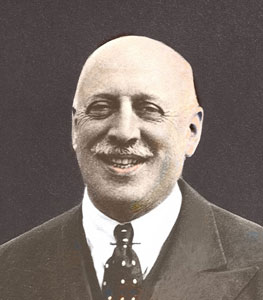
Discover C.H. Douglas’s proposals for economic and social renewal with the Pilgrims of St. Michael in Rougemont, Quebec Canada from Sept. 23 through September 28 2026.
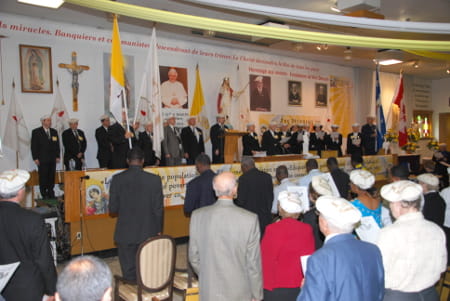
Rougemont Quebec Monthly Meetings
Every 4th Sunday of every month, a monthly meeting is held in Rougemont.

 Subscribe