



As stated in almost every issue of this paper, the movement led by the Institute of Political Action does not seek the implementation of Social Credit through an electoral success. We believe in education, in enlightening the people and training them to concerted action, to demand what they are rightly entitled to from the administration of public affairs by whomsoever has been elected to take charge.
Concerted action is unthinkable as long as the people have not become conscious of their common fundamental aspirations, of the existing possibilities to satisfy them, and as long as they have not grasped the true conception of democracy. And our chosen method to carry on this educational work is, chiefly, through the diffusion of appropriate literature, more particularly the official organs of our movement: this monthly paper, "The Union of Electors" or, for French readers, the bi-monthly "Vers Demain".
The experience of twenty years'work along these lines has proved the wisdom of this method. Not only do the regular readers of our papers gather a knowledge of facts, but they imbibe, more and more, the philosophy at the base of Social Credit, which includes far more than just the technical proposals enunciated by Douglas for a monetary reform. As Douglas himself insisted when speaking to Social. Crediters:
"Important as the money problem is, primarily important because it is a question of priority, Social Credit fundamentally involves a conception, I feel a true conception, of the relationships between individuals and their association in countries and nations, between individuals and their association in groups." (An Approach to Reality.)
That is why such matters as the fluoridation of public water supply, political or economic planning, State health insurance, conscription of all sorts, and all other such collectivist measures where the individual loses his right to contract out, are of so much concern to vigilant Social Crediters. And this paper deals with them as it does with financial policies. (Over 2 pages of the present issue are given to the fluoridation question, to vindicate the rights of the individual against mass medication.)
Social Credit makes the individual supreme. It holds the rights of the individual to be sacred. But similarly, a true Social Crediter should be a man individual engaged in personal action to make truth prevail. If concerted action is necessary to impress rulers and impose a change of policy, no concerted action is possible unless individuals are participating in it.
A real Social Crediter could and should be a leader in this line of action. Our movement has produced such leaders and strives to increase their number, not men seated in power by way of the ballot-box, but local leaders acting as initiators or as catalysers in their milieu. One in a community can raise a force to second him when he is first on the line of battle. Even if left alone, he can storm a stronghold and score victories.
We read in the official organ of the Secretariat established by Douglas, "The Social Crediter" of October 18, last:
"A good deal of the history of Social Credit consists of demonstrations of what has not been possible."
If you like this paper, others would like it also. Show it around to neighbors and friends. Then get them to subscribe, just $2.00 a year. You may use form at bottom of page 5 of this issue.
We think this is much the case of the so-called Social Credit party's attempts to power in view of imposing Social Credit by legislation once it had become master at Ottawa. The article goes on:
"So what is possible is the impact of individuals, who have made the Social Credit idea their own, on events (our emphasis). No 'movement' could do anything with the calculus, or any other idea, it is the individual who understands the calculus and its use who solves problems, to which it is ap- plicable. We need Social Crediters who are able to deal from the Social Credit point of view, with the problems and situations with which they come in contact, by means of contacts with others concerned, or by correspondence, or by action."
The party-minded Social Crediters pretend that it is impossible to obtain results by pressure politics only, because, they say, the lack of sanctions will leave the men in power immune. And by sanctions they mean unseating the present rulers by an electoral action when people are called to vote.
The experience of March 31 last should have shown to all Canadian Social Crediters the fragility of this mechanism to achieve their end.
But has our non-electoral movement no means of imposing sanctions against unfaithful servants? We think that exposure can do great deal to bring them to hear the people's demands. We mean that no public man likes to have his attitude known far and wide when it shows him contemptuous of his electors' legitimate demands and sacrificing them to his party or bowing to the power-that-be. This is where "The Union of Electors" and "Vers Demain" prove to be a potent weapon. And this weapon may be made more and more effective by an increased circulation of these two papers. This is within the province of Social Crediters themselves. They are the ones who can make the sanction bear to whatever strength they choose, by their own action.
Not so with electioneering. The result of an election is the outcome of various and opposite factors. You may try your best to win, but your opponent does just the same. And when you come out defeated, as has been most often the case with Social Credit candidates, to the zero point on March 31, 1958, the sanction on which they relied turns against them: "The people are satisfied and disprove your doctrine!"
Not only does the Union of Electors, under the guidance of the Institute of Political Action, insist on results from the people's representatives, not only does it pillory by exposure those who betray their mandate, but it also works to increase the weight of this sanction by placing its two papers in more and more homes. This is the constant objective of the members of the Institute and we consider as members of the Institute the Social Crediters who endorse its policy and do their part, even so small, to enlarge its influence by diffusing its publications. The expansion program of the Union of Electors for 1959 will send the missioners of the Institute of Political Action through the ten provinces of Canada to carry the message and leave subscribers wherever they have passed.
They are actually covering a broad region around Hull and Ottawa, in both Quebec and Ontario. This campaign will last through the first three months of the year and culminate in a Congress to be held at Hull on the 3rd and 4th of April.
The month of April will be given to an already begun, but then intensified drive in the Saguenay district, northeast of Quebec, and will terminate by a second Congress, at Dolbeau, on the 4th and 5th of May.
Then the team of full-time missioners, and some others who can find time to spare, will carry their work in the Western Provinces: Manitoba, Saskatchewan and Alberta, with a penetration into British Columbia this grand campaign to be closed by a Congress in Alberta.
Back East, they will carry on house-to-house work in the northwestern part of Quebec and in northern Ontario, with a Congress in Abitibi, September 5, 6 and 7.
In September, October and November, their field of action will cover the three provinces of New Brunswick, Nova Scotia and Prince Edward Island, a Congress being scheduled at Moncton, N.-B., in November.
We plan to enter Newfoundland in December. And the next Winter will be more particularly given to an extensive work in central, southern and western Ontario.
This is a bold program, indeed, but not above the faith, courage and enthusiasm of the Social Crediters formed in the school of the Institute of Political Action.
The Director,
LOUIS EVEN
Last Fall, September-October, four missioners of the Institute of Political Action were propagating the literature, of the Institute and the doctrine of Social Credit in Prince Edward Island. To most of the people there, Social Credit was completely unknown. But its logical principles and humane features were generally well received.
After a couple of meetings grouping a few dozen persons, one of the missioners, Alphonse Pelletier, wrote:
"The meetings brought together men of various political colors. Some were liberal, others conservative, others did not mind. But no question of party was raised. We simply presented to them the doctrine of Social Credit, and they showed receptiveness. Some bought a pamphlet or two, a few of them even subscribed to our paper, "The Union of Electors". The idea of uniting together for a common purpose and to request results from the elected representatives, whoever they may be, struck home with their unprejudiced mind.
"I could not help thinking within myself: If we had tried to introduce to them the idea of a third or fourth political party, asking them to join, the story would undoubtedly have been quite different. We might have recruited a member or two, but those who prefer to vote for a Liberal candidate, and those who prefer a Conservative Member, and those who have placed their faith in the C.C.F. party, would have remained cold to our proposition. We would just be after another split among the people, and covering the beauty of Social Credit with an ugly garment not to the liking of our hearers.
"To attach Social Credit to a party label, whatever the name of the label, is cornering the idea and making its acceptability only more difficult to the majority.
"We were fortunate that this small province of Prince Edward Island has never yet been spoiled by the ill-advised and short-sighted promoters of a Social Credit party. And we shall surely castigate, by all means at our disposal, any attempt by anyone to throw discredit on Douglas's doctrine by using it as an instrument for furthering political ambitions, either in Prince Edward Island or anywhere else in Canada. Some other provinces have already suffered from the bane of a so-called Social Credit party, and there we have the added task to work to undo the harm that has been done. But we tackle the job as well, and not without appreciable results."
Study Session on Economic Democracy And Annual Congress
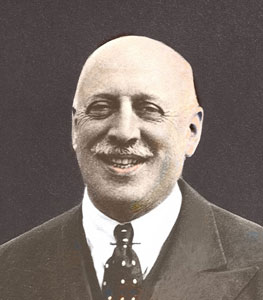
Discover C.H. Douglas’s proposals for economic and social renewal with the Pilgrims of St. Michael in Rougemont, Quebec Canada from Sept. 23 through September 28 2026.
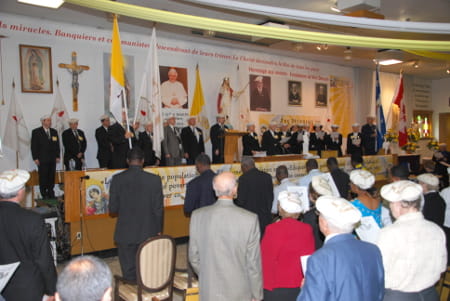
Rougemont Quebec Monthly Meetings
Every 4th Sunday of every month, a monthly meeting is held in Rougemont.

 Subscribe