



Professor Parkinson, of Parkinson's Law fame, while addressing an "Aims of Industry" meeting at Church Hall, Westminster, mentioned the efforts of one of his correspondents to obtain some information about the National Debt. "He asked the Treasury", said the Professor. "That august institution produced a list which covered forty-seven per cent of the debt, majestically disclaiming any knowledge of the rest. There was thus an odd sum of £15,000,000,000 for which the Treasury could not account. My correspondent tried the National Debt Office, which also disclaimed all knowledge, referring him to the Bank of England. After some delay, the Bank of England referred him to a Government White Paper, an article in the Midland Bank Review and a book about the City."
Prior to World War I, the National Debt stood at only a few hundred millions; by the time that struggle had ended it had risen to about £8 thousand million.
At the beginning of World War II, there was only £400 million in cash in Britain, yet the Government is supposed to have borrowed at least £20 thousand million during the War, and by its end the figure for the National Debt had risen to about £30,000,000,000.
It now appears that about half of this enormous sum cannot be accounted for. From whence has it come? Is it part of the amount which the Government of the day 'borrowed' from the banking system during the wars?
Most people are still unaware that the banks had to 'create' this money before they could 'lend' it, and that it was created by the simple process of writing figures in ledgers.
What a great opportunity, this search for the missing millions (thousands of them), would give to the two M.P.'s who were amongst those present at Professor Parkinson's meeting, Mr. Geoffrey Hirst (Con. Shipley), and Mr. Donald Wade (Lib. Hudderfield West), if they would take the matter up in the House of Commons and pursue it to the end.
What a great service they would render to the community, if they could bring about the cancellation of this fictitious imposition, bringing down the debt per- head of the population from about £600 to about £300, with the consequent substantial relief from taxation and added buoyancy to the whole national economy.
Cecil Keene in Credit Notes
Study Session on Economic Democracy And Annual Congress
Discover C.H. Douglas’s proposals for economic and social renewal with the Pilgrims of St. Michael in Rougemont, Quebec Canada from Sept. 23 through September 28 2026.
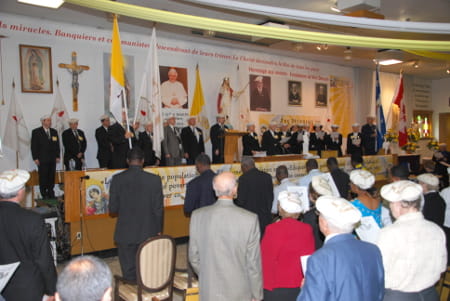
Rougemont Quebec Monthly Meetings
Every 4th Sunday of every month, a monthly meeting is held in Rougemont.

 Subscribe