



It is true that the majority of people would prefer inflation to deflation, but only because they have been conditioned to believe that there is no genuine alternative to either of these policies. The future of Western Civilisation will be decided, to a very great degree, by this question of introducing a policy which reduces prices to the benefit of all sections of the community. Reduced prices are economically possible because the real cost of production has been progressively reduced by labour-saving equipment and greater efficiency. Why, then, do prices continue to increase? The major reason is because there is a continuous expansion of new financial credits for capital expansion designed primarily to provide "full employment" in order that monetary incomes can be distributed. If there is any reduction in the rate of expanding new financial credits, there is an immediate slowing down of the economy, one feature of which is unemployment. The central problem therefore resolves itself into one of how to ensure that adequate purchasing power is distributed to consumers without forcing them to engage in unnecessary economic activities which must be reflected in an increasing price level."
Modern man is so mesmerised by abstractionism that he accepts with little criticism the official policy of "full employment" even though in his private life he endeavours to arrange his life so that he has the maximum time to devote to pursuits which he likes for their own sake and for the pleasure they give him. The necessary work to provide the basic requirements of civilized life is done by a very small percentage of the population. And they are hampered by the activities of the majority, most of whom are engaged in activities which are not only useless but in many cases are blatant economic sabotage.
THE NEW TIMES Oct. 30, 1959.
Study Session on Economic Democracy And Annual Congress
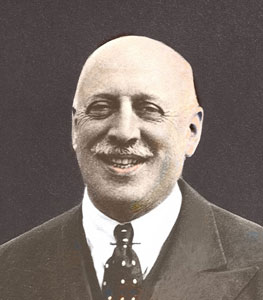
Discover C.H. Douglas’s proposals for economic and social renewal with the Pilgrims of St. Michael in Rougemont, Quebec Canada from Sept. 23 through September 28 2026.

Rougemont Quebec Monthly Meetings
Every 4th Sunday of every month, a monthly meeting is held in Rougemont.

 Subscribe