



The letter in the parish bulletin of Sunday, March 13, was very explicit and to the point. The French Federated Charities campaign, which ran from February 26 to March 13, was aimed at $1,800,000 in the city of Montreal. Wrote the president of the parish committee for the campaign, in the parish bulletin:
"... with 85% of the parish visited we have attained only 70% of our objective; what reason are we to give (to the central committee)? The fact of the matter is not that we must answer to the Central Committee of the Federation. The fact of the matter is much more brutal than that; it is the brutal fact of a small child practically without clothing who holds out his hand to us; it is this same child which asks us for its daily bread as we ask for our daily bread from our Father who is in Heaven; it is this same child which has need of pure air for its health; it is the young people without work; it is the discouraged who have need of guidance; this fact is also the old people who are living in need. In other words, this fact is the 34 works which the Federation operates by channeling all your gifts for a more efficient administration."
* * *
Certainly the precept of feeding the hungry, clothing the naked and sheltering the homeless is one of the most binding in the Christian religion. The great spiritual men of the church, down through the centuries, have had as one of the essential characteristics of their holiness, a deep compassion for those in material want, and a readiness to give their all to aid them. Numberless have been the congregations of holy men and women who have dedicated their lives to caring for those in misery, without any hope of temporal remuneration.
The movement of the Union of Electors has made it one of its most favored works to gather material and goods which will supply the wants of the needy ones among whom its members work.
And from Christ Himself we have the word that those who will be admitted to His right hand will be the ones who have, among other things, given drink to the thirsty and clothing to the naked.
The appeal of the president of the parish committee, quoted above, would reach home to the coldest of hearts. Of the misery, want and insecurity which he sketched, there can be no doubt. In The Union of Electors and Vers Demain we are constantly relating case histories of poverty, with pictures, which are almost incredible. It is a brutal reality this reality of the most degrading poverty in the midst of superabundance.
But these vast campaigns, managed by professional alms collectors, who have behind them large staffs of salaried assistants and buildings to house their offices are these true charity?
There is scheduled for the city of Montreal alone, during the year, 1961, no less than 95 different charity campaigns whose total financial objective will be in the neighborhood of $27,216,085. This does not include some 46 Tag Days with the money they hope to entice out of citizens' pockets.
95 campaigns! $27 million and more to be coaxed out of the people, most of whom are not finding it any too easy to make ends meet as it is. For after all, they are feeling the pinch of economic conditions which have made necessary these monster drives to aid the needy.
Clearly such a campaign requires the work of experts the know-how of professional campaign managers. They in turn must have staffs of employees who have some understanding of the complexities of big-time charity. And all of this personnel must be housed in office buildings. Add together these factors and you have charity turned into something that is akin to "big business". And the funds to pay these salaries for the full-time workers who do not labour for love and to rent or buy the necessary premises, where are they to come from? From the money gathered in the campaign, quite logically. So we have charity turned into a business which provides a living for a fair number of people. And those being aided, it goes without saying, must be investigated, reported on, filed away in dossiers, and told what they must do if they hope to benefit from the funds acquired during the massive campaigns. A mild form of regimentation, to put it moderately.
But, you will say, how are all these people in need to be helped except through such organisations as exists today? Quite right! How else? How else, under the financial system which generates the poverty, which such charity was instituted to combat?
There is no lack of the products necessary to provide a decent living for all these poor. This is borne out by the fact that organized charity does not ask for food, clothing or the material with which to build houses. These exist in abundance. What charity asks for is money - the means with which to buy these products for the poor.
There is no lack of goods. There is a lack of money. There are vast surpluses of material. There is a penury of money with which to purchase these goods, a penury existing in a critical degree among the poor whom charity wishes to aid.
The solution then is not to make a big business out of the virtue of charity. The solution has been put forth by Social Credit time and again, preached constantly by word of mouth and through Vers Demain and The Union of Electors. The dividend! If the materials exist in abundance, then let society institute a monthly dividend for each and every citizen, young and old.
This dividend will make it possible for the unemployed, the poor, the unfortunate, to live decently, to benefit from the inheritance of progress which has made this great abundance of goods possible with so little help from hands. With the dividend the poor will no longer be "victims" of charity, but will remain with the dignity of citizens able to provide for themselves. The citizen who has to contribute to such campaigns will no longer be called upon draw upon his meagre store of funds which he can ill afford to spare.
The answer to widespread poverty is not giant, "big-business" charity campaigns. The answer is the dividend for each citizen. Organized charity tends to degrade the poor while helping them, through the regimentation which is necessarily tied up in such organizations. The dividend respects the dignity of the individual poor. It gives him what is rightfully his and allows him to look after himself as he sees fit. And what more, the dividend will not only relieve the distress of the poor, it will banish the cause of such poverty.
Study Session on Economic Democracy And Annual Congress
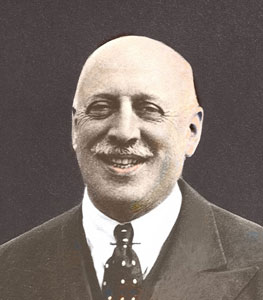
Discover C.H. Douglas’s proposals for economic and social renewal with the Pilgrims of St. Michael in Rougemont, Quebec Canada from Sept. 23 through September 28 2026.
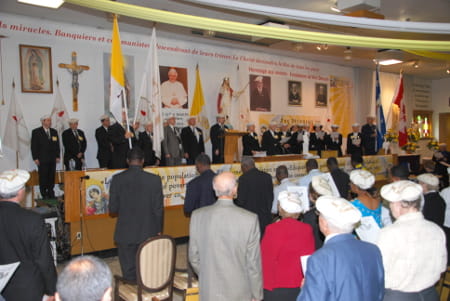
Rougemont Quebec Monthly Meetings
Every 4th Sunday of every month, a monthly meeting is held in Rougemont.

 Subscribe