



Anyone who knows the spirit of Christianity must realize that it categorically demands the highest respect for the individual, as a person destined for Heaven, and also demands the sense of human solidarity. Christianity secures a balanced synthesis of these two, such that neither can outweigh the other in the least degree.
No other doctrine has so lofty a conception of man. He is the adopted son of God, he is destined to share the life of God, the material world is his servant. His personal liberty is superior, within the limits imposed by the like liberty of others, to the State or to any human group - and this superiority has the character of being absolute. Yet nowhere is altruism so complete as in the Gospel, where individuality finds its fulfillment in the entire giving of itself to others. The symbol of these two Christian essentials is the precept in which the whole teaching of Christ is contained: the precept of love. There is nothing in the world more personal, more free or more social, than love. Love never imposes itself by force; it is free, by its very nature; it abhors egoism, for it consists in subordinating the use of our liberty to the service of others: if, then, society were really permeated by the plain Christian spirit, both Communism and Liberalism would find in it its own proper good not only achieved, but lifted to a higher excellence.
- Towards a New World, by Richard Lombardi, s.j., pp. 28-29
The following is from a pastoral letter of 1946, issued by Cardinal Saliège, Archbishop of Toulouse, France:
"Because Christianity places the kingdom of justice and happiness in heaven, the Christian does not have the right to remain indifferent towards this life on earth nor towards the conditions surrounding this life which affect him and others.
"It is in the measure that he strives to promote justice that he will merit the abode of eternal justice. It is in the measure that he is truly free and works to bring freedom to others, for liberty is a matter of daily conquest, that he will merit the abode of eternal love. No, the Christian is not submissive before injustices or sufering, an attitude which some are pleased to teach because they are ignorant of true doctrine. He is a man of action, not satisfied to sit passively by, a revolutionary who spills no blood - and who draws from the Gospel the strength to rebuild." (Emphasis ours —. Ed.).
Mr. Samuel Bronston has produced a film called "The King of Kings" which may fairly be described as travesty verging on the blasphemous. Commenting on some of the glaring modifications, not merely textual, in this film life of Christ, Miss Dilys Powell, film critic of the Sunday Times, notes that the way is open for "something less expected: an intentional blurring of the divinity of Christ... Magi, miracles, noli-me-tangere and all, this still boils down to a film about the non-divine."
Mr. Alexander Walker, film critic of the London Evening Standard, writes scathingly and with feeling of "Kings". He calls it: "The most theologically dubious, religiously vapid, historically unlikely view of the Redeemer I have ever encountered. Its gravest sin is simply this: its hero is not Jesus Christ at all. It is a man by the name of Barabbas... By the wildest piece of commercial plotting, Mr. Bronston builds up Barabbas as a rip-roaring national hero working for a Jewish state. Barabbas's right hand man in the rebel underground is Judas Iscariot. Irked by the pacifism of the Messiah - so the film implies - Judas betrays Him to the Romans hoping He will be forced to work a few miracles when He feels the Roman sword at His throat. Did someone mention 30 pieces of silver? "I assure you not a penny piece of it changes hands in King of Kings. Christ's betrayal was pure patriotism..."
And he goes on: "Presumably this abysmal travesty of the Christian story is meant to increase the film's appeal to Jewish audiences by clearing Judas of the guilt usually attributed to him. For the same reason, perhaps, we do not hear Jesus' judgment against the scribes and Pharisees. We do not see Him expel the moneylenders from the Temple. We do not witness His bearing before the High Priest. We do not hear the Jerusalem mob cry, Crucify Him..."
After years of films whose general tenor, under the guise of realism and "sophistication", has been to attack every decent Christian feelring, it comes as- no surprise that a grotesque representation of the Christian story, masquerading as an epic and with all the meretricious gloss of technicolor, Superama and what-have-you, should be imposed upon a public conditioned to accept the views on life and history of a powerful minority in Hollywood. Good films there undouttedly have been, but since the days when Charlie Chaplin presided over the Communist faction in the film city, the propagandists and de-moralizers have been busy, often aided and abetted by film critics seemingly too deeply involved in the esthetics of film making to have noted the deeper motives. Miss Powell, who uses a word so detested by the pseudo-liberals, ("intentional blurring") and Mr. Walker, obviously scandalized, bravely state the obvious, but are none the less courageous for that. Perhaps their example will generate a deeper awareness among their fellow-critics and the general public of what is being attempted...
From Intelligence for December 1961
Study Session on Economic Democracy And Annual Congress
Discover C.H. Douglas’s proposals for economic and social renewal with the Pilgrims of St. Michael in Rougemont, Quebec Canada from Sept. 23 through September 28 2026.
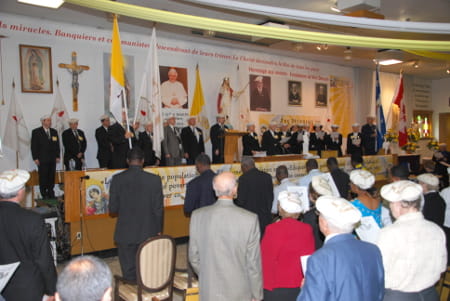
Rougemont Quebec Monthly Meetings
Every 4th Sunday of every month, a monthly meeting is held in Rougemont.

 Subscribe