



From the point of view of an election, there are two outstanding traits marking the results of the voting of June 18, last.
First, there is the severe check which the Conservative party suffered. This party which, in 1958, counted 208 members in the House of Commons, now has only 118. While it yet remains the largest party in the House it is still in the minority with respect to the total of 265 representatives which sit there.
It was in the province of Quebec that the party of John Diefenbaker suffered the greatest losses. In 1958, it had 50 members elected in Quebec. In 1962 only 14 were supported by the voters. This was a drastic slashing, comparable to that suffered by the Liberals in 1958 in Quebec, when they dropped from 63 to 25.
As far as this set-back of the Conservatives, we have only this to say: it was due to their own fault. It was the fault of the Diefenbaker government, which after having had four years in power with a majority which no other government has enjoyed, was completely unable to give the people the satisfaction they demanded. Among numerous errors committed by this government is that of refusing to render justice to families which are bringing up children. And this truly hurt him in the province of Quebec. In spite of the multitude of demands, demands which kept flowing in upon it during its term in office, this government remained obstinate in refusing to do anything to improve family allowance rates, which rates at the present time and in the face of the rising cost of living, are equivalent to only half of their original value. It is true that the Liberals were no better than the Conservatives in this respect. But they, too, were turned out by Quebec. Both parties turned a deaf ear to the cry of the people of Quebec. Quebec rejected them both.
The other outstanding event of June 18 was the spectacular vote given Social Credit in the province of Quebec. 26 members of this party were elected with such overwhelming majorities in the 26 constituencies, that 37 candidates of other parties lost their deposits.
Even the blindest can no longer help seeing that which the career politicians, the big dailies, the denizens of the CBC, the intellectuals dwelling in their ivory towers, have for so long denied, ignored or held of no account – the fact that there is in existence, in the province of Quebec, a large Social Credit population.
Yes, it can be said without any fear of exaggeration that Quebec, and for that matter, French-Canada, is strongly Social Credit. This fact is the fruit of 25 years of long and arduous labour, labour which was carried out in the face of the strongest resistance, labour which was treated to a systematic campaign of silence or was slandered and blackened whenever the opponents could find an opportunity to do so.
In fact, it was 27 years ago that the Social Credit. movement was born in Quebec. We use the word, "movement", deliberately, for the party, the party which bears the label, "Social Credit", has not been in existence for a full four years as yet.
During 27 years, Social Credit literature, in the French language, has been spread far and wide, not only in Quebec but in the other French-Canadian parts of Canada, by apostles who could not be halted or slowed down by any amount of sarcasm, invective, slander or persecution.
The propagation of Social Credit in the province of Quebec began by the publication of articles in Le Moniteur, the counterpart of the English-language publication used in study circles, called The Monitor. From 1936 to 1939, this work was carried on by the modest but very effective Cahiers du Crédit Social (Social Credit Notes). Then came Vers Demain, which has appeared twice a month, every month for 23 years. Added to the work accomplished by this paper has been the indefatigable labours of the apostles of L'Union des Electeurs, grouped under the Institute of Political Action. These workers have striven mightily, some of them consecrating their full time to the work of the movement - the full-time workers; others have given of their leisure time, especially their week-ends, to spreading Vers Demain and in accomplishing the other activities which have been planned by the Institute of Political Action. All have given themselves, at all times, without any material remuneration or any desire for such.
And with this labour, not only has the seed been sown, but the weeds have been uprooted, the soil has been cultivated and the growth of the plant carefully fostered and nurtured. In 1937, Ernest Lapointe, the right arm of Prime Minister Mackenzie King, - with cutting derision, told a meeting of Liberals at Lotbinière: "Social Credit? This grain will never grow in the province of Quebec!" Had he lived, what would he have to say the evening of June 18, 1962?
After each election, the politicians and the ordinary commentators stop to consider and reckon up the number of M.P.'s elected by each party. It was a distinct shock to them when, on the night of June 18, they counted 26 M.P's elected from a party called Social Credit. That was more than a third of the deputation which Quebec sends to Ottawa!
For those of us who believe in the strength of a people which is enlightened and which is determined to get the results it wants, the election of these 26 men to parliament was not what drew our attention. We are well aware that the people do not live in parliament. We know too that it is not there that we are to seek for devotion to the interests of the people. Unfortunately, parliament is all too often the habitation of combines, of concessions, of vested interests; the house of forgotten promises, of broken pledges, of betrayal. It is, above all, a house of impotence.
That which, in the election of June 18, drew our attention, our consideration, and which gave us the greatest satisfaction, was the ringing voice of a people to which Vers Demain and its apostles had, without let-up, brought the illuminating and liberating message which had originally been given to the world by Major C.H. Douglas. We take our satisfaction from the manifestation of faith in Social Credit which was given by 504,619 people who voted in the province of Quebec alone. To this number must be added a multitude of other men and women whose faith in Social Credit is even more profound, but who choose means and methods of expressing this faith other than those entailed in voting.
Dumbfounded by the results of the voting on June 18, politicians and newspaper men who are unwilling to face the fact of the mounting Social Credit tide in Quebec, have drawn all sorts of explanation out of the hat to try and show that this was not a question of a Social Credit vote demanding the application of Social Credit principles to the economy of Canada.
Some have tried to belittle the significance of the vote by saying that it is nothing more than a temporary upsurge of Social Creditism in the province; something impressive to see, but hardly lasting. But surely an upsurge of such amplitude must presume that there are large numbers of Social Crediters in the province. Such a demonstration is more than a passing wave.
There are others who have waved it off, remarking, "Oh, it was the television!" As if the use of television was an exclusive right reserved to the Crediters. Quite the contrary must be true if you consult the evidence. Observe how for many years, from one end of Canada to the other, and not only in Quebec, in matters of political ideology, it is to the Socialists that the CBC has given the greatest amount of time on both radio and television. Why, then, did we not see a Socialist wave surging up during the voting and sweeping across not only Quebec but the whole of Canada?
Others explained this Social Credit vote by saying that the people in Quebec were fed up with John Diefenbaker and his Conservatives, just as they had become completely dissatisfied with the Liberals. Well, that is probably quite true. But again, why was this discontent expressed through a Social Credit vote rather than a Socialist or Independent vote? And why in the province of Quebec alone? Are we to believe that the other provinces have been completely happy with the policies of the last two governments in Ottawa? · Jean-Louis Gagnon, Leftist though he is, gave a true picture of the situation when he wrote in the lately defunct, Le Nouveau Journal of June 19:
"One would have to be blind to imagine that it is easy to uproot something which has been growing for 25 years." And that is the truth. There is in Quebec a movement which has been striking its roots deeper and deeper for over a period of 25 years — even though the naive and those who hold their hands over their eyes seem to have remarked it only since June 18.
In fact, Quebec is for the most part Crediter. It is today the province which is the most truly Social Credit in all Canada. Not only that, it is likewise the province in which the authentic message of Social Credit has been most faithfully presented, best understood and most widely accepted.
Of course, we are not pretending that all those who voted Social Credit are capable of explaining correctly the entire doctrine of Douglas. Are other voters expected to explain fully and correctly the doctrines of the party for which they voted? How many electors who voted Liberal or Conservative are capable of explaining what Conservatism or Liberalism are?
But, for all the Crediters of French Canada, the two words, Social Credit stand for two things at least: 1. No financial problems where possible production is concerned; all that which is physically realisable ought to be made financially realisable to meet the legitimate public and private needs of the population? For distribution, a periodic dividend guaranteeing to all a share of modern production; for modern production is the result of progress, a common heritage, much more than a result of the personal efforts of those engaged in production.
It is not the Social Crediters of Quebec who are putting up with substitute Social Credit, a label without substance, something that is nothing but a pretence of Social Credit, a poor emasculated thing, deprived of its social dividend and the indispensable adjustment of prices. The compromisers in other provinces, more interested in garnering votes than they are in realising the application of true Social Credit, may cook up all sorts of bastard programs and decorate them with the name of Social Credit, but they will never deceive the people of Quebec who, for so many years, had the light of true Social Credit shed upon them by Vers Demain and the work of the men and women labouring for the movement under Vers Demain.
Furthermore, it is very important that we guard against being dazzled by the sheer number of votes. This vote expresses a demand. Yes, but it does not give the electors the right to go to sleep. Nor does it confer on the elected the right to serve up any old dish under the name of "Social Credit"." And there can be a very real danger of this happening, and the fact must be underlined. If we are too accustomed to thinking in terms of elections and ballots, we can forget the doctrine and end up by being very ordinary partners to very ordinary political parties. That is why, if we are going to give to the word Social Credit its true meaning, we can only lament that today there is so little Social Credit, so few Crediters in Alberta and even fewer in British Columbia.
This last remark no doubt surprise quite a few people. But the results of the election of June 18 ought to give them some idea of the true situation. The two premiers of these provinces, Manning and Bennett, have made it quite clear that if Social Credit is to become a reality, it will be, necessary for the Crediters to go to Ottawa. That is, win a federal election. But, lo and behold! it is precisely in a federal election that their followers in these provinces have voted other than Social Credit. In British Columbia they voted the contrary to Social Credit — Socialism!
For the election of June 18, Manning threw his weight personally into the campaign for Crediters, a weight backed up by the prestige of being premier of Alberta for 20 years. And for what? For the election of 2 Crediters out of a possible 17! In British Columbia 2 Crediter M.P.'s were elected; B.C. has 22 seats in Ottawa.
Which simply goes to prove how wrong those orators were who predicted that B.C. and Alberta would vote massively for a Social Credit party. Such oration might have been good for whipping up enthusiasm, but is was still false. Moreover, even if the people of Alberta and B.C. had voted Crediter, such a vote would be far from having the same significance as has the Crediter vote in Quebec. For where, in the provinces of Alberta and British Columbia will you find a true knowledge of the doctrines of Social Credit spread among any large number of people. There is no question but that the People of these provinces - of Alberta at least, are quite happy and appreciate the "good government" which they have. But that is not Social Credit. Social Credit, as far as authenticity goes, is a farce in these provinces.
Premier Bennett of British Columbia has said that had his people known that there was such a strong current of Social Credit running in Quebec, they would have voted en masse for Social Credịt in B.C.. A vote based on such considerations indicates that Social Credit in this province can have but the flimsiest of foundations. Furthermore, such a statement would indicate extreme political childishness.
Vers Demain and the Institute of Political Action have always presented the authentic doctrine of Douglas. They have not allowed themselves to be distracted or led astray by the sirens of election victories. This fidelity to true Social Credit is the reason why we can state categorically that the Social Credit vote in Quebec on June 18 was a vote for true Social Credit, an integral Social Credit, and not merely for some change or other of parties, or of some financial reform.
It will be the mission of Vers Demain (and of its English-language counterpart, The Union of Electors) to continue its work of education. For without such work, carried on unceasingly, the true ideas are soon forgotten, principles are diluted and loose their force, perversion takes over, time is spent awaiting the realisation of dreams that never come, especially if there should come some little relief from the evils that have beset us without their being any actual escape from the financial system which has generated these evils. It is most important that Quebec become not another Alberta or British Columbia which have succumbed to this dry rot.
Happily, it would seem that, in general, those who voted for the party bearing the name, Social Credit, realise the necessity of continuing the work. Since June 18, a number of these have written us or told us orally: "Now is the time to press on harder than ever. We must not stop with putting men in parliament who will do nothing for us. The people must ask for results, and demand them."
Vers Demain and The Union of Electors will certainly be faithful to this work. Our papers, our movement hold no seats in parliament. They are out here among the people. They will continue to teach true Social Credit, to build a force, among the people, which will be capable of vanquishing that other force, that of the controllers of the people's money, a force which, likewise, is not seated in parliament but nonetheless controls it and forces parliament to obey it.
If we are to work to make the people heard and served, we must not work simply to place power into the hands of a few elected individuals. We must work to see that the power is placed in the hands of the people themselves. The people, not parliament, must be strong. And it is this power and this strength which is going to bring down the power of the present controllers of Finance and permit government, whatever be its name, to institute a Social Credit system of finance. And it is precisely this pattern which has been outlined and emphasized by Major Douglas, the genius who founded Social Credit.
The Social Credit people of the province of Quebec and the Crediters of the other provinces of Canada likewise, can be happy that our two papers, Vers Demain and The Union of Electors, and our Institụte of Political Action, are not tied up with any political party, not even a party going under the name of Social Credit.
For thus unfettered, we are able to go on with the job of spreading the light of true Social Credit, of building a watch force which will protect our public men from temptations contrary to the welfare of the people, a watch force which will not only watch but will strike against those who would betray the people.
We have never had any reason to believe that The Montreal Star harboured sentiments of friendship towards the doctrine of Social Credit or towards any movement thereof. Nevertheless we have discovered that in an editorial of June 1, "Political Party Minus Principle", a certain conjunction of opinions on the part of the Star and the Union Of Electors. We herewith quote some sections of this editorial.
"We wish we could understand what Mr. Robert N. Thompson is talking about. With one breath he says his national Social Credit party still holds firm to its financial tenets; with the next he says it is not stressing the $25-a-month social dividend any more..."
"Mr. Thompson is therefore engaging in double-talk. But then Social Credit as a political movement in Canada has always been based on doubletalk. It has appealed to the politically naive by offering a vaguely-stated economic policy as the cure for their frustrations in the face of big business and big government.
"In the two farthest western provinces where it has achieved power it has never in practice, since the days of Aberhart, applied a single one of its economic theories...
"If Mr. Thompson were honest he would admit that this national party has no more to do with the Social Credit theories expounded by Major C.H. Douglas and reinterpreted by "Bible Bill" Aberhart, than have the two provincial governments today...
"There is a fundamental dishonesty about a party which, lacking the base of any real political conviction or principle, adapts itself to circumstance like a chameleon..." (Emphasis ours - Ed.)
To which we say a hearty "Amen!".
We can only hope that are many more in the electorate, who will, like The Montreal Star, see this "Social Credit" party for what it really is - a political fraud!
Study Session on Economic Democracy And Annual Congress
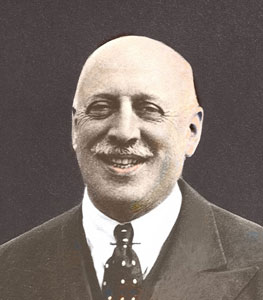
Discover C.H. Douglas’s proposals for economic and social renewal with the Pilgrims of St. Michael in Rougemont, Quebec Canada from Sept. 23 through September 28 2026.
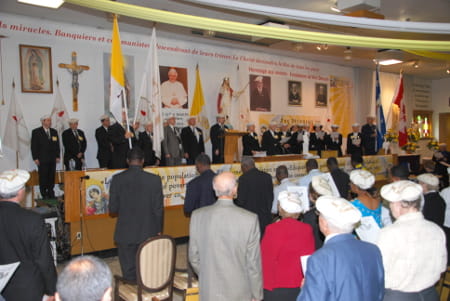
Rougemont Quebec Monthly Meetings
Every 4th Sunday of every month, a monthly meeting is held in Rougemont.

 Subscribe