



It can be deduced from the facts of industrialism examined previously, that in the case of the, U.S.A. it is simply impossible to dispose internally of the product of full employment of the population as industrialization approaches completion. But apart from deduction, the apparent necessity to export "more than ever before" demonstrates it. On the other hand, even exports are, as we have seen, not a solution, and, further than this, competition between export- ing units can only lead to international trouble, And even then the problem is not solved, because at some point of time, as industrialism spreads over the world, the problems that confront the U.S.A. would confront the world as a single economic unit.
Since the purpose of power machinery is to save labour, it does not take so detailed an examination, as this to demonstrate the futility of "full employment" as a policy. But the people of the world are hypnotized by this phrase. The facts of the matter are actually simple.
As intimated previously, the human labour required per unit of average production is already decreasing as the fourth inverse power of the increment of time; it should decrease even more rapidly. Unemployment must, therefore, rapidly rise even above 19 millions, even, apart from exports, so that any policy based on providing full employment is quite certain to lead to trouble. Short of reversing the process of industrialization there is only one solution to this economic problem, and that is to recognize, the displacement of human labour, and arrange for distribution of the product of industry on a basis other than that of employment. Either employment can engage a rapidly diminishing proportion of the population, or the whole employable population can be employed for a diminishing proportion of time. But this latter alternative which implies in the near future working hours of less than seven per week, is clearly cumbersome and ineffective. If the present basis of distribution is maintained, only war can possibly provide an adequate "market" for the product, of "full employment". War is, of course, an unrestricted export market.
From "The Dilemna of Politics, by Bryan W. Monahan,
in The Social Crediter of Feb. 4, 1961
"... the Government officials in charge of monetary matters and the banker-philosophers who speak on the subject have a way of surrounding this subject (money) with much mysticism, gobbledygook, and, at times, downright misleading statements. As a result the public is more confused than enlightened concerning one, of our most important social institutions, name- ly, our money system".
U.S. Representative J.C. Oliver,
March 21, 1960
"This is my world just as much as it is anybody's and I am going to work just as hard to save it as others are working to wreck it".
Christopher Notes, June-July, 1960
Study Session on Economic Democracy And Annual Congress
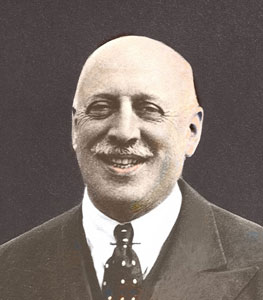
Discover C.H. Douglas’s proposals for economic and social renewal with the Pilgrims of St. Michael in Rougemont, Quebec Canada from Sept. 23 through September 28 2026.
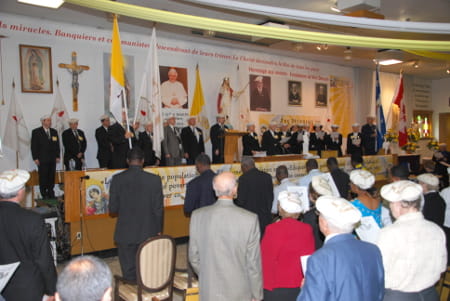
Rougemont Quebec Monthly Meetings
Every 4th Sunday of every month, a monthly meeting is held in Rougemont.

 Subscribe