



The decision of the U.N. Security Council to use force if necessary in the Congo to prevent civil war, is one which could have far-reaching consequences. In theory the Congo is a sovereign, independent state and a member of UNO. In fact, of course, there is no such a thing as a Congolese nation. However, if UNO can take action in the internal affairs of one of its so-called members, a dangerous precedent could be established and used to justify intervention in the internal affairs of genuine nations like South Africa. And ultimately in the internal affairs of all nations.
While there is still a great deal of confusion concerning the situation in the Congo, it is clear that UNO is being used to further a revolutionary programme. It is important to recall that UNO was invited into the Congo by the late Mr. Lumumba, now being built up into a black martyr by the Communists and their dupes in all parts of the world, and that in spite of the verbal attacks upon UNO by the Communists, and the Secretary-General and his staff has consistently pursued a policy which seeks to drive all Belgians from the Congo and to establish a central government which would dominate Katanga and other provinces which have in fact declared themselves independent states.
The Communists' use of dialectics suggests that it is highly probable that the violence of the Communist attacks upon the UNO is designed to mask the fact that the Communists are pleased with general developments. Just as they never used their veto powers to prevent the UNO decision to intervene in Korea, so the Communists significantly refrained from using the veto to prevent the UN Security Council from deciding to use force in the Congo. If UNO can be used to destroy Mr. Tshombe and to force the Belgians out of Katanga, the Communists will be delighted. It would almost appear that the early policy of UNO in doing nothing in the Congo, while raping, looting and tribal warfare broke out, was deliberately designed to produce a situation where the current policy could be successfully implemented.
Whatever the real truth, it is certain that the use of force in the Congo will shortly be used as an example for urging similar action in the Rhodesias and other parts of Africa as the natives are increasingly whipped into an anti-European passion. President Kennedy's representative in Africa, "Soapy" Williams, has already made it clear that Kennedy and his masters are going to continue furthering the revolution in Africa by their support of black demagogues preaching "Africa for the Africans". Ultimately, the Europeans in South Africa will be forced to resist strongly against so-called black nationalism. "World opinion" is being carefully prepared to accept the necessity of UNO intervention, although the excuse will be offered that such intervention is in the best interest of the Europeans themselves.
The growing revolution in Africa could well be the second-last phase of the world revolution. In the statement issued by the 81 Communist Parties which met in Moscow in the latter part of last year, it was claimed that the European Powers' retreat from their colonies was the most important world development since the revolution in Russia in 1917. The last phase of the revolution could come with the final isolation of the European communities everywhere and their acceptance of the "inevitability" of the situation.
The primary and immediate issue confronting the non-Communist world today, particularly the European nations, is not one of the complete re-organization of the social, political and economic structure, but of survival. Some modifications of economic and financial policies such as we have put forward from time to time, would undoubtedly be of great value in the struggle to survive. But unless the will to survive is maitained, social theories become dangerous diversions from the principal task of the moment. C. H. Douglas warned that it was dangerously foolish to talk about reforming the financial and economic system until the Money Power was defeated. The present plight of the world is the direct and indirect result of the policies of the International Money Power. These policies must be defeated if there is to be a future.
One of the first moves the European Powers should make, is to withdraw from UNO before it is too late. And as far as Australia is concerned, the criminal folly of breaking down the present immigration policy should be strongly resisted. Already there have been moves to bring in UNO officials to investigate the question of aborigenes. The creation of race problems in Australia would lead quickly to an exploitation of these problems as an excuse for international intervention. If European migrants are genuinely required we suggest that the Australian government offer to accept all Europeans in Africa who desire to leave before they suffer the same fate as the Belgians. Some financial assistance towards bringing these people to Australia would be a sound investment in the struggle to survive. Tens of thousands of settler types from Africa, including French settlers who desire to escape from Algeria, would bring not only some genuinely pioneering types to this country, but also people who would help dispel a lot of the current flabby sentimentalism concerning Australia's immigration policy. There was never a greater need for stern realism concerning the exploitation of race friction in the interests of world revolution. It may be too late now to halt the tide of revolution in Africa, but Australians and other European nations still have time to prepare to save themselves - if they possess both the will and the faith.
The New Times, March 10, 1961
* * *
We might note that there has been considerable propaganda in Australia to break down that country's present immigration policy of no non-white immigration. There are very grave reasons and valid reasons why Australia adheres to such a policy, not the least of which being her geographical position. The important point to note, however, is the attempted interference from without in this policy. Such action is intolerable to any country which claims sovereignty. Australians do well to resent and resist any attempt from within or without, to change this policy. The EDITOR
Study Session on Economic Democracy And Annual Congress
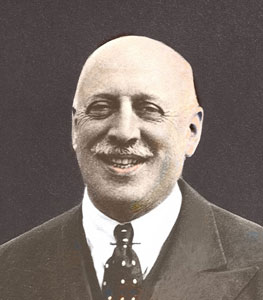
Discover C.H. Douglas’s proposals for economic and social renewal with the Pilgrims of St. Michael in Rougemont, Quebec Canada from Sept. 23 through September 28 2026.
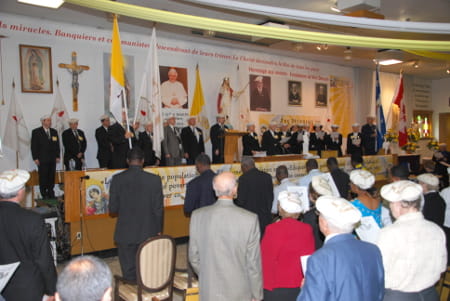
Rougemont Quebec Monthly Meetings
Every 4th Sunday of every month, a monthly meeting is held in Rougemont.

 Subscribe