



The Social Credit year of the movement of the Union of Electors runs from one annual congress to the next — from September to September. The year began. after the congress of Sturgeon Falls (September 3-4-5 of 1960) and ended with the congress held at Levis last September 2-3- 4. On the opening night of the Levis congress, Gerard Mercier, one of the directors of the movement, delivered a report of the twelve months which had just finished. The following report is made up of extracts from his delivery to the assembly.
Our movement devotes itself to fostering in its members a sense of personal responsibility. The past year has amply demonstrated the remarkable progress which has been made in attaining this objective, especially in the effects it had on the politics of the country in regard to the application of social security measures.
The Crediters of the Union of Electors disassociate themselves completely from party politics, whose utter uselessness in the matter of effecting social or political reform has for long been evident to anyone who is willing to see. Our members prefer to play the role, as it were, of a catalyst. This they have found to be the most fruitful way to attain our goals.
We know that in biology, as in chemistry, catalysts play an important role in accelerating a reaction while itself remaining unchanged by the reaction. The Social Crediters formed by our movement, play no part in party politics, take no seats in parliament, have no part in voting laws formulated to correct the erroneous and vicious principles underlying our existing economic and financial system; nor do they help make up the membership of this or that government agency set up to put in force any laws intended to ameliorate the sorry lot of the unfortunate and the desperate?
But the doctrine which they never cease to preach, the testimony which they bear to it, always and everywhere, the pressure which they exert upon public men and upon government officials and others concerned with public welfare, have contributed to create an atmosphere which is more conducive to a humane and more comprehensive approach to the problems and needs of the poor.
The number of those needy ones who have been aided by our people wherever they work, but especially in Quebec and in the poverty-stricken province of New Brunswick, is beyond counting. And each case of a poor person helped by us is more than just another case of a poor man aided. For these instances help to swell the numbers of those who are capable of helping others and so a sort of chain reaction is set on foot and continually fed. This is evident in the fact that wherever we have been able to assist the needy, there, in time, we find governments, especially on the important local level, developing a greater willingness to hear the applications made, a thawing of former coldness so characteristic of most phases of bureaucracy, a readiness to step down and study in detail and take into account, the individual cases of misery among the people. In a word, government officials, under the pressure exerted by our people and those aided by our people, are becoming more and more human.
Mind you, the world of bureaucracy has not been reformed. The work remaining to be done in this field would discourage any but the stoutest hearts. But the way has been shown and a beginning has been made along a road leading to a better world. And this, thanks to the individual initiative shown by the men and women of the Union of Electors in every part of the country in which they live and work.
This is the true spirit of personal responsibility. This is true individual initiative as taught by our movement.
Through the voices of the movement Vers Demain and The Union of Electors through representations, over the radio and in many other ways, we have vigorously attacked the policy of restricting credit, which policy was championed by the ex-governor of the Bank of Canada, James Coyne.
Our movement was one of the first groups to take after this policy of cutting off the life blood of the economy. It is with the greatest satisfaction that we have seen, after us, public men, public groups and even professional economists take their turn in denouncing this policy laid down by Coyne and the chartered banks. Last December, a group of economists created a precedent when they attached their signatures to a letter sent to the Minister of Finance, and later made public, in which they demanded the dismissal of the Bank of Canada's governor Coyne - for poor management of the Bank and of the country's financial system.
Finally, last May, the government, through Minister of Finance Fleming, requested Mr. Coyne to hand in his resignation. The latter did so, but only after he had resisted with public denunciations of the government, and only after the Senate (with a Liberal majority) had criticized the method which the government (with a Conservative majority) had used to get rid of Coyne.
This is the first time that a government has ever demanded the resignation of a central bank's governor. The Diefenbaker government refused to bow to the policy of restricted credit, a policy dictated by international finance and applied here in Canada through the agency of the governor of the Bank of Canada. It was a beneficial act on the part of the government, and Coyne's successor would do well, regardless of what his personal convictions might be, to heed, as governor of the Bank, the policies of the government and the declared opinion of the people.
Those who have any knowledge of the Union of Electors and its activities, are well aware of the campaign which it is waging to have the Bank of Canada issue interest-free credit, instead of producers being obliged to pay two or three times, or even more, the amount necessary to realize private and public production.
Social Crediters of the Union of Electors, working in their own localities, have brought a multitude of municipal councils and school commissions to adopt resolutions supporting this proposition of the movement.
It was with great pleasure that the members of the Union of Electors, on the eve of their annual congress last year at Sturgeon Falls, heard of a resolution adopted by the powerful Union of Municipalities of the Province of Quebec, which resolution appeared in the press of August 30, 1960, as follows:
"That a means be found whereby municipalities might be allowed to borrow money free of interest rates, or, at very low rates of interest."
The idea is taking root. During the course of the past year, also, the Union of Electors has urged the following proposition upon the provincial governments, in the event of the failure of the Bank or the federal government to take any steps:
"That the provincial governments themselves take the initiative in setting up provincial bodies which will utilise the credit of the province (each province within its own jurisdiction) without having to pay exorbitant rates of interest to financiers for permission to make use of this credit. Such provincial organisms might be analogous to the hydro divisions existing in many provinces and might for example be termed, Quebec Credit, Ontario Credit, etc."
The Union of Electors has continued its unalterable opposition to all increases in the income tax or in any other form of taxation. Not only does it oppose any such increases, but it demands the diminution of such taxes until they have finally disappeared completely under the financial reforms proposed by Social Credit with regard to methods of financing, in conjunction with the adjustment of prices.
The Union of Electors wages war upon taxation chiefly through its publications, in its French-language paper, Vers Demain, and its English language monthly, The Union of Electors. It also makes use of circulars, posters and radio broadcasts. We greeted with deep satisfaction the decision of the Hon. Judge Roger Brassard of the Superior Court against the sometimes dictatorial methods employed by the taxation department.
It was also with some satisfaction that we noted the immediate and decisive action taken against agents of the income tax department here in Quebec who were sent into the rectories of parishes to investigate the parish books and verify receipts given to the faithful for charitable contributions such donations being deductible.
This took place during the time our movement was distributing circulars by the tens of thousands, protesting the increase in taxation brought about by the Lesage government. We also took after this act of the government via articles in our publications and in addresses over the radio.
We were pleased to see members of the opposition in the provincial government, heartily support this resistance of ours. Mr. Gabias, the member from Three Rivers, arose in the legislature and read twice the resolution of the Crediters of his constituency against the increase in taxation.
The proposal to increase taxation became law in spite of widespread resistance. But let it be known that the Lesage group lost plenty of feathers in the fray. This was evident during the winter carnival in Quebec City when the people of that community made known their discontent with a float figuring a huge black death's head, inspired by the Social Credit design which bears the words, "Death to taxes!" Mr. Lesage was pared put to make his speech during the festivities dues to the continual heckling by his audience on the subject of increased taxation.
Vers Demain and The Union of Electors have continued to wage a war against the tremendous propaganda and pressure being brought to bear for the fluoridation of public water supplies.
Let it here be noted that our opposition to this procedure is based upon the principle of the liberty of the individual. We say: Let those people who want to take in sodium fluoride, fluoridate their own water in their homes; or take tablets, or mix it in their milk if they will. But in the name of all that is just, let them abstain from forcing everyone else to take it! This is the simple and logical way to handle this question; and it respects the freedom of the individual.
Our campaign against fluoridation has aided others in other parts of the world in this same battle. A reader of Vers Demain who lives in Auburn, Maine, has succeeded in having fluoridation halted in his locality. This reader took to the radio to launch a number of arguments, which he had read in Vers Demain, against the move to fluoridate the public water supplies. The project was defeated by 707 votes to 258.
During the past year, fluoridation has been rejected by a majority of the people in Cincinnati and some twenty other American municipalities.
The Crediters of the Union of Electors have always spoken out against obligatory State hospital insurance. They feel that instead of the State intervening where private insurance companies are quite competent to care for the people, there should be a system of finance which would guarantee to each citizen a revenue which would enable him or her to care for their own essential needs by joining, if they so wish, this or that private insuring group according to their own desire.
However, state obligatory hospital insurance has finally been established throughout Canada, including finally, the province of Quebec. It should be noted that in setting up state hospital insurance in Quebec, the Lesage government did not impose the collection of insurance premiums which would have obliged each family to hand over to the state $52 a year plus $26 for those boys or girls working and earning a salary. The decision to forego premiums in Quebec may in some measure be due to the very considerable opposition raised by our Crediters. Our people worked so vigorously against such practices in the province of New Brunswick where hospital insurance with this practice had been set up, that the Conservative government was toppled. The Liberal party won that election because it promised to abolish the premium if it came into power. And, in fact, the premium was abolished in that province and was never instituted in the province of Quebec.
Our Crediters continue to combat every manifestation of State control or of the State's attempt to control wheresoever the State has no business controlling. It is, for example, presently fighting against State obligatory health insurance which would cover almost the entire field of medicine. The same arguments are used against this attempt at State control as were used against State hospital insurance. Our members are attacking that financial dictatorship which makes it impossible for individuals and individual families to look after their own medical needs; a dictatorship which would add to its own particular form of slavery, that of State dictatorship. We are attacking in similar fashion that move which would centralize education under the pretext that local school commissions are unable to finance the education required by modern standards. How much better it would be to reform finance and make it conform to the exigencies of modern standards and requirements!
We have at various times, and in this report, made mention of pressure exerted upon municipal councils. This is the most basic and important form of political activity which a citizen can exercise. Such activity, in the Union of Electors, always bears fruit if not immediately, then certainly over a period of time.
At Hull, Quebec, last November 8-9, the work of our Crediters was responsible for blocking a referendum whose object was to determine a loan of $500,000 for the purpose of building a new police station. This was the second time that this borrowing had been blocked: Armand Turpin, the mayor (a former Crediter) and four of his councillors finally decided that the only way to get their loan was to petition the provincial government at Quebec city to amend the city charter to permit such monies to be borrowed without the necessity of having to go through a referendum. This is hardly what you would call a democratic procedure. Happily, the mayor and his comrades were turned down flatly by Quebec.
In many other localities our Crediters have succeeded in having large borrowings blocked not because they are opposed to the public works (sometimes badly needed) but because they are opposed to that method of financing them which leads to the citizens of the municipality having to pay three and sometimes four times the amount originally required to carry out the work because of the terms exacted by the lenders, and the rates of interest.
The movement of the Union of Electors has used all the means at its disposal its publications, radio, TV to wage a bitter fight against the ever-mounting tide of Communism.
We have often denounced the Communist propaganda which is preached from the rostrum of the United Nations world pulpit if there ever was one. We have denounced such propaganda emanating from those Soviet bodies attached to the organization of the United Nations. We have denounced Communist propaganda issuing forth from the embassies of Soviet Russia in the capitals of the western nations.
The Union of Electors set forth the menace of Communism in the Belgian Congo, denounced the anti-Belgian propaganda (Communist-inspired) which so many western papers and so many western public men gave themselves over to, thus playing the game which Moscow so cunningly led them into.
The Union of Electors castigated the advances of the University of New Brunswick which had the temerity to invite that enemy of western culture and ideals, Khruschev, to enter its portals to receive an honorary doctor's degree. It lashed out at the government of the province of Quebec (a province which is nominally Catholic) for having stood passively by while such an outrage took place before its face. When the public men and the press of this country and of our neighbour to the south, were praising Fidel Castro to the sky and hailing him as a hero of democracy, the Union of Electors, in Vers Demain and The Union of Electors, was raising it voice in warning and striving to open the eyes of the public to the Communism which lay beneath the revolution which had overthrown the rule of Batista.
The Union of Electors sprang to the attack at the first mention of a suggestion by certain public men that the United Nations should shift its seat from Manhattan to Quebec. Certain public men here, under the pretext that such a move would bring prestige and dollars to our province, were in reality striving to import into this country an organization which has become one of the principal weapons for the achievement of Communist goals, principally through centralization culminating in a world government dominated by Communist countries and countries sympathetic to Communist aims.
The Union of Electors has had occasions, frequently, to denounce the infiltration of Communism into unions, the press and the universities. It is true that on many such occasions it was a question of attacking Socialism or laicism. But it must be remembered that in the vicious struggle for the minds and souls of men which is raging today, the least giving in to such ideologies which deny the primacy of the individual, the primacy of the soul over matter, the existence and supremacy of God, is the first step, and a very long one, towards ultimate, complete surrender to atheistic Communism.
The Union of Electors is likewise in the forefront of the attack against the quasi-Masonry which would laicize our education, centralize our school system and bring it under the single authority of the State, replace the system of school commissions by a single Minister of Education and replace confessional schools by one vast system of neutralist institutions.
"Pèlerins d'un Monde Meilleur!" Pilgrims of a better world. This was the formula of activity adopted by some 2,000 apostles of our movement at a special assembly held in Ville Jacques Cartier, a suburb of Montreal, last April 8-9.
The whole idea of the project was the organisation of large, organised trips into specific districts, one after the other, visiting families, by those of our members who could arrange the time.
Four of these trips were organized prior to the congress at Levis. The results of these "pilgrimages to the sanctuaries" of the nation's homes more than justified this new type of activity. Not only did we experience an enormous increase in the number of readers of our publications, but new apostles of the movement were won over, the movement went directly to the families of the nation, and Social Credit. through the Union of Electors became a living reality to those we visited.
The members of the movement who assisted in these trips had great opportunity to work with the poor, to bring their plight to the attention of the proper authorities, to win through this work new members, and to impress upon local public servants the fact that there was a strong force at work on behalf of the poor and the unfortunate who normally have no voice with which to make known their needs.
The result of these pilgrimages upon our own members was to instill in them a new and grander sense of responsibility, a desire to take the initiative, a complete throwing off of all timidity and shyness to stand bravely up and be counted among those not afraid to speak out against injustice. It further deepened in our members a great sense of the necessity of the spiritual in their lives, a realization that to succeed in the mission of the Union of Electors, every member must work for his fellow men with love, the love of one's neighbor for the love of God; that without a deep and abiding love of God there could exist no true love for our neighbour and hence there could be no complete fulfillment of the destiny of a true and complete Crediter.
The year 1960-61 was very satisfying from a financial point of view also. Revenues from donations and above all from subscriptions, has made it possible for the movement to finance, over and beyond the normal works such as our two publications and the work of our full-time members, weekly broadcasts over 23 radio stations (a total of nearly 1,200 broadcasts). We have also embarked upon a series of television broadcasts with contracts of one year each with three TV station and a fourth coming up.
* * *
The work of the Union of Electors is having its effect far beyond the borders of French-Canada. It is making itself felt across the entire Dominion. We count our friends in Europe, Africa, the lands "down under", and wherever people have become disillusioned with party politics. In Belgium, for example, the formula of the Union of Electors was put forth in a weekly publication, "La Défense Sociale", and was welcomed in many parts of that country.
The Social Credit year which has finished for the Union of Electors, saw our members more devoted, more zealous, more enthusiastic and more numerous than in any preceding year. We can only thank Divine Providence which has guided the movement, favored its work and sent to it so many fine men and women. We thank also, all those whose selfless work has made this year a success.
Gérard MERCIER
Study Session on Economic Democracy And Annual Congress
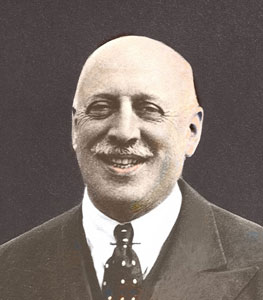
Discover C.H. Douglas’s proposals for economic and social renewal with the Pilgrims of St. Michael in Rougemont, Quebec Canada from Sept. 23 through September 28 2026.
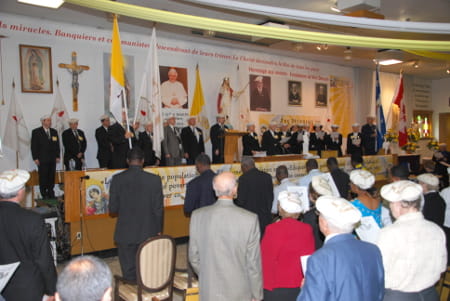
Rougemont Quebec Monthly Meetings
Every 4th Sunday of every month, a monthly meeting is held in Rougemont.

 Subscribe