



The following article is taken from chapters one and two of Mr. Louis Even's work "Sous le Signe de l'Abondance". This book, published by the Institute of Political Action, is an excellent resumé of the philosophy and practice of Social Credit. These two chapters delineate the true principles which should govern the role of society and of society's basic function of providing for the material wants of the individual economics.
Man is a person. He is not simply an animal. All persons live in society. The more persons are perfect, the more life in society is perfect. The society of the Angels is more perfect than that of men. As for the Three Divine Persons, They live in a society of infinite intimacy without there being any confusion of personalities.
Furthermore, this Divine Society is proposed to man as a model of society: "Father, let them be one as we are one".
So men, being persons, also live together in society. Such an association answers a need which springs from the very nature of man.
Life in society meets the requirements of man's nature in two ways:⠀
The human person is in itself a small universe, after the image of God, and receives from its model a tendency to give of itself, to communicate the riches which it possesses.
But the human person is also a universe of needs, temporal as well as spiritual needs. The human person has need of other humans if it is to meet and fill these needs. It has a physical need of others for its conception, its birth, its growth. Intellectually it has need of other human persons; without education what degree of intelligence can beings, born ignorant, attain?
As for its needs and requirements in the spiritual realm, and of its needs for a spiritual society known as the Church, we do not here speak! We are here primarily concerned with the temporal order. We cannot, of course, lose sight entirely of the fact that the temporal order is subordinate to the spiritual, for it is the same human person who is concerned with both the temporal and the spiritual, and the ultimate end of man, which is spiritual, takes priority, over the purely temporal.
Every association exists for a reason; for the attainment of a goal. The goal of every association is a particular common good which varies according to the types of association. But this common good is always the good of all and of each of the members of this association.
And it is precisely because it is the good of each and of all that it is a common good. It is not the good of one member only, nor the good a particular clique or a particular section of the association which is sought. It is the good of each and of all...
Three human persons associate for the undertaking of an enterprise. Peter brings the strength of his muscles. John contributes his initiative and experience. Matthew has capital money. The common good of this little association is the success of this particular enterprise. But the success of this enterprise is not sought for the benefit of Peter alone, nor of John alone, nor of Matthew alone. If any one of the three is going to be excluded from enjoying the benefits of the enterprise, then it is most unlikely that he will voluntarily join the association.
The three have organised the association, have banded together to achieve a result which each of the three desires, but which none, singly and alone, is capable of achieving. Money alone will bring little to Matthew; muscles are of small benefit to Peter; and John's intelligence and experience are not sufficient alone. So the three associate, the enterprise progresses and all three benefit. Each of the three may not necessarily benefit to the same degree, but each gets more out of the association than they would acting alone.
Every association which frustrates its members, or a part of its members, weakens the bonds of the association. There is a tendency for the associates to disassociate. When, in very large societies, the signs of discontent become more and more pronounced, it is precisely because more and more members of the association are being more and more frustrated in their attempts to get their just share of the common good. At such a time if the legislators are wise they will seek and take the necessary means to the end that all members of the society or association will have their share of the common benefits. To attempt to check this discontent by imposing penalties or punishment will only add fuel to the flames.
Furthermore, since human associations are made up of men, of human individuals, that is, of beings which are endowed with liberty and intelligence, the common good being sought should certainly be in conformity with the development of the indivudual's liberty and intelligence. Otherwise it is no longer a common good, it is not a benefit flowing from association, a benefit conformed to the nature of the free and intelligent beings who make up the association.
It might be well to distinguish between ends and means, and above all, to show that the means must always be subordinated to the ends, and not the end to the means.
The end is the goal which is aimed at, the objective pursued.
The means are the procedures, the methods, the acts posited to attain the end.
I wish to make a table. My end, then, is the manufacture of a table. I go and seek some planks of wood. I measure them, saw them, plane them and join them together with screws or nails. Each movement and each act is a means to the end, the end, that is, of manufacturing a table.
It is the end which I have in view, the making of the table, which determines the movements which I will make, the tools I will use. In other words, the end governs the means. The end existed in my mind first even if it was necessary to make certain gestures and employ certain tools in order to realize the end. The end exists before the means, but it is not attained until the means have been used. This may seem very elementary. But it happens frequently enough, that in the conduct of public affairs, the means are mistaken for the end and then there is universal surprise when chaos results.
We need only consider this one example, which we shall come back to later: employment. How many legislators consider work to be the end of production; and through this error they are led to demolish or paralyze whatsoever will give production without the necessity of employing individuals! If they only realized that work (employment) is nothing more than a means to producing goods, they would be quite satisfied with the amount of labour necessary to realize the production desired.
Similarly, is not the government a means of facilitating the pursuit of the common good of the state and the province? In other words, is not the function of the government, then, to serve the individuals who make up the state, or the province? And yet, in practice, do we see the State existing for the people; or is it not rather the individual who is considered to exist for the State?
The same can be said of many existing systems. Systems were established to serve men. Men were not created to serve systems. If, then, a certain system is harmful to the masses of individuals, should we allow the individuals to suffer for the sake of preserving the system, or should we not rather alter the system so that it may serve to the welfare of the mass of individuals?
Another question which has been treated at great length by us: since money has been created to facilitate the production and distribution of goods, should we limit production and distribution to money, or should we not rather establish the amount of money to be conformed to the amount of production and the need for its distribution?
So we see that the error of mistaking means for ends and ends for means, or of subordinating ends to means, is a very grave mistake which can lead to serious and widespread disorder.
The end, then, is the objective, the goal which is sought. But there can be long-range ends and immediate ends, final ends and intermediate ends.
I am in Montreal. An automobile company which employs me, sends me to China to establish business contacts. I begin my voyage by taking the train from Montreal to Vancouver. There I take a steamship which will carry me across the Pacific to Hong-Kong. From HongKong I take advantage of the various forms of local transport for the remainder of the trip.
When I get on the train at Montreal it is to go to Vancouver. Getting to Vancouver is not the ultimate end of the trip, but it is the goal of my journey by railroad.
Reaching Vancouver, then, is an intermediate end. It is a chosen means towards the ultimate end of my voyage. But if it is only a means with respect to the final end of the trip, nevertheless it is the end sought for by the trip on the train. If this intermediate end is not achieved, the ultimate end of the voyage establishing commercial relations in China will never be attained.
The intermediate ends have their definite fields. I must not seek a train to carry me from Vancouver to Hong-Kong. Nor must I look for a steamship to carry me from Montreal to Vancouver.
So all the intermediate ends must be properly ordered towards the ultimate end. If I take the train for Quebec City, I shall be adopting the perfect means for attaining the particular end of getting to Quebec City. But I'll certainly never, achieve the ultimate end: establishing business contacts in China.
We shall see shortly why all these distinctions are so elementary. They may seem very simple and clear in the present example; a business trip to China. But when it comes to considering and treating of economic ends, these intermediate ends, these means, are often ignored and the result can be catastrophe.
When we speak of economy, many tend to think of saving. Are we not often exhorted thus: Economize your money, your strength? And in such a case it is quite clear that what is meant is: Save, don't spend.
All the same, we often hear people make the following reflection: Here is an economy which is not economic! Which proves that the people, without being deeply schooled in the vocabulary of the special field of economics, have already come to attach a wider significance to the word economy.
Likewise, the little girls in the primary school, do they not begin the study of domestic economy? From domestic economy to political economy is only a matter of degree.
There are two Greek roots to the word: Oikia, house; nomos, order.
So we have the proper order in the house; the good use of the things of the household.
Domestic economy: the good conduct of affairs in the domestic household.
Political economy: the good and orderly conduct of affairs in that great common household, the nation.
But why "good conduct"? When can we say that the conduct of affairs in the little household or the great household, in the family or the nation, is "good"? When it achieves its end. A thing is good when it achieves the ends for which it was instituted.
Man devotes himself to a variety of activities and the pursuit of variety of ends, in different spheres and different orders.
There, are for example, the moral activities of a man, which concern his ultimate end.
Then there are cultural activities which concern his intellectual development, the ornamentation of his mind, the formation of his character.
In his relations to the general good of society, man devotes himself to social activities.
Economic activities relate to temporal wealth. In economic activities man pursues the satisfaction of his temporal needs.
Temporal needs of men are those which accompany him from the cradle to the tomb. There are those needs which are essential and there are those which are less necessary.
Hunger, thirst, the elements, fatigue, sickness, ignorance, create for man the need to eat, drink, clothe himself, house himself, warm himself, rest, care for himself medically and instruct himself.
Man's needs are a vast multitude.
Food, drink, clothing, wood, coal, water, a bed, medicaments, instruction by teachers, books - so many goods needed to come to the fulfillment of his wants. Effect a conjunction between goods and needs - that is the goal, the end of our economic life.
If the economic order can achieve this, then it has achieved its end. If the economic order fails to achieve this end, or does so but imperfectly, then it misses its end or meets it but imperfectly.
To join goods to needs. To make them meet. Not merely place them face to face.
In plain terms, we can say that the economy is good when it attains its end, when it is so well ordered that food enters the stomachs of those who are hungry; when there is clothing to cover the backs of those who are cold; when there are shoes to cover naked feet; when there is a good fire to heat the house in the winter; when the sick can be visited by the doctor; when students and teachers are able to get together.
This is the domain of the economy. It is a temporal domain. And the economy has its own, very well defined end to satisfy the temporal needs of men. When a man can eat if he is hungry; is this his ultimate end? Not at all. It is but a means whereby he is better able to attain his ultimate end.
But if the economic end is only a means if considered in the light of man's ultimate end, if it is only an intermediate end in the general plan, it is nevertheless, an end in its own right with respect to the economy itself.
And when economy attains this its proper end, when it permits goods to come into conjunction with needs, it is perfect. We cannot ask more of it. But we can ask that much of it. And it is up to the economic order to achieve that end.
We may not ask the economic to attain a moral end. Nor may we ask the moral to attain an economic end. That would be a disorder comparable to seeking to go to Vancouver from Montreal in a Pacific liner, or go from New York to Le Havre in a railway train.
A man does not satisfy his physical hunger by reading his Bible, but by partaking of food. That is right order. This is the way the Creator wanted it. And it cannot be otherwise except by a miracle, by deviating from the established order. The Creator alone has the right to depart from this order. So we see that to satisfy the hunger of a man, it is the economic order which must act, not the moral.
A man with a sullied conscience cannot purify it by sitting down to a hearty meal or by passing a few hours in a rousing drinking bout. He must have recourse to the spiritual. It is for religion to act here. For a moral activity is required, not one that is economic.
Of course there is no question but that the moral should accompany man into every domain of activity, including the economic. But not to replace, for example, the economic. It can be a guide in the choice of objectives. It can watch over the legitimacy of means. But it cannot accomplish that which it is the proper function of the economic to achieve.
When the economic, then, does not achieve its end, when goods remain on store shelves or unrealised, and the needs remain unsatisfied in the homes, we must seek for the cause of this failure in the economic order.
Evidently we shall place the blame upon those who disorganise the economic order, or who having the duty of seeing to the proper ordering of this field, permit it to fall into anarchy. These people do not accomplish their duty, and in this respect they certainly affect their conscience and thus fall under the sanction of the moral order.
We might say that, even if the two are distinct, the moral and the economic, nonetheless it can happen that the two will concern the same man at the same time, inasmuch as that if one order is allowed to lapse into disorder, the other order, the moral, will likewise suffer. The man has a moral obligation to watch over the economic order, to see to it that the temporal social attains its proper end.
Even if the economic is responsible only for the satisfaction of the temporal needs of men, nevertheless the importance of an economic order in good shape has often been stressed by those who have the care of souls in their charge. For it so happens that there is a minimum of temporal goods necessary for the practice of virtue.
The Pope, Benedict XV, has written that, "it is in the field of economics that the salvation of souls is in danger".
And Pope Pius XI:
"It is exact to say that such, at the present time, are the conditions of the economic and social life that a very considerable number of men are finding the greatest difficulty in leading that life which alone is necessary for their salvation". (Quadragesimo Anno).
* * *
Man has been placed by this Creator on earth, and it is on earth that he has the duty of demanding the satisfaction of his nature's needs. He has no right to shorten his life by depriving himself of those goods which the Creator has placed on the earth for him.
To make the earth, the things earthly, serve all the temporal needs of men, this is the specific and proper end of the economic activities of men; the adapting of goods to needs.
Since men are beings which, by their nature, live in society, an economy which is truly human must be social. It must serve all the members of society.
An economic organisation which would permit the adaptation of earthly goods to the satisfaction of the needs of a few only, leaving the others lacking these goods, would certainly not be social, and hence would not be human.
If certain members of society are practically forbidden a share in the advantages of life in society; if others permit them, most reluctantly, the very minimum of those necessaries only to prevent them from rising up in rebellion, treating them as if they were enemies to be appeased instead of members of society with a strict right to share in these goods, then such an economic and social order is not a human order but a monstrous order. It is an economy of wolves.
In the jungle, there is a constant battle to live. The strong survive and the weak perish. Such a law of the jungle is inadmissible among men who are social and intelligent beings. The struggle to live among men should be nothing more than a collective struggle on the part of men against common enemies, against the wild beasts of the forest, against ignorance, against the adverse elements. An economy which is truly human should be based upon co-operation in the struggle to live.
On the other hand, if human beings are social beings they are also free beings. And if a human economy must insure the satisfaction of the essential needs of all men, it should do this without in any way hindering the free development of the individual person.
The economy must not in any way violate sociability; nor must it violate true liberty. A society of men is not a herd. An economy which posits regimentation as a condition for the right to live is it not a human economy, for it goes against the very nature of man.
In the choice, then, of those means for the redressing of a disordered economy, we must choose those which most respect the liberty of the human individual.
If the end of the economy is a temporal end, it is also a social end and should be attained in a social manner. If it should satisfy the temporal needs of man it should satisfy the temporal needs of ALL men.
And this principle should apply to every rank of the social hierarchy, according to the jurisdiction pertaining in each.
If it is question of the family, the domestic economy must seek to satisfy the needs of all the members of the family.
If we pass on to the provincial economy, it should seek, within provincial jurisdiction, to satisfy the temporal needs of all who come under provincial jurisdiction.
And the same pertains in the federal economy, within the jurisdiction of the federal government. Likewise for the global economy. It is absolutely necessary that there exist some organization for liason between the nations; an organism which, while respecting the autonomy of independent nations, will see to it that the economy of the world is directed towards the satisfaction of the essential needs of all men throughout the world through the co-operation of all nations in a just and human economy. The earth was created for every race of mankind.
But such an organization, if it is a good and efficient organism, will see to it that the satisfaction of the temporal needs of ALL will be effected within those grades of the social hierarchy which are most intimate to the individual units of society. Thus would the independence and liberty of all organisms be respected.
Instead of substituting itself for the family in providing help to the family, the State would be wiser and more humane to legislate and order the economy in such a way that the family would be able itself to look to the satisfaction of its needs itself, thus providing for the wants of each member of the family while maintaining the families rightful autonomy.
Instead of putting itself in the place of the province, on the grounds that the provincial treasury is dry and incapable of looking after provincial needs, the federal government would do better to organise the financial system in such a way that the provinces would have the finance necessary to meet their real needs.
This is the philosophy of Social Credit. It is also the philosophy of corporatism. And at the same time, it is a philosophy most in conformity with true democracy.
Social Credit seeks decentralisation in finance. Corporatism decentralizes in the field of jurisdiction, while still maintaining the hierarchy conformable to good order.
Centralization and statism are the negation of democracy.
The end of the economic, then, is the satisfaction of the needs of ALL consumers. The end is consumption. Production is only a means, To halt the economy of production is to cripple the economy. To ask the economy to satisfy the wants of only a segment of society when the market is gorged with goods is something unreasonable and inhuman.
To abandon the economy to mere chance, to the play of forces which are often in conflict, is to deliver the world to the law of tooth and claw.
Study Session on Economic Democracy And Annual Congress
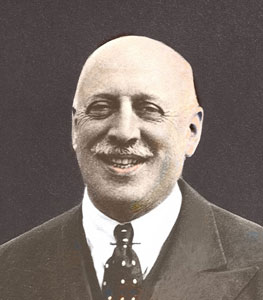
Discover C.H. Douglas’s proposals for economic and social renewal with the Pilgrims of St. Michael in Rougemont, Quebec Canada from Sept. 23 through September 28 2026.
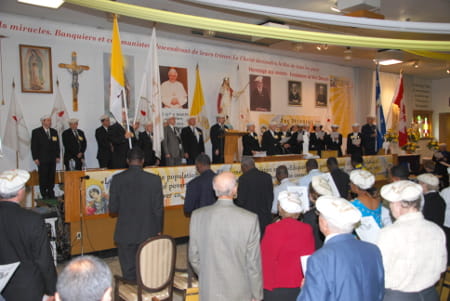
Rougemont Quebec Monthly Meetings
Every 4th Sunday of every month, a monthly meeting is held in Rougemont.

 Subscribe