



"Civilized man is no better than primitive man, he is only more civilized". What is meant by this is that, although civilized man may not be much more intelligent than primitive man and is probably much more helpless, he has the advantages of a cultural inheritance, i.e., the advantages of thousands of years of gathered experience, "laid on" as it was, like plumbing in his house: This should ensure for him a vastly higher standard of living; but in return for this he becomes more dependent on "society" for the means of existence.
Our cultural inheritance manifested itself in what was called the "British way of life", or the "Australian way of life"; it represented the slow organic growth of a culture which has been adapted to the country, the climate, and the people. Our cultural inheritance hands on to each generation a vast treasure-house of knowledge, especially that particular kind of knowledge which gives men power over their environment.
Since our cultural inheritance represents the practical results of thousands of years of human activity, any discussion of it can only hope to cover small fragments of the whole. Further, a discussion limited to one institution alone, however scientific it may be, must give a false impression unless it is interrelated with those institutions which decide its policy.
If, for example, we select what appears to be one of the simpler aspects of our cultural inheritance, the use and development of tools - the discussion does not get us beyond the aspect of a new set of toys for the amusement of technicians, unless we examine very carefully why we make tools, and for what purpose we use them. According to all the political and financial leaders on both sides of the Iron Curtain, the purpose of tools (our industrial equipment) is to ensure
(1) Full Employment, ie, that labour-saving tools shall provide no leisure; and
(2) that any increase of production shall be exported, i.e., that labour-saving tools shall produce no profit for the ordinary man, his family or his country.
It should be noticed how violent is the contrast between the official policy and the policy of private individuals. In fact this official policy is so contrary to all human aspirations, so contrary to everything which our cultural inheritance was designed to give us, that it can only be imposed by brute force and fraud.
Throughout history, ambitious men have caught a glimpse of the tremendous power which lay in that vast treasure-house of knowledge which we call our cultural inheritance, and they have seen in the institutions of the group the perfect instrument for exercising absolute power over their fellow-men. History is the story of how society has tried to protect itself against such men...
James GUTHRIE, from
The survival of the unfittest by unnatural selection,
in The Social Crediter, May 30/59
"The purpose of Social Credit as a system is to free individual initiative".
B. W. Monahan. Introduction to Social Credit, p. 113
Study Session on Economic Democracy And Annual Congress
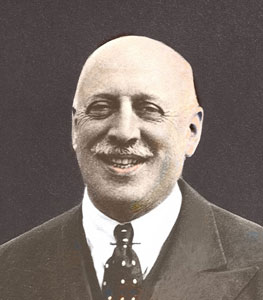
Discover C.H. Douglas’s proposals for economic and social renewal with the Pilgrims of St. Michael in Rougemont, Quebec Canada from Sept. 23 through September 28 2026.
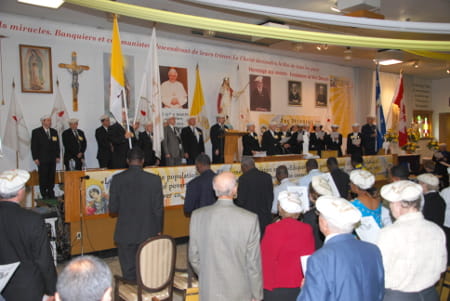
Rougemont Quebec Monthly Meetings
Every 4th Sunday of every month, a monthly meeting is held in Rougemont.

 Subscribe