



The new socialist party - lacking a name as yet - is working to arrange for a system of checkoffs, whereby each union member would contribute five cents a month to the support of the New Party. This does not mean that every segment of the union body in Canada will enter into such an agreement. But since most of the unions are affiliated with the powerful and large Canadian Labour Congress, whose executive, under president Claude Jodoin, has pledged support to the New Party, it will be surprising if the majority of unions do not agree to enter into such a pact.
"Checkoff" simply means that the company, within which a union works, collects from the each employee's pay, that amount of money stipulated by the union. It is a withholding at source, much after the fashion in which the government takes a portion of your income tax each pay.
The checkoff first began when the unions were first organizing. They demanded that every employee be obliged to contribute to the union fund. Justice Ivan Rand decided that such a checkoff would be granted, but that no employee could be obliged to join the union. The theory behind this was that everyone would contribute to pay for the benefits which the union would obtain for everyone non-union employee and union employee.
This system is now being talked of as a means of building up the "war chest" of the new Socialist party. Through this system, every union member would have five cents a month deducted from his pay, this money to go to the support of the new party.
Leaving aside any discussion at the moment as to the justice and morality of the union dues checkoff, let us consider the checkoff of union members' pay to support this political party.
Can any individual be obliged to contribute, against his will, to the support of a party to whose principles, perhaps, he is unalterably opposed? The answer is a very simple, no!
Supposing it is left to each individual union member to decide whether or not he wants his pay to be subjected to such a checkoff? Supposing he has the right to "contract out" of the New Party and to refuse to allow his money to be used for the New Party? This might sound fair enough on the surface. But when you consider that each such member will be known to the union authorities, it is not difficult to understand that certain officials would not scruple to use persecution to bring such recalcitrant members into line. It's been done before.
In effect, it is well known that any member which belongs to a large, powerful and aggressive organization has very little chance of opposing successfully the wishes of that group's leaders.
Such a pretence of leaving it up to the individual member to decide whether or not he wants to pay, is a flimsy pretext and nothing more. The checkoff is undemocratic and unjust.
If the union decides that they will support this new Socialist party with money from union members, then such contributions can only be solicited in the ordinary manner, and collected in such a fashion that the rights and privileges of the member, in the union or the company cannot possibly be prejudiced by his refusing to contribute.
The fact that the unions have decided to support this new Socialist party only serves to bear out what this paper has long maintained that under present leadership, the unions are Socialist; thus they are well along the road laid out by the leaders of Communist international policy.
The individual is finite; the family, potentially immortal.
The Social Crediter, 18/12/61
Study Session on Economic Democracy And Annual Congress
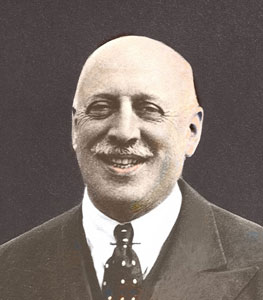
Discover C.H. Douglas’s proposals for economic and social renewal with the Pilgrims of St. Michael in Rougemont, Quebec Canada from Sept. 23 through September 28 2026.
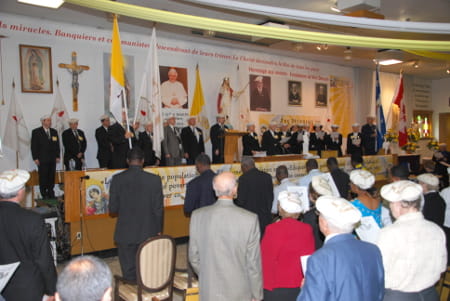
Rougemont Quebec Monthly Meetings
Every 4th Sunday of every month, a monthly meeting is held in Rougemont.

 Subscribe