



State hospital insurance having become a fact, the hue and cry is now for complete and obligatory State health insurance.
State hospital insurance was instituted, not because the hospitals were incompetent or gave poor service, but because hospital expenses were too high for a great number of people. Or to put it in other words, because too many people were unable, themselves, to pay their own hospital bills. Thus the problem in the matter of hospitalisation was one which lay entirely in the field of finance.
State hospital insurance does not provide free hospitalisation. This was the happy illusion under which many supporters of the project labored. It makes everyone pay those who are not in the hospital as well as those who are - for those who are hospitalised. This is what happened to those who were enrolled in private hospital insurance companies before the advent of obligatory State hospital insurance. The Blue Cross, for example, pays its insured clients according to the class of hospitalisation which they have chosen. It pays with the money which it has collected as insurance premiums from all those insured by it, the perpetually healthy as well as those who are stricken by illness. But with private insurance companies, the individual has the right to enter or not to enter into such insurance schemes. He may choose the company he wishes and the range of services he wishes or feels he can afford.
The promoters of obligatory State hospital insurance base their arguments for such a scheme upon the fact that many people are incapable of paying such insurance premiums, or are not provident enough to devote a portion of their revenues to private hospital insurance plans. The solution to this problem would have been, first, to see to it that everyone had a sufficient revenue, if not to meet actual hospital expenses, at least to enroll in some form of private insurance; secondly, where necessary, to institute a program for developing the sense of responsibility in individual citizens. Instead of taking such a direct and logical step, recourse has been had to State collectivism, where the State reigns supreme and the individual is little more than a number in some bureaucrat's filing cabinet.
State Hospital insurance has not in any way reduced hospital costs. It has simply contrived to have them paid in another fashion that is, through the government via taxation of the people.
State hospital insurance in no way adds anything to the efficiency or smooth operation of hospitals. It does change the personnel of the hospital into government employees. It provides the opening through which the government is able to stick its nose into hospital affairs. And following close behind the government nose comes the heavy hand of the government. And finally the hospital becomes just another department of State bureaucracy.
Complete State health insurance, which is envisaged by the promoters of State hospital insurance, would mean that the entire field of medicine would come under the heavy hand of the State. Every doctor would inevitably become a government employee, like a Customs clerk, or a tax collector. We would have a medicine which would be collectivized and dehumanized.
At a congress of neurologists which was held not long ago in Montreal, a famous French doctor, who has visited many countries and has had first-hand experience of various stages of social security in the field of medicine, delivered himself of a number of observations, some of which were reported in the press. Here are some that were carried by the Montreal daily, La Presse, on June 15:
Collectivised medicine is a fearful thing. Medicine should remain something which pertains to the individual. That medicine should be something that rises from the community, from collective action and we have in mind here those vast fields which work against epidemics and against industrial sicknesses is something of prime importance. But this great social benefit must not be confused with collectivized medicine, properly so-called, which is not preventive but curative and which is expressed by the medical act and which of necessity is the act of an individual. The dehumanization of medicine, with its great masses of people in which patient and doctor alike are nothing more than numbers, gives rise to a deplorable species of medicine. Mutual confidence between patient and doctor is a part of the medical act.
And with reference to collectivised State medicine, Doctor Castaigne finds the system of State health insurance in England at once, "aberrant and stupid". At the beginning of the year each English citizen hands in his ticket to the doctor he chooses, and the doctor, who has not the right to refuse this or that patient, will be paid according to the number of tickets he receives. Faced with a multitude of cases, and not being paid any more for the graver cases than for those less severe, he cannot give to each the attention and care which he should. As for the patient, if he is not satisfied with the treatment he receives from the doctor he has chosen, he is nevertheless obliged to keep this doctor for the entire year.
In Germany, according to Doctor Castaigne, the system of obligatory State health insurance is deplorable. And in Italy, they are in the process of setting up a system which is no better.
As was the case in hospital insurance, the whole problem is financial: the inability of many people to pay the rising costs of medical care, or even to pay for insurance with private companies has given rise to the cry for State health insurance. This will not reduce the costs of medical care; it will simply insure that such costs are paid for through taxation. Such State insurance will inevitably lead to a medicine which is "collectivized and dehumanized."
All such forms of obligatory State insurance are set up to correct the faults of a defective financial system. For the financial system fails to set up a balance between total purchasing power and the totality of prices for goods and services, thus preventing each individual from taking upon himself and meeting adequately, his and his family's responsibilities.
If the ideals and principles of Social Credit were realized and applied to society, this march towards Socialism, towards a society of men and women who, individually, are nothing more than numbers in a government dossier, this progress towards complete and all-powerful bureaucracy, would be halted and reversed.
Study Session on Economic Democracy And Annual Congress
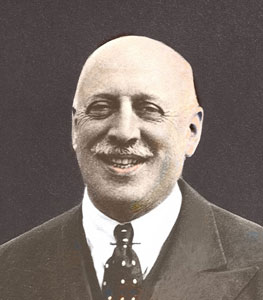
Discover C.H. Douglas’s proposals for economic and social renewal with the Pilgrims of St. Michael in Rougemont, Quebec Canada from Sept. 23 through September 28 2026.
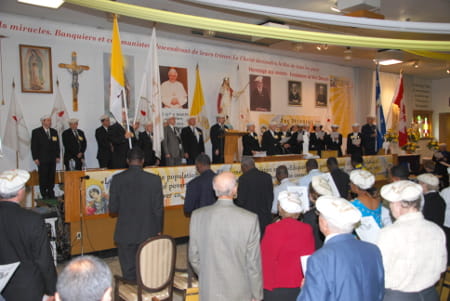
Rougemont Quebec Monthly Meetings
Every 4th Sunday of every month, a monthly meeting is held in Rougemont.

 Subscribe