



"U.N. controls Congo Dag tells Kasavubu". This was the heading over a report which appeared in the Montreal Gazette, March 10, 1961. The report continues:
Secretary General Dag Hammarskjold notified Congo President Joseph Kasavubu that the United Nations no longer considers itself dependent on his will or the invitation of Congolese authorities to operate in that African country, it was learned Thursday... Whether Mr. Kasavubu liked it or not, the United Nations is in the Congo now because the Congo constitutes a threat to international peace."
So the United Nations executive comes out quite bluntly and says that it has the power to invade an independent country with its armed forces whenever it, the U.N. may judge that "international peace" is threatened. It no longer needs an invitation from that country's authorities (U.N. armed forces first went into the Congo at the invitation of the then premier, Patrice Lumumba).
We now have the United Nations instituting a police force with unlimited power. For such a force is no longer merely a force available for any country which needs armed help in repelling invasion or restoring order. It is a force of aggression which can be used whenever the U.N. decides that international peace is being threatened.
How flimsy such an excuse for the invasion of another country can be, is demonstrated by the present situation in the Congo. When Congolese tribesmen and mutinous soldiers were running wild and murdering white (Belgian) men and raping white (Belgian) women, the United Nation troops stood idly by. Now that President Kasavubu (an opponent of the Communists) has finally managed to bring dissident leaders together for a conference which might lead to some semblance of peace in this country, the United Nations suddenly decides that the Congo now "constitutes a threat to international peace". Even in the most turbulent days of the Congo republic, it is difficult to see how this completely disorganized land could have constituted a threat to other lands. The attempt of the Communists to seize control of the vital positions in the Congo had early been thwarted by Colonel Mobutu. Where then was the danger to international peace to come from?
Obviously the real threat to the independence of nations comes from the United Nations itself.
"(The Security Council) may take such action by air, sea or land forces as may be necessary to maintain or restore international peace and security. Such action may include demonstrations, blockade and other operations by air, sea, or land forces of members of the United Nations."
Article 42, United Nations Charter
Note well, that it is the Security Council, not the Assembly, which makes the decision. These are the great powers. Note also the sentence regarding the type of action, "... and other operations". Practically the whole range of military action is left to these forces.
And so the march towards one great world dictatorship, with one gigantic, omnipotent world police force, continues. What so many men of foresight have been crying out for so long, is finally becoming clear: the United Nations is the instrument whereby the independence of sovereign states is being taken from them to be replaced by the police force of a supranational body, the Security Council! Centralization within nations, centralization among nations! Behold, how the Communist plan for eventual world domination is gradually coming to fulfilment!
Study Session on Economic Democracy And Annual Congress
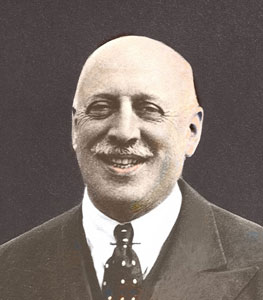
Discover C.H. Douglas’s proposals for economic and social renewal with the Pilgrims of St. Michael in Rougemont, Quebec Canada from Sept. 23 through September 28 2026.
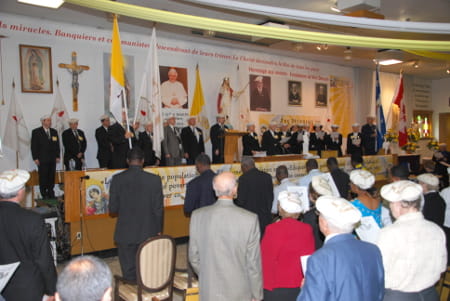
Rougemont Quebec Monthly Meetings
Every 4th Sunday of every month, a monthly meeting is held in Rougemont.

 Subscribe