



Those who work for centralization and those who help spread their doctrine, whether consciously or otherwise, are fond of repeating that the present drift of mankind is towards federation, towards centralization; it is towards the disappearance of small groups or, at least, towards the diminution of their sovereignty. And these apostles of centralization hasten to add that this drift is in the best interests of humanity.
When these gentlemen speak of federation they are really thinking of fusion. They want to federate nations by causing nations to disappear; in our country they would like to federate the provinces by, to all effects, suppressing them, by mixing them together in a giant mortar bowl in such a way that they would end up being nothing more than so many geographical divisions like the departments in France.
It is false to say that humanity tends towards centralization, if by humanity you mean men, individual men. This tendency exists only on the part of certain individuals who would very much like to exercise supreme power over the "masses". In fact, this tendency is something which is being imposed, or stealthily foisted upon men.
The best proof that this tendency is not natural to men, to individual men globally considered, is that, in spite of all the resources which world centralizers possess finance, the press, the help of central governments they have not yet succeeded in imposing complete centralization upon men. They have been working systematically and vigorously towards this end for more than forty years. They have fomented wars and created crises to set up those conditions which would throw men into the hands of a central state, and still they have not succeeded.
And they have failed precisely because centralization goes against the grain of the individual. The individual wants no part of it. On the contrary, he sincerely wants to be master of his own life. The further a government is from the individual (that is, the more central it is) the less chance the individual has of making his voice heard. Such a condition is diametrically opposed to a flourishing democracy.
* * *
The Social Crediters - all true Social Crediters - resist this movement towards centralization. They resist it just as they resist all that which goes contrary to the interests of the individual, as an individual; as they resist the attempts of governments and institutions to lay hands upon the individual. That is why, for example, they combat conscription. Such resistance may appear, at times, like a fighting retreat, especially when few people engage in it while the mass of the people remain passive and apathetic with a "Well, what can I do about it?" air.
But it must never be forgotten that those who resist bear within their hearts the most ardent and intimate aspirations of the individual, not only for themselves but for their fellow men. And while liberty has often been beaten to its knees it has always struggled to its feet and resumed the fight. History bears witness to this fact. There have been great and bloody tyrants who have grasped in their hands the most awesome powers for the centralization of entire nations. They have been defied. They have made their victims in an unnumbered multitude. But they in turn have become victims of their own lust for power and have fallen before men would not give up the contest to be free. Each act of resistance strengthens the one resisting and creates a new obstacle in the path of the centralizers. Each act of resistance encourages others to acts of resistance. So each act of resistance develops the resistance of the one resisting and provokes others to resist.
But the fight is a never-ending one. For there are always those who are hungry for power over others. And a people which sleeps is a people easily put in chains.
* * *
The outstanding characteristic of Social Credit teaching is the pursuit of liberty for the individual; liberty to grow and develop by the means which the individual himself will choose. Major Douglas, the founder of the Social Credit school, has said that Social Credit is a new strategy in the great and ancient struggle between the will to domination of the tyrant and the will to liberty of the individual.
If Social Credit places such emphasis upon the return of the control of credit into the hands of the members of society, it is because finance has become the prime weapon for domination. Those centralisers who have had the greatest success are those who have been working for financial centralization. They hold almost all the civilized and advanced nations in the palms of their hands through the centralization of finance. Where finance is concerned, everyone is obliged to keep in step. Everyone is plunged into economic crises at the same time without there being any justification whatsoever for such crises.
But now even the centralizers of finance are beginning to find opposition a little to begin with, but a "little" which slowly but surely is, growing into something big and formidable, The tyranny of the financiers is being more and more unmasked to the eyes of the people and is becoming more and more understood by individuals who previously thought finance to be some holy mystery which must not be probed by lay minds. Finance is finding it more and more necessary to go to governments for help in combatting this resistance, this opposition from the individuals who make up society. The centralizers of finance now seek a world government which would arrange the private lives of men by legislation, just as these dictators of finance dominate the economic lives of men through the control of credit and the threat of hunger.
Social Crediters no more admit political centralization than they admit though they may be obliged to suffer, financial centralization.
* * *
Party politics, the bolstering of old or the formation of new parties, is futile when it comes to resisting centralization. Political parties seek power. But power corrupts. The more power that is had, the more power is sought. The provinces which speak out the most loudly against federal centralization, are the province which at home exercise the greatest centralization.
The battle against centralization can only be waged effectively by those who are not seeking power for themselves. Hence it must be fought by citizens who are not seeking power for themselves alone. The only outstanding group who are waging the fight against centralization under this condition are the true Social Crediters and their number is greatest in the Union of Electors.
Study Session on Economic Democracy And Annual Congress
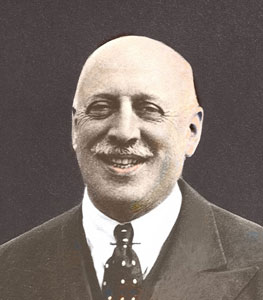
Discover C.H. Douglas’s proposals for economic and social renewal with the Pilgrims of St. Michael in Rougemont, Quebec Canada from Sept. 23 through September 28 2026.
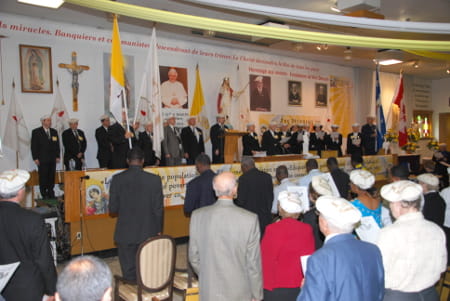
Rougemont Quebec Monthly Meetings
Every 4th Sunday of every month, a monthly meeting is held in Rougemont.

 Subscribe