

The following letter was sent to the Toronto Globe and Mail.
Dear Sir:
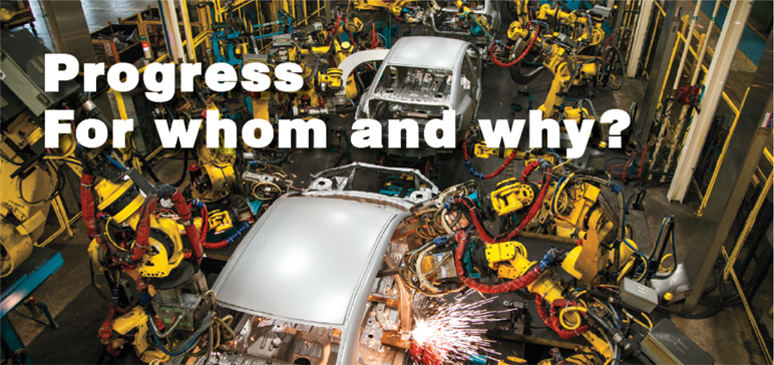
With reference to the impact of Automation on the unemployment problem, it appears to me that Mr, W. T. House is off on the wrong track when he concludes that "new inventions plus the change in the money system" produce new jobs. Why look for new jobs when the whole purpose of Automation is to do away with as much work as possible, especially work requiring manpower. For Donkey's years inventors, engineers and mechanics have been doing their utmost to do men out of jobs, and rightly so. Long before 1929, they had succeeded. How is it, then, that these inventions and improvements did not bring to mankind the benefits they were intended to bring? If it is found that two men in a factory can produce what formerly it took fifty men to produce, surely the sane thing to do is to send forty-eight of the men home with enough money for them to enjoy their leisure or do in their own time and to their own satisfaction whatever work they choose until such time as it is again their turn to do the chores.
It is a Leisure State, or rather a state of leisure, that produces the Newtons and Shakespeares of this world. And it is where people are free and economically independent that mercy, charity, self-development, generosity, responsibility and other Christian virtues come forth and grow. With an abundant life available almost, one might say, without the use of Labour, why should anyone want to bind man down to a kind of Commercial Slavery in which he would not know, and have very little chance of finding out, how very wonderful Life on this Earth can be.
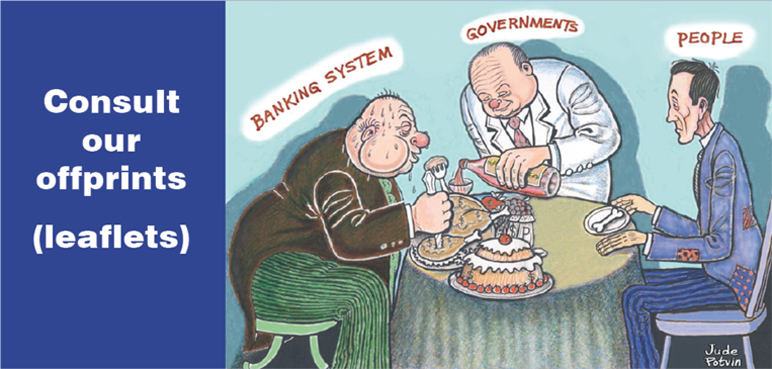
Your correspondent refers to the crash of 1929. No doubt you will recall what followed. Consumers were walking past the stores, longing to consume the goods in the windows, but powerless to do so because, before they could consume, they required money, they required jobs. Inside the stores were the retailers longing to hand over for consumption not only the goods on display but also the goods piled up on the counters, in the back rooms, in the basement and in the attic. Behind the stores were the factories standing idle, the owners of which were longing to employ more people and produce more goods for consumption. It was, of course, Under-Consumption. What prevented all these individuals from co-operating to their mutual advantage and obtaining what they all longed for? What was missing? Money, figures in a book — tickets. Something made with no effort and at comparatively no cost was all that was necessary to stop the sabotage and enable millions to resume at least a semblance of Life. Yet, the purchasing power that belonged to these people and would have enabled them to buy their own products was not forthcoming. Why? Instead, the goods were sabotaged. Again, Why?
If Labour were to demand Leisure and the money with which to enjoy it, they would stand a chance of benefitting not only themselves but also the rest of mankind, and many outside of Labour circles would rally to their support. So long as they continue to demand work, they will be given plenty to do. Your correspondent was partly right when he claimed the money system was responsible for many new jobs, but he might have added that most of those jobs were at their worst terribly destructive and at their best useless or wasteful.
To summarize as briefly as possible: Without taking anything away from the "haves" there was, in 1939, plenty for the "have nots" to live in comfort, and this was available with comparatively little effort. Yet in spite of this situation both the "haves" and the "have nots" allowed themselves to be put through a depression and then tied up in a work-state straightjacket. That was madness. This time it will be madness running wild, and signs of the approach of such a state have been evident for some time.
Yours truly,
K. L. M.
Study Session on Economic Democracy And Annual Congress
Discover C.H. Douglas’s proposals for economic and social renewal with the Pilgrims of St. Michael in Rougemont, Quebec Canada from Sept. 23 through September 28 2026.
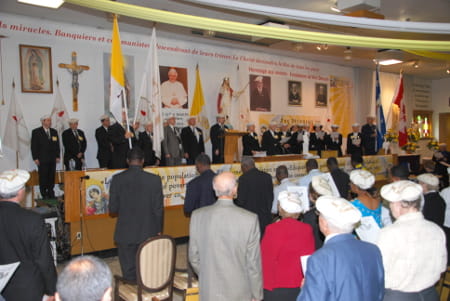
Rougemont Quebec Monthly Meetings
Every 4th Sunday of every month, a monthly meeting is held in Rougemont.
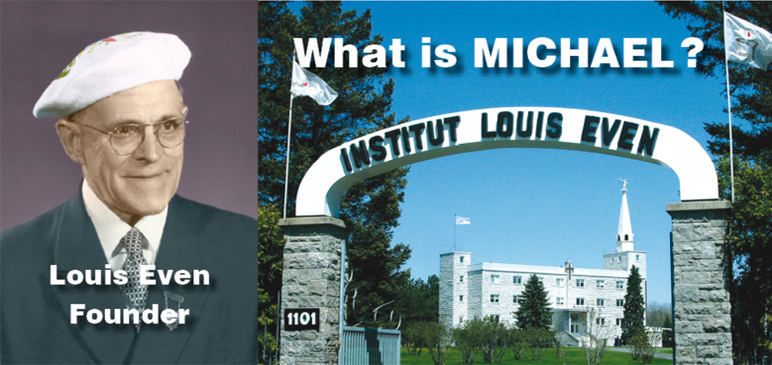
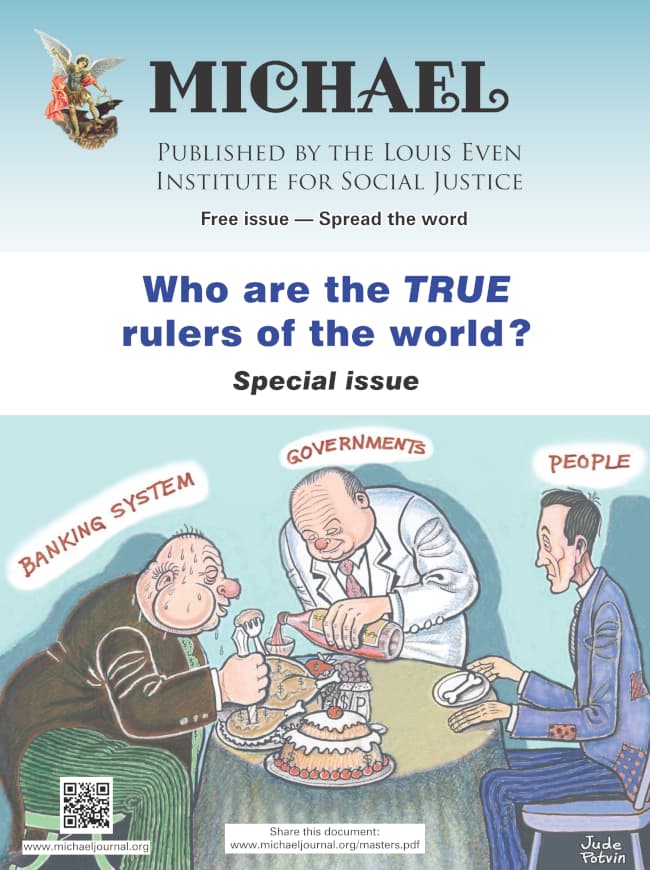 In this special issue of the journal, MICHAEL, the reader will discover who are the true rulers of the world. We discuss that the current monetary system is a mechanism to control populations. The reader will come to understand that "crises" are created and that when governments attempt to get out of the grip of financial tyranny wars are waged.
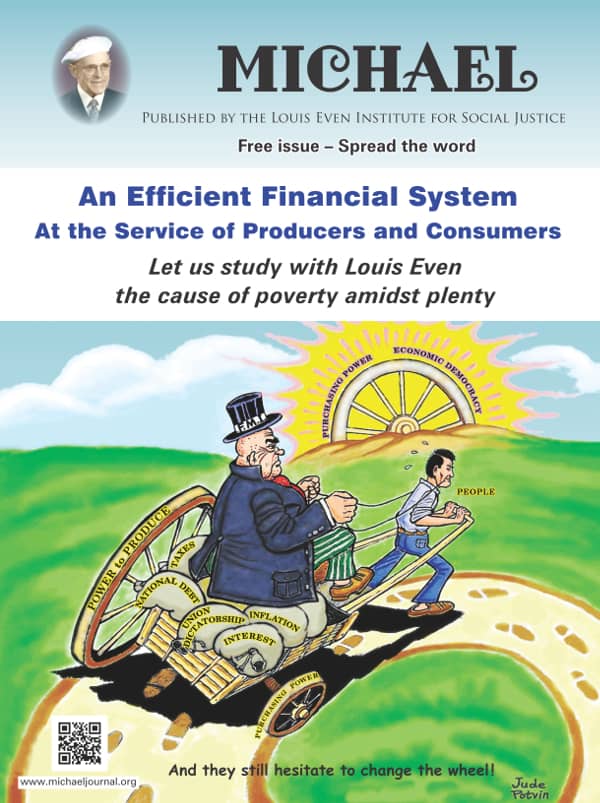 An Efficient Financial System, written by Louis Even, is for the reader who has some understanding of the Douglas Social Credit monetary reform principles. Technical aspects and applications are discussed in short chapters dedicated to the three propositions, how equilibrium between prices and purchasing power can be achieved, the financing of private and public production, how a Social Dividend would be financed, and, finally, what would become of taxes under a Douglas Social Credit economy. Study this publication to better grasp the practical application of Douglas' work.
  Reflections of African bishops and priests after our weeks of study in Rougemont, Canada, on Economic Democracy, 2008-2018
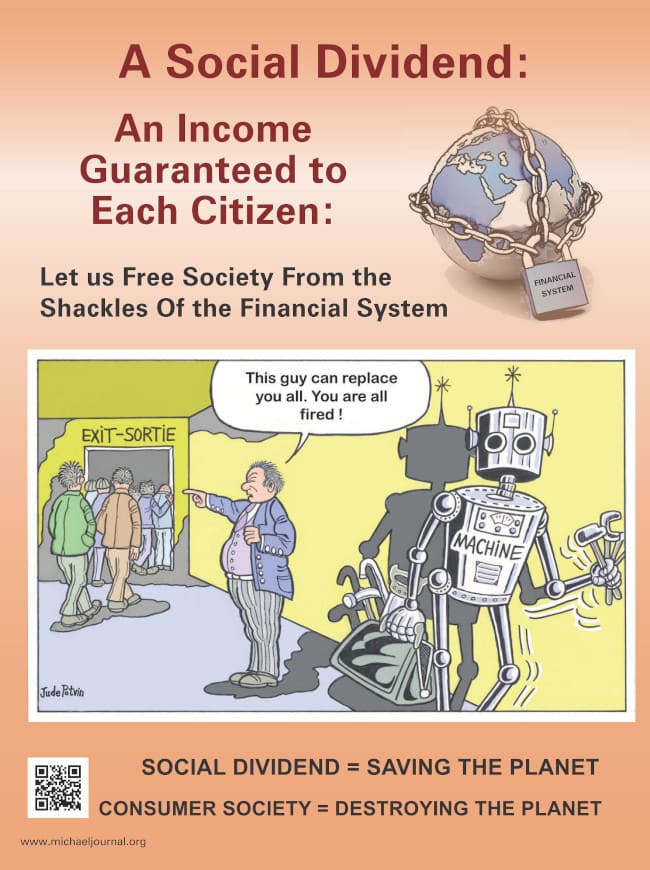 The Social Dividend is one of three principles that comprise the Social Credit monetary reform which is the topic of this booklet. The Social Dividend is an income granted to each citizen from cradle to grave, with- out condition, regardless of employment status.
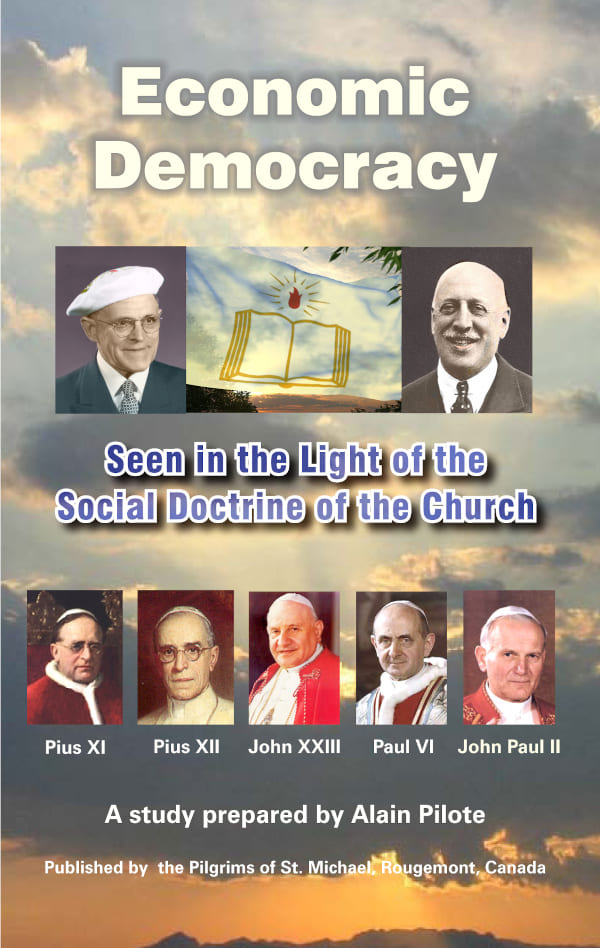 Economic Democracy is a book to explain Social Credit in lessons presented in logical order so it may be easier to the reader to grab the main principles of Social Credit rapidly and somehow easily.
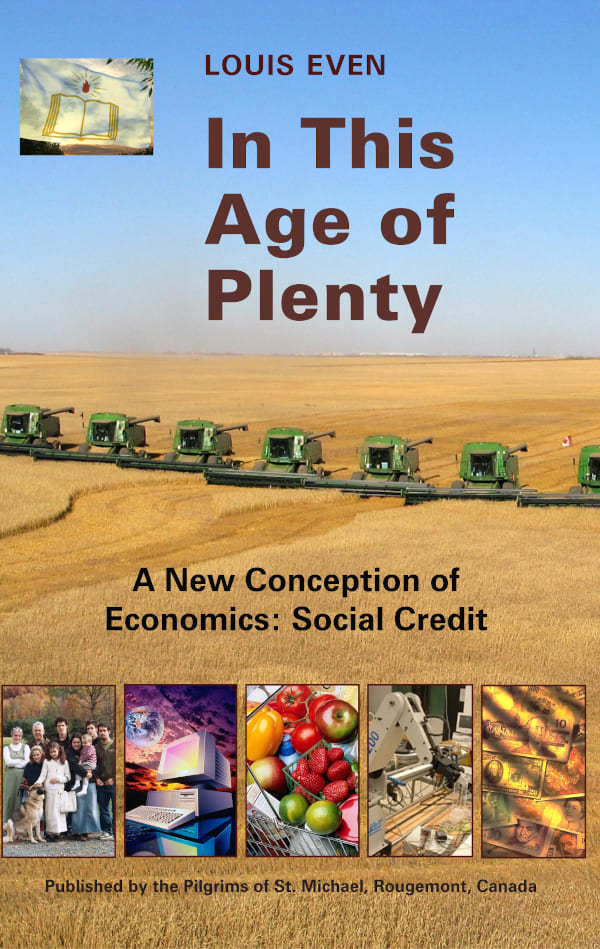 In This Age of Plenty deals with Social Credit, but it does not exhaust the topic. Social Credit principles address social and political matters, as well as, or even more so, than economics and will put civilization on a new course.
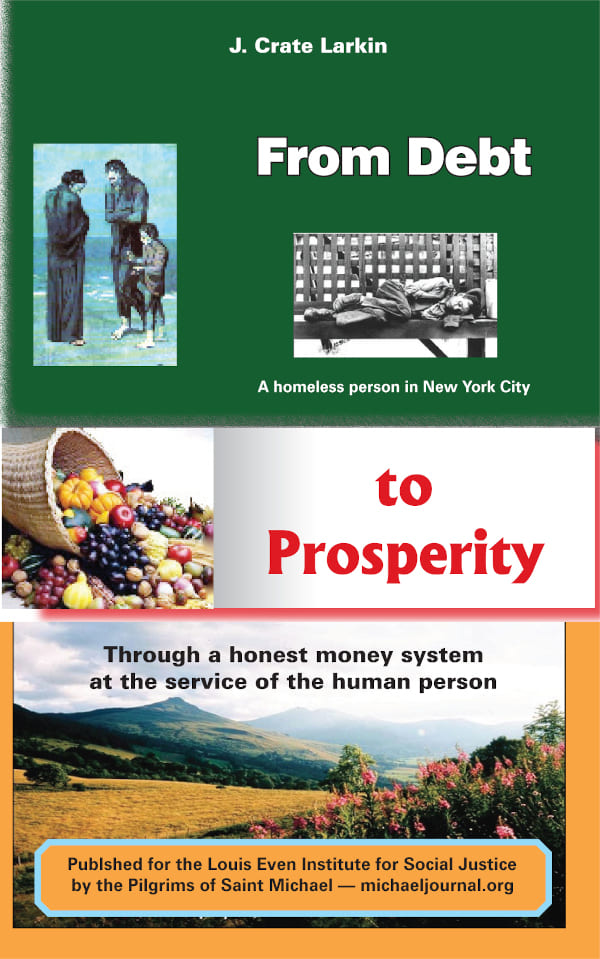 From Debt to Prosperity outlines briefly the economic analysis and constructive proposals known as Social Credit.
 Subscribe