


Pope Leo XIII wrote in his encyclical letter, Quamquam Pluries, that it is the
“opinion held by a large number of the Fathers, to which the sacred liturgy gives its sanction, that the Joseph of ancient times, son of the patriarch Jacob, was the type of St. Joseph, and the former by his glory prefigured the greatness of the future guardian of the Holy Family.”
Father Michel Gasnier explains at the beginning of his book, Joseph the Silent, that not only did they have the same name, they were also alike in their virtues: both men experienced lives of trials, joys and surprising coincidences.
Both of them – two just men in every sense of the word – gave themselves body and soul to the missions entrusted to them. The two Josephs, by a series of providential circumstances, went to Egypt: the first, persecuted and delivered by his brothers because of a fierce jealousy, and the second, fleeing the jealous rage of Herod to save the One who was the Pure Wheat of the elect.
God gave the Joseph of the Old Testament the gift of interpreting dreams and thus he was warned of what was imminent. The new Joseph received the Lord’s messages through a dream. He was to accept Mary as his wife and flee immediately to Egypt to save the Child from the soldiers of Herod.
One can say that the dreams of the Old Testament Joseph only saw their full realization in the mission of the second Joseph. The book of Genesis says about the first Joseph (37:5-10):
“Joseph had a dream, which he told his brothers, they hated him all the more. He said to them, ‘Listen to this dream that I had. We were binding sheaves of grain out in the field when suddenly my sheaf rose and stood upright, while your sheaves gathered around mine and bowed down to it... I had another dream, and this time the sun and moon and eleven stars were bowing down to me.’”
These dreams came true in the life of the first patriarch when his father Jacob took his family to Egypt and bowed down before Joseph, who became viceroy of the country and provided food as father of the peoples of the earth. One can see that he foreshadowed the mystery of Nazareth when the world would be amazed because Jesus, the Son of Justice, and Mary, praised in the liturgy as a beautiful and bright white moon, became subject to the authority of the New Testament Joseph, head of the household.
Pharaoh, amazed at the wisdom of Joseph left the kingdom’s government in his hands, saying to those who came to see him: Go to Joseph (in Latin, Ite ad Joseph) and do whatever he tells you. Likewise, the second Joseph was commissioned to earn the bread for the Holy Family in Nazareth and later to be designated the official defender of the Church.
Another virtue, chastity, is common to both Josephs and completes the fascinating parallels. The first rejected the shameful incitement of Potiphar’s wife. Even more perfect was the chastity of the second Joseph who, knowing that God had placed under his protection the purest of creatures, the wife of the Holy Spirit, he treated her with sovereign respect and provided her a very pure love.
Study Session on Economic Democracy And Annual Congress
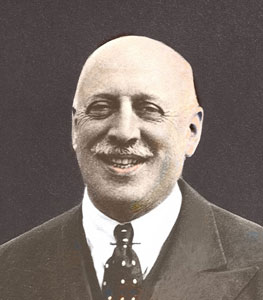
Discover C.H. Douglas’s proposals for economic and social renewal with the Pilgrims of St. Michael in Rougemont, Quebec Canada from Sept. 23 through September 28 2026.
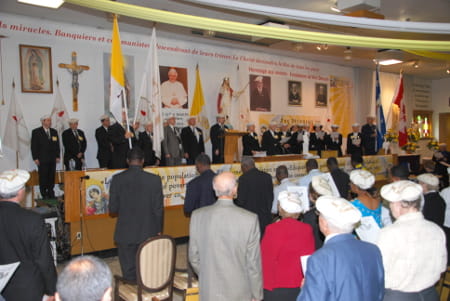
Rougemont Quebec Monthly Meetings
Every 4th Sunday of every month, a monthly meeting is held in Rougemont.
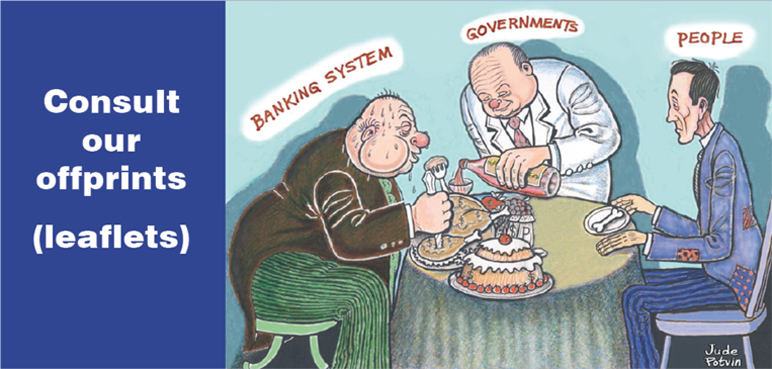
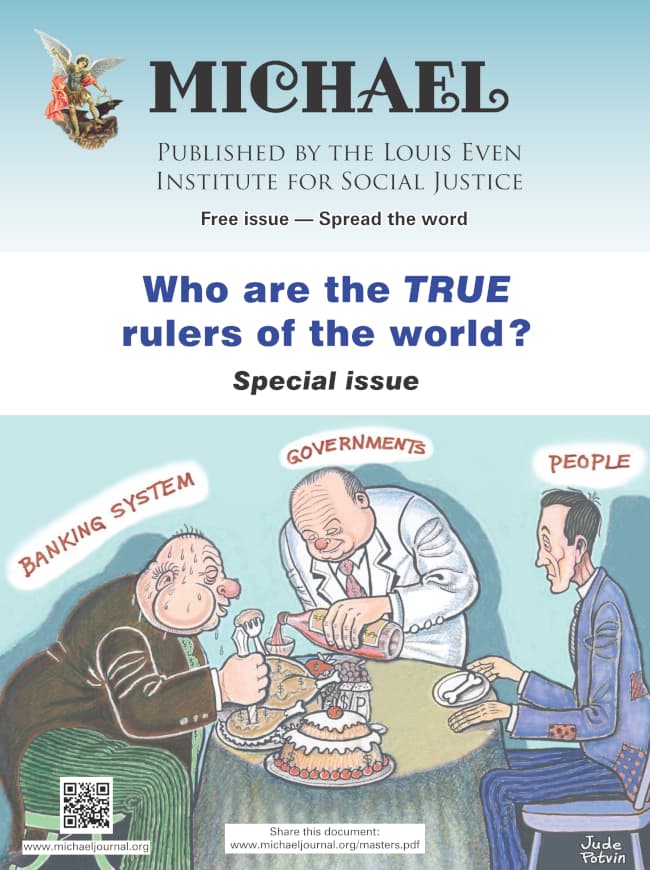 In this special issue of the journal, MICHAEL, the reader will discover who are the true rulers of the world. We discuss that the current monetary system is a mechanism to control populations. The reader will come to understand that "crises" are created and that when governments attempt to get out of the grip of financial tyranny wars are waged.
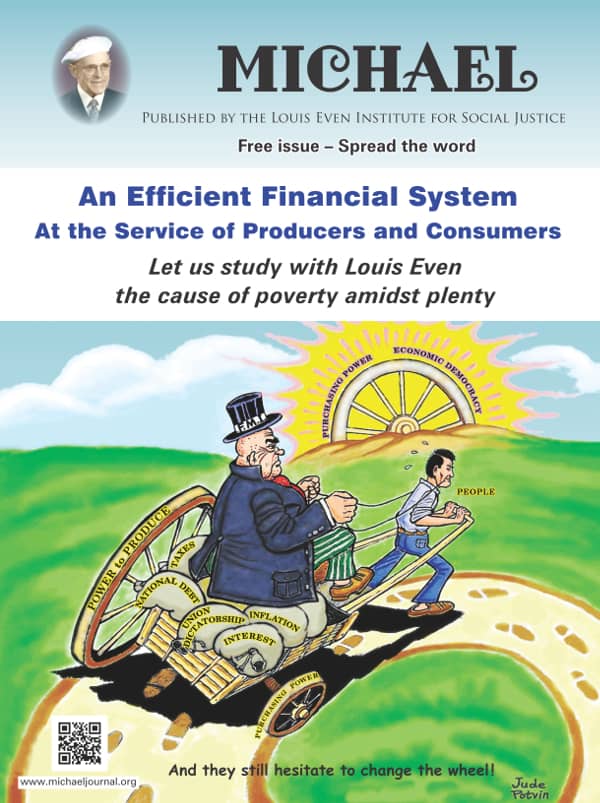 An Efficient Financial System, written by Louis Even, is for the reader who has some understanding of the Douglas Social Credit monetary reform principles. Technical aspects and applications are discussed in short chapters dedicated to the three propositions, how equilibrium between prices and purchasing power can be achieved, the financing of private and public production, how a Social Dividend would be financed, and, finally, what would become of taxes under a Douglas Social Credit economy. Study this publication to better grasp the practical application of Douglas' work.
 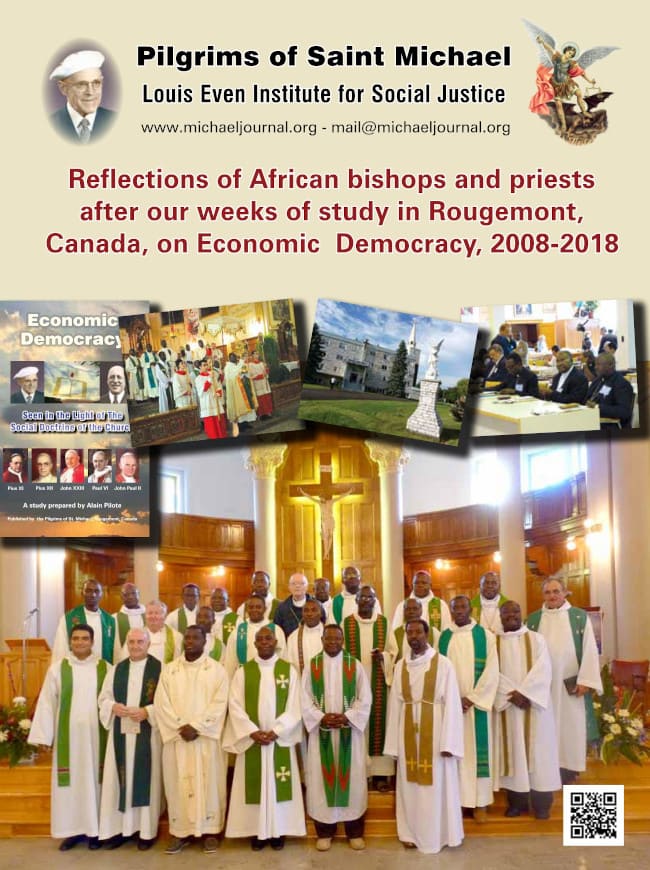 Reflections of African bishops and priests after our weeks of study in Rougemont, Canada, on Economic Democracy, 2008-2018
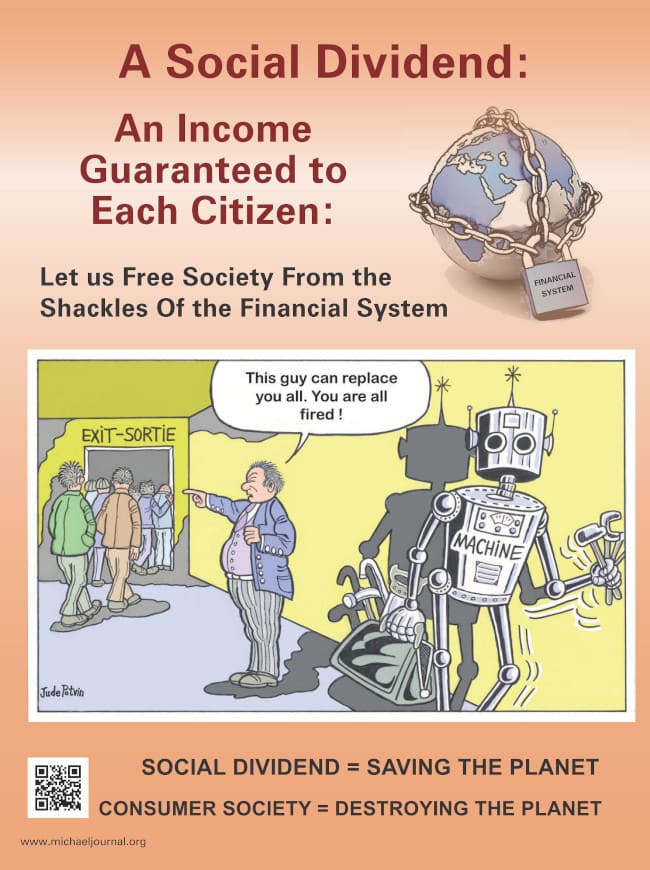 The Social Dividend is one of three principles that comprise the Social Credit monetary reform which is the topic of this booklet. The Social Dividend is an income granted to each citizen from cradle to grave, with- out condition, regardless of employment status.
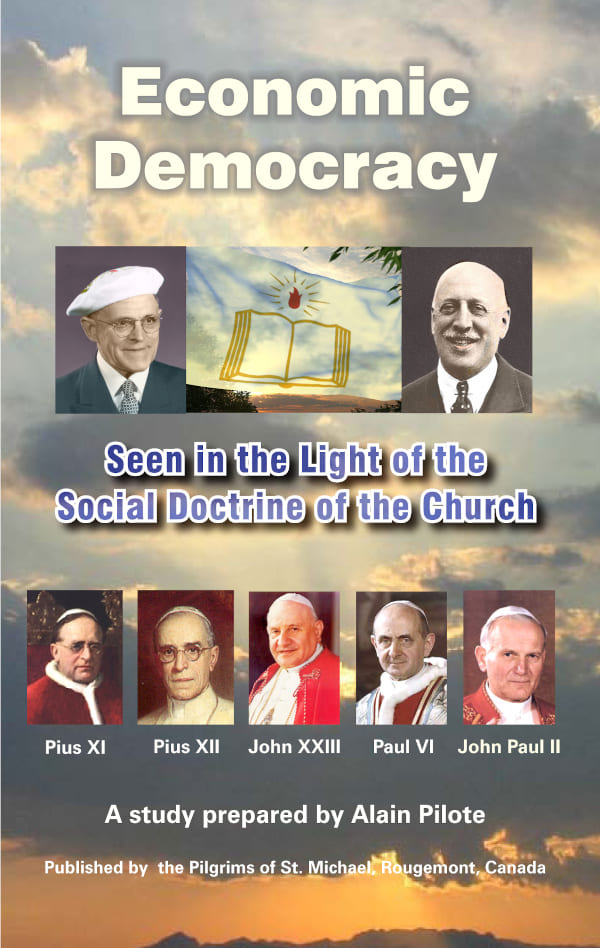 Economic Democracy is a book to explain Social Credit in lessons presented in logical order so it may be easier to the reader to grab the main principles of Social Credit rapidly and somehow easily.
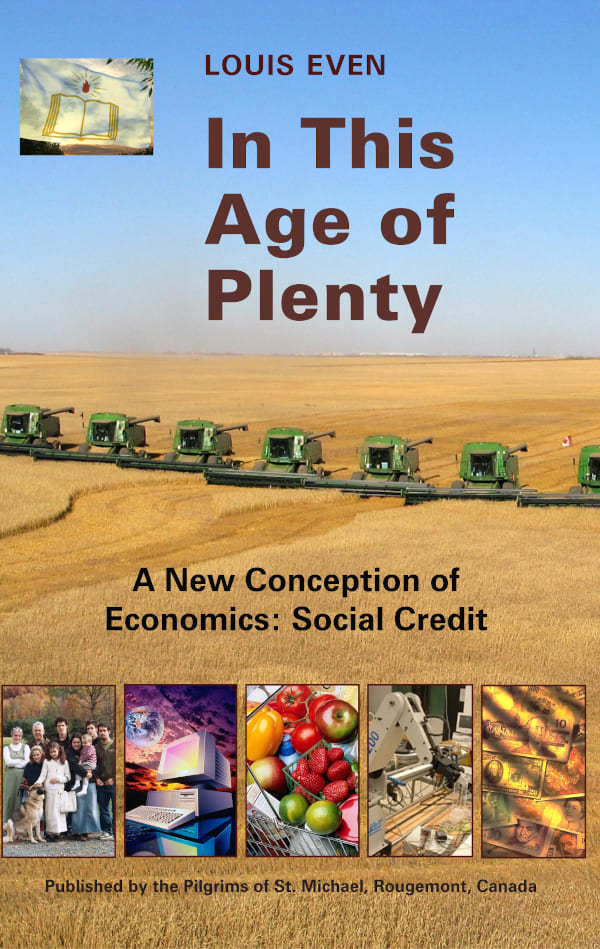 In This Age of Plenty deals with Social Credit, but it does not exhaust the topic. Social Credit principles address social and political matters, as well as, or even more so, than economics and will put civilization on a new course.
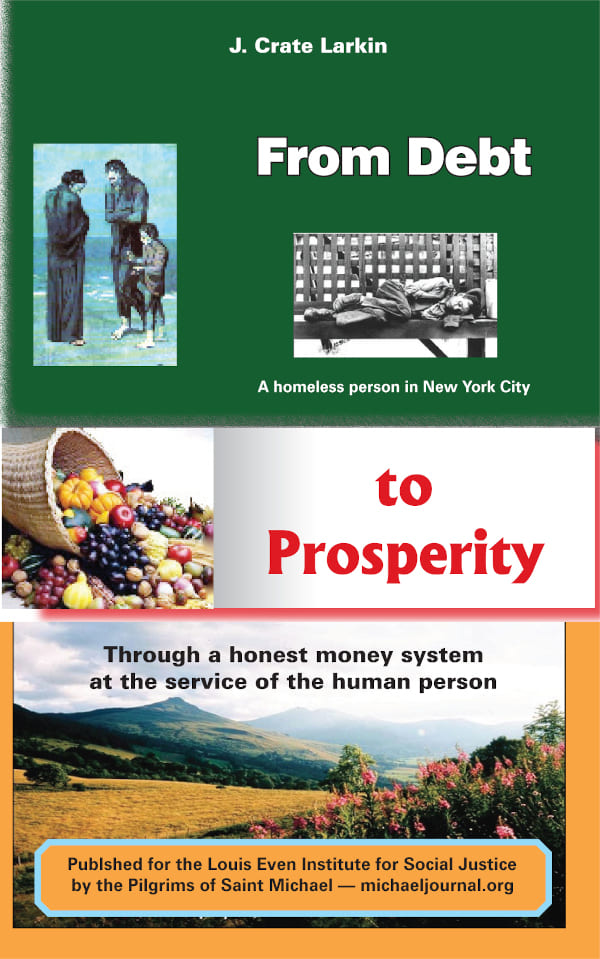 From Debt to Prosperity outlines briefly the economic analysis and constructive proposals known as Social Credit.
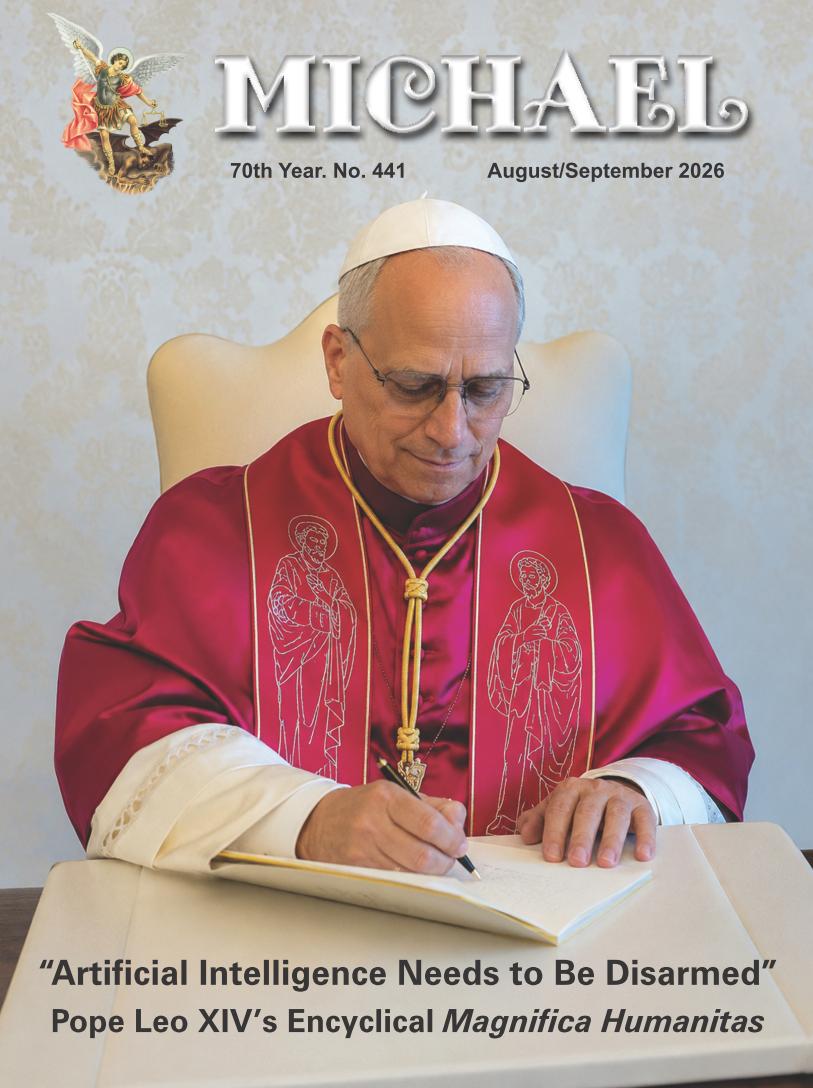 Subscribe