

When the huge "charity" trusts in the United States converge in supporting the same cause, there is always solid reason for keeping that cause under observation. For instance, the Royal Institute of International Affairs has long been the beneficiary of American trust funds, so that Chatham House has been and remains well worth watching. Now comes the turn of the Institute of International Education to receive largess. Not long ago the Carnegie Corporation made it a grant of $1,500,000, and the Rockefeller Foundation soon afterwards bestowed $250,000 upon it. The Ford Foundation recently announced that it would grant the fortunate Institute $3,500,000 spread over the next ten years.
The Institute of International Education is not a new body: what is new is the uniting of the giant trusts to lavish their benefactions upon it. Its work consist in encouraging educationists and others to study abroad and in supporting students from abroad in the United States.
Quite innocuous, one might think. As the trusts are being widely used to promote internationalism, however, it would be interesting to know on what basis the students are chosen, and to what influence they are subjected in the countries to which they go. We may be quite certain that these influences do not include any which rest on the belief that the sovereignty of the nation-state is essential to the preservation of Christendom.
A. K. Chesterton, Editor of Candour, the British Weekly as quoted in The American Mercury, December, 1956. (Emphasis supplied).
Study Session on Economic Democracy And Annual Congress
Discover C.H. Douglas’s proposals for economic and social renewal with the Pilgrims of St. Michael in Rougemont, Quebec Canada from Sept. 23 through September 28 2026.

Rougemont Quebec Monthly Meetings
Every 4th Sunday of every month, a monthly meeting is held in Rougemont.
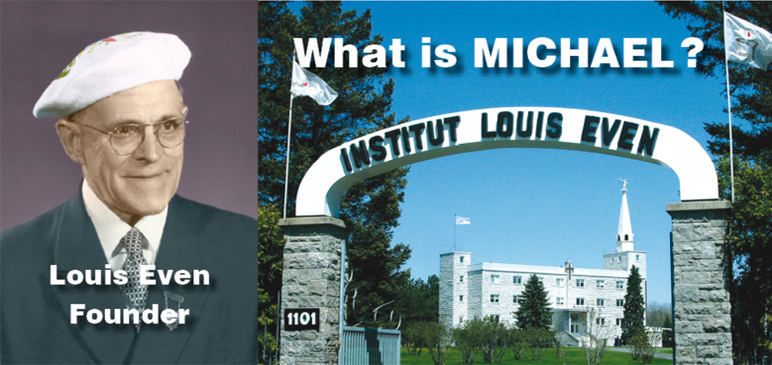
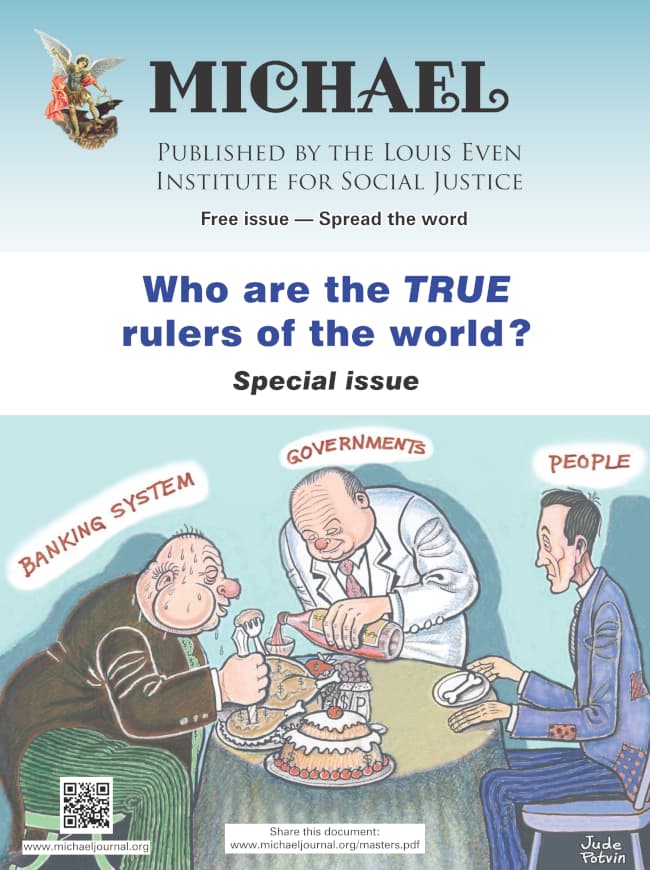 In this special issue of the journal, MICHAEL, the reader will discover who are the true rulers of the world. We discuss that the current monetary system is a mechanism to control populations. The reader will come to understand that "crises" are created and that when governments attempt to get out of the grip of financial tyranny wars are waged.
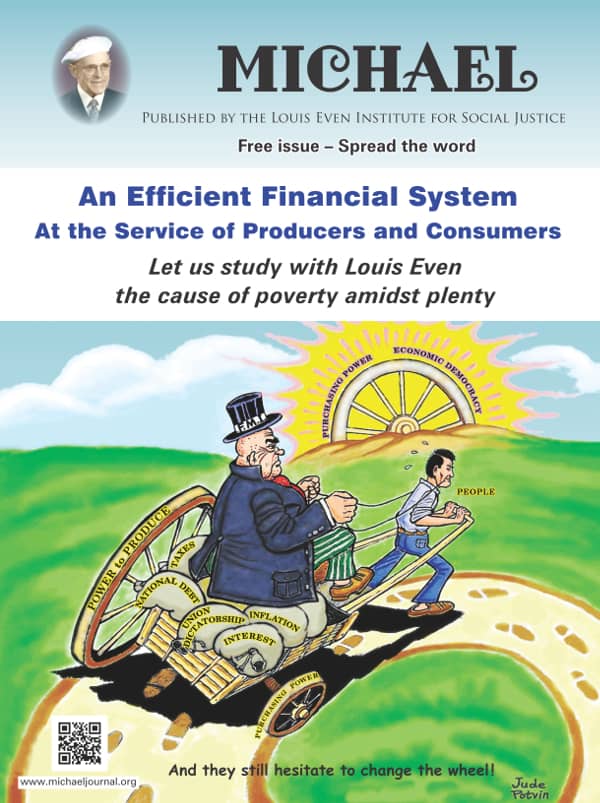 An Efficient Financial System, written by Louis Even, is for the reader who has some understanding of the Douglas Social Credit monetary reform principles. Technical aspects and applications are discussed in short chapters dedicated to the three propositions, how equilibrium between prices and purchasing power can be achieved, the financing of private and public production, how a Social Dividend would be financed, and, finally, what would become of taxes under a Douglas Social Credit economy. Study this publication to better grasp the practical application of Douglas' work.
 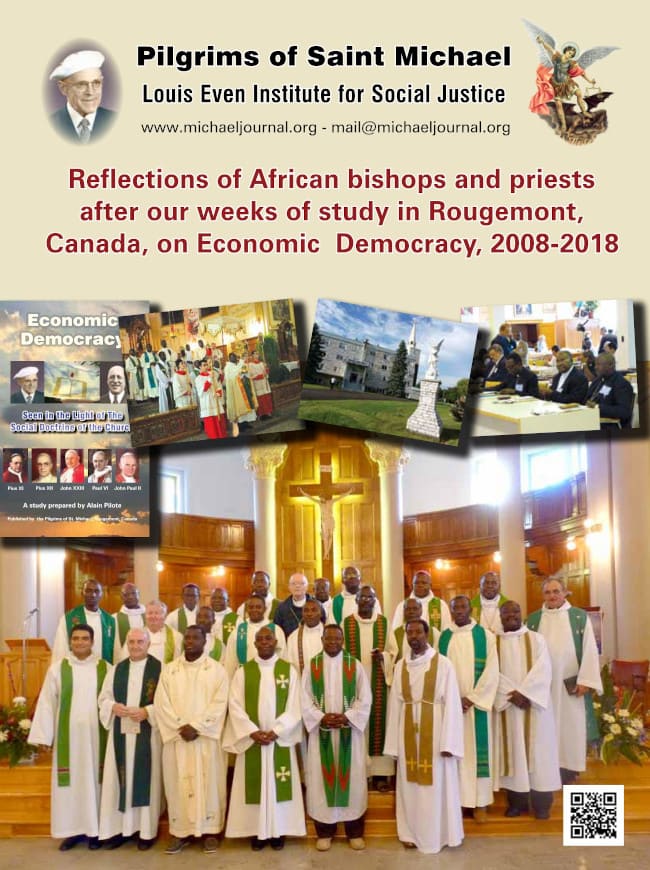 Reflections of African bishops and priests after our weeks of study in Rougemont, Canada, on Economic Democracy, 2008-2018
 The Social Dividend is one of three principles that comprise the Social Credit monetary reform which is the topic of this booklet. The Social Dividend is an income granted to each citizen from cradle to grave, with- out condition, regardless of employment status.
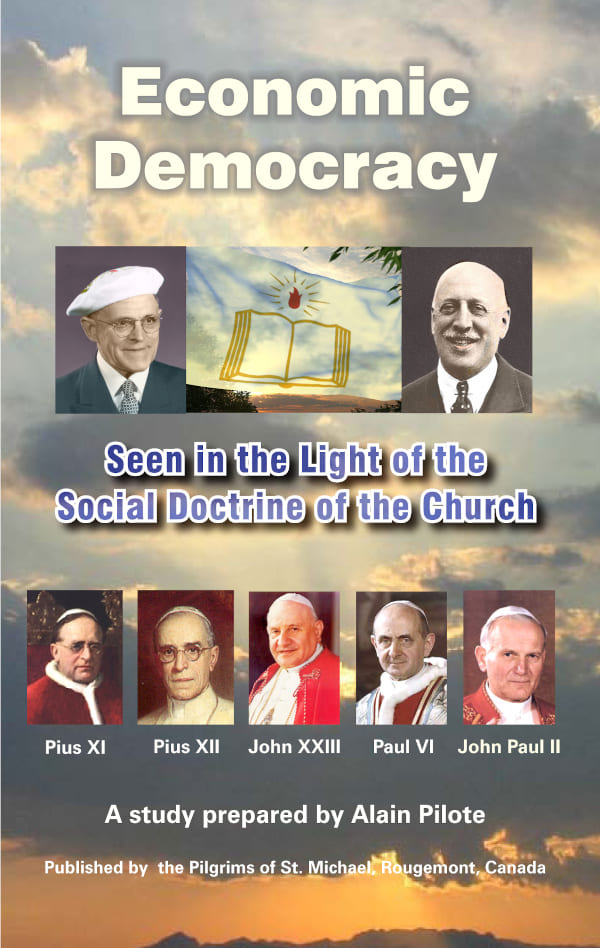 Economic Democracy is a book to explain Social Credit in lessons presented in logical order so it may be easier to the reader to grab the main principles of Social Credit rapidly and somehow easily.
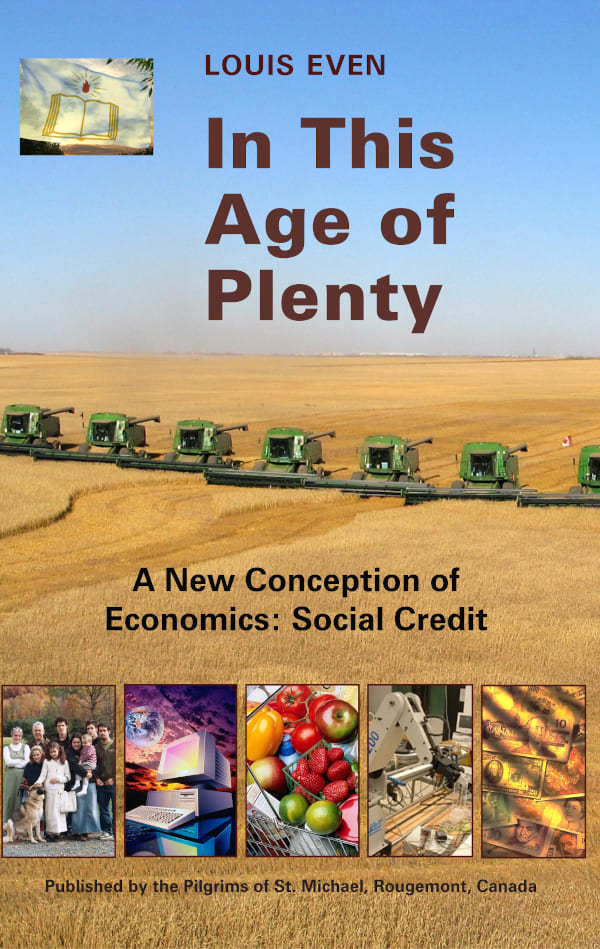 In This Age of Plenty deals with Social Credit, but it does not exhaust the topic. Social Credit principles address social and political matters, as well as, or even more so, than economics and will put civilization on a new course.
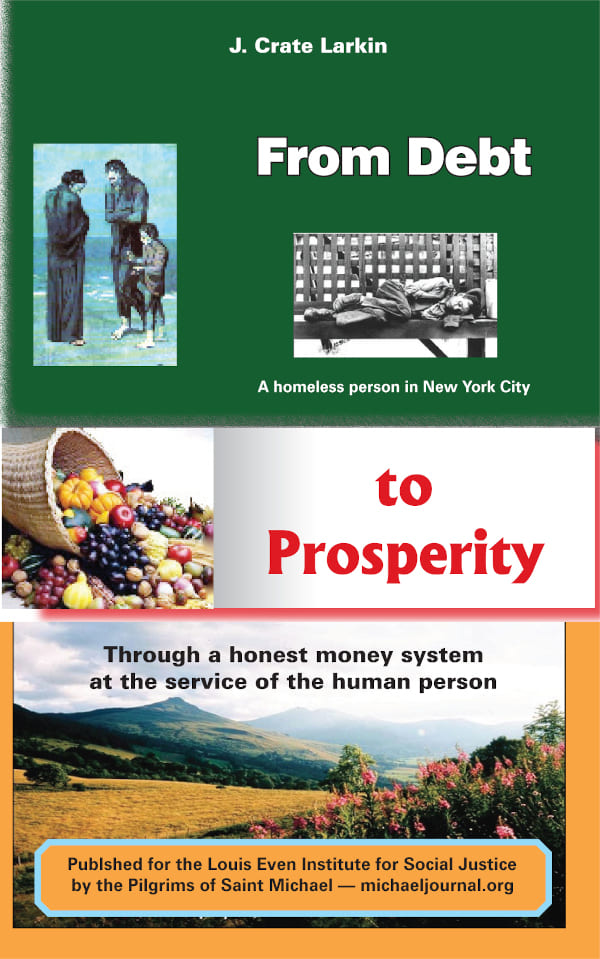 From Debt to Prosperity outlines briefly the economic analysis and constructive proposals known as Social Credit.
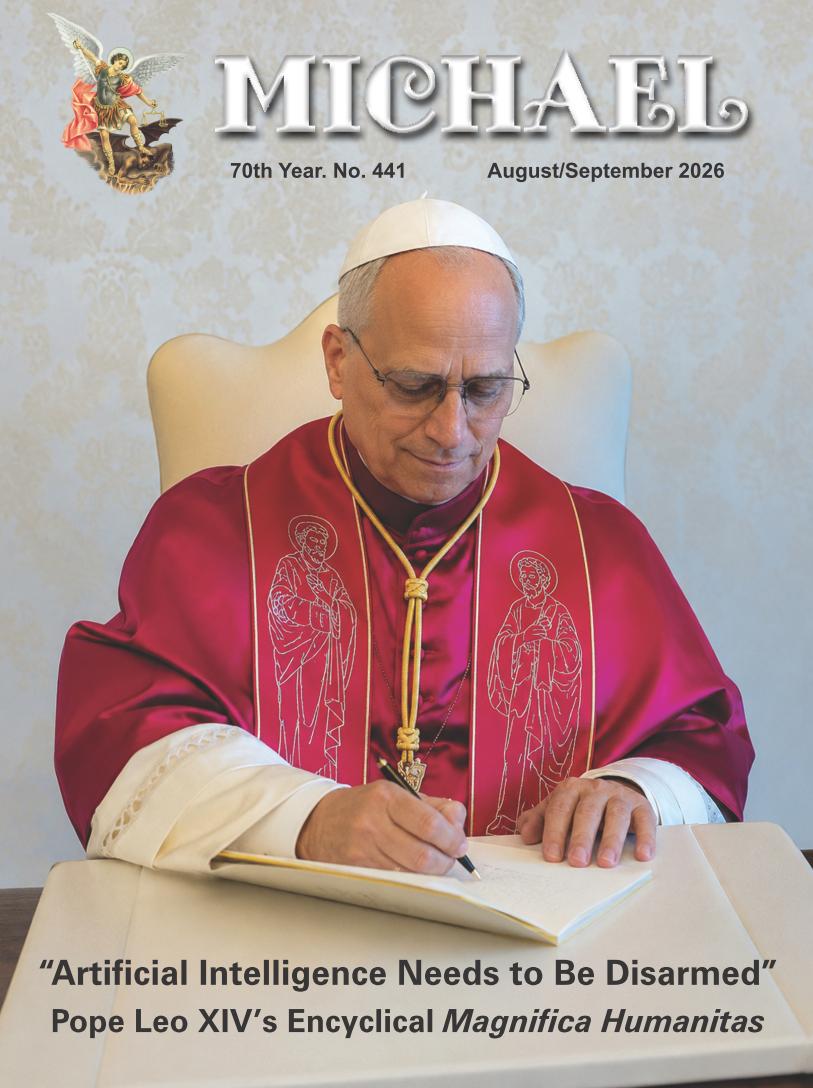 Subscribe