

On the 25th of May a half dozen of our fulltime workers left for western Canada. Two of these will pass the month of June and the first few days of July in the province of Alberta.
Now, Alberta is at the moment in the throes of a provincial election campaign. A general election will be held on June 16. The election date was announced by premier Manning on the evening of Saturday, May 9. Since the beginning of January we have stated many times the reasons for our mission into the West. And anyone who has any knowledge of these reasons will know that we have not sent men to Alberta to get mixed up in electioneering. Our workers would by far prefer to be there outside of election time as we originally expected they would be. It is only three years since the last election and no one was more surprised than we were to see Mr. Manning making an appeal to the people at this time.
However, since our work must be carried on during an election campaign, it gives us, the opportunity to re-state and reaffirm our attitude regarding elections, both in Alberta and in any other province of Canada, or regarding the federal elections.
Our attitude is clear, unmistakable and quite categorical: our movement will not mix itself up in any election campaign, on behalf of any candidate, whether he be Social Credit wholely or in part. It is true that we have done so to a greater or lesser degree in the past, but experience and a deeper understanding of the doctrine and the thinking of Major Douglas, the founder of Social Credit, has convinced us that a Social Credit civilization can never spring from election campaigns. It can only bloom from a Social Credit culture infused into the entire people. And this culture can never be developed by elections.
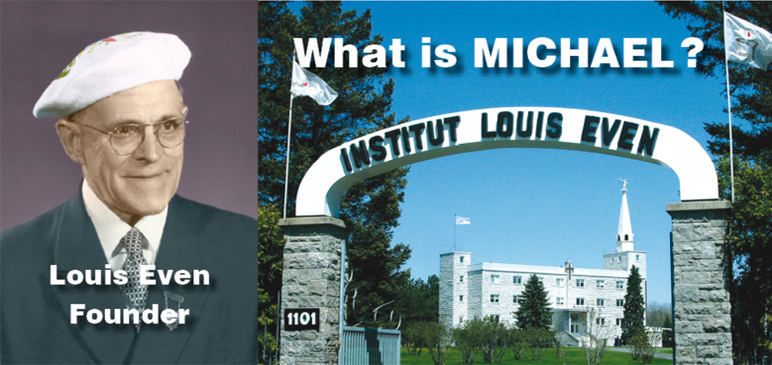
The two men sent to Alberta, the two in Saskatchewan, the fifth in Manitoba and the sixth in British Columbia, have all been sent out by the Institute of Political Action. The Institute publishes two papers: Vers Demain in French, and The Union of Electors, in English.
These are two Social Credit papers. The doctrine which they put forth is the doctrine of Social Credit as presented to the world 42 years ago by the Scot genius, Major C. H. Douglas. The Institute which publishes these two papers is in no sense whatsoever a political party. The Institute of Political Action is a school. It is a school for instructing and forming; for instructing in Social Credit and for forming Social Crediters. This school is not satisfied with merely setting forth the financial propositions enunciated by Major Douglas, but, after the example of this master, it explains the philosophy which inspired this system of monetary reform.
The policy on monetary affairs is only a means to an end. The end of Social Credit might well be summed up in one short phrase: to make it possible for each one to be his own master. To make it possible for him to organize his own life, to choose his own profession, to employ his time as he wishes; to be master of his own property and goods; to be free to accept or reject any program placed before him; to be free to enter into or not to enter into any organization which may invite him, and free to leave it when he chooses, if he does enter it.
So, this goes much deeper than a mere monetary reform, for you can have such a reform and still have forces opposed to the liberty of choice for the individual. But the first condition necessary in order that a man become his own master, is that he desire to be so with a firm strong will, and that he posit the necessary actions in order to bring about such a condition. And such actions are something quite different from voting in an election, where votes are merely added up to decide who is going to sit in parliament.
Douglas never advised the formation of a Social Credit political party. On the contrary, there were several occasions when he stressed how ineffectual, even harmful to Social Credit, would be the setting up of such a party. He even went so far as to say during a conference delivered to a group of Crediters:
"If you elect a Social Credit party, supposing you could, I may say that I regard the election of a Social Credit party in this country as one of the greatest catastrophes that could happen."
This is the master who so speaks, the master, of whom certain politicians in this country proclaim to be disciples, while they go about the very activity which he so expressly condemned.
Here in Canada, the last Federal elections showed to anyone who isn't completely stupid, the futility of counting on elections as a means of arriving at Social Credit. Not only do they not lead there, but they have an effect tending in the other direcțion.
To look for Social Credit in the election of a Social Credit parliament, is to tie success in getting it with a Crediter majority in parliament. That would be to say that the hour of Social Credit was near at hand when the number of Social Credit representatives increases, and it recedęs when this number grows smaller. Using such a barometer, we can conclude that the tide of Social Credit in Canada has never been at a lower ebb, because in 1935 there were 17 Crediter representatives in the Commons; then in the following years this number varied between 11 and 19. Today, since the 31st of March, 1958, there isn't a single Social Credit representative sitting in parliament.
If, however, we believe that a Social Credit regime will come as the fruit of a Social Credit culture, from the formation of a growing number of Crediters among the people, then we can say that the Institute of Poiltical Action is advancing continually the hour when Social Credit will be a reality. Through its publications and the activities of its members, the Institute never ceases to extend the depth and scope of this formation of a Social Credit culture.
Can we say that the Social Credit members who had seats at Ottawa for 23 years increased in any way the number of Crediters in Canada during those years?
Certainly they didn't make one single new Crediter where they lived and worked eight months of the year. Compare this sterility with the work of the volunteer workers of the Institute of Political Action and those taking subscriptions to Vers Demain and The Union of Electors during the past 20 years.
There are some who pretend that participation in an electoral campaign would help to make better known the doctrine of Douglas and win the favor of the people. The facts show just the contrary. Each time that our movement participated in an electoral campaign, the people were less receptive to our doctrine the day following. We have always had a struggle afterwards to climb back up to where we had been before our participation in the elections. And let us note here that this struggle to recoup our losses has always been the work of those truly educated in Social Credit; the "electioneers" on the other hand have withdrawn from activity after having caused the damage.
But in the West, wouldn't the participation in the elections by a Social Credit party help towards the Social Credit the education of the masses? Not in the least. Here again the facts prove the contrary. For 12 years, since 1947, the government of Alberta has declared openly that it will do nothing to establish Social Credit in the province, that if the citizens want Social Credit they will have to send their representatives to Ottawa, because, it says, this is a federal matter. As a result, when elections come, it is in the provincial elections that Albertans elect Social Credit members; few ever got to Ottawa — none in the last election. Same thing for British Columbia. Now can we truthfully say, that this is spreading Social Credit?
And as for the provincial elections, well, if the people of Alberta, and British Columbia elect Social Credit parties it isn't because they hope to have Social Credit established in these provinces; both Mr. Manning and Mr. Bennett were the first to declare that they would do nothing for the realization of a Social Credit regime. Their re-election proves only one thing that the people are satisfied with their administration, which, however, has nothing to do whatsoever with the monetary propositions of Social Credit, conducting itself within the frame-work of present day financial rulings. The electors are free to vote for "a good government" if they judge it to be so; but they are in no way voting for Social Credit.
They did in 1935, when the establishment of Social Credit was a goal placed before them by Aberhart; but not today, since the establishment of Social Credit has no place in the present government's platform.
From time to time federal-provincial conferences are held. Why? Because the provinces are complaining of financial difficulties. If this were not the reason there wouldn't be any conferences, since the provinces know very well what is and what is not within their jurisdiction.
Now in these conferences not one single provincial government, including those of Alberta and British Columbia (Social Credit governments), has ever proposed Social Credit as a means of healing the financial ills which are afflicting the entire world today.
At the last of these conferences, November 25-26, 1957, who took the initiative in suggesting Social Credit? Manning? Bennett? Not at all. They hadn't a word to say about this. It was our movement, the Union of Electors, which, alone, placed before the conference the monetary policies of Social Credit. Oh, these propositions were not actually laid on the table about which the delegates sat. Only the official representatives had the right to do this. But our two men in Ottawa, saw all the official delegations and made sure that they got copies in English and French of the memoir drawn up by the Institute of Political Action, pressing for the adoption of Social Credit principles.
On this occasion, the Union of Electors did more for Social Credit than any political party of this name, more than the two provincial governments which bear the ticket of Social Credit.
No, it is neither political parties or political campaigns that will make a Social Credit people. Parties exist to try and put their members in parliament — that is, to wage election campaigns. And election campaigns are waged for the candidates, not for the people. During an election campaign, the candidate is not working for the people; he is making the people work for him to get him into power. Electoral campaigns may bring something to the candidate; they bring nothing to the people. They are affairs for the politicians, not for the people.
The candidates themselves know very well that the campaign is for them and not for the people. On the eve of the elections they thank their electors. They say thank you, to those who have worked for them. If all this were being done for the people, then they, the people, ought rightly to be thanking the others. But this is not and never has been the case.
But then why do the people become so excited to work for those whom they are going to have to pay? And after it is all over, they are in the least concerned about seeing to it that those they are paying work for them?
It is this curious mentality which our movement is working to correct.
On the day of elections itself, it is quite normal that each voter go and deposit his vote in the ballot box. It is quite normal that the people be divided on that day. Some prefer this candidate; others, another. The more candidates there are, the more divisions there are.
Now, power does not reside in division. It resides in union. It is certainly, therefore, not on election day that the people are strong, for that is the one day when they are the least united.
That is why our movement works above all to obtain a strong people, a people that can get that which it wants and which it has a right to expect out of politics — and it is for this reason that our movement holds itself apart from any electioneering activity. During elections, let the people divide themselves as they wish — or as the political workers wish to divide them; but in times between elections, we shall preach a people united; the union of electors, united about the legitimate demands which will fill the common aspirations of all.
All Crediters are of one mind in denouncing the dictatorship of money. But the power of the financiers did not grow overnight and it will not be abolished overnight. Today it is solidly entrenched; and it is certainly not the little cross made with a lead pencil on a ballot every four or five years that is going to dislodge it. Only one force can drive it out; the strength of an enlightened and determined people, demanding that change in the financial regime.
It is to the formation of just such a people that the Institute of Political Action has devoted itself. It is to educate the people that the Institute spreads abroad its literature, especially its two publications, Vers Demain and The Union of Electors. It is to make the people conscious of their power that the Institute teaches them how to exercise pressure on public bodies, whether they be municipal, provincial or federal. It is to work to unite all the people about common aims which are good for all, that our movement has adopted the formula of The Union of Electors instead of the formula which divides electors, namely that of political parties.
This political education, this education of the people in Social Credit may seem to some an objective which is unattainable, or at best, something which will come only after years and years of work; whereas on the other hand, a victory in the elections may seem to them to be a quick and easy way to success. This is an illusion, a double illusion, for even with an election victory this does not necessarily mean Social Credit. In a coming article, we shall demonstrate that the formation of a people who are decided upon being masters in their own homes, is the quickest way of getting true and lasting results; whereas the winning of an election after great expense and manifold preparations, can succeed one year and the next year fail miserably — and the history of the ballot box will prove this without having to go too far into the past.
It is to have time, to avoid wasting time, that the movement seeks to build that which is enduring, based upon a solid education, upon the true and lasting formation of men; and not upon a foundation which is based on shifting sands, the prey of the first strong wind which may happen to blow.
Study Session on Economic Democracy And Annual Congress
Discover C.H. Douglas’s proposals for economic and social renewal with the Pilgrims of St. Michael in Rougemont, Quebec Canada from Sept. 23 through September 28 2026.
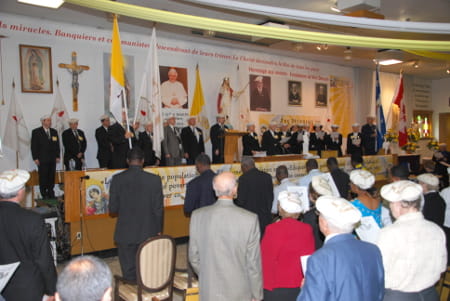
Rougemont Quebec Monthly Meetings
Every 4th Sunday of every month, a monthly meeting is held in Rougemont.
 In this special issue of the journal, MICHAEL, the reader will discover who are the true rulers of the world. We discuss that the current monetary system is a mechanism to control populations. The reader will come to understand that "crises" are created and that when governments attempt to get out of the grip of financial tyranny wars are waged.
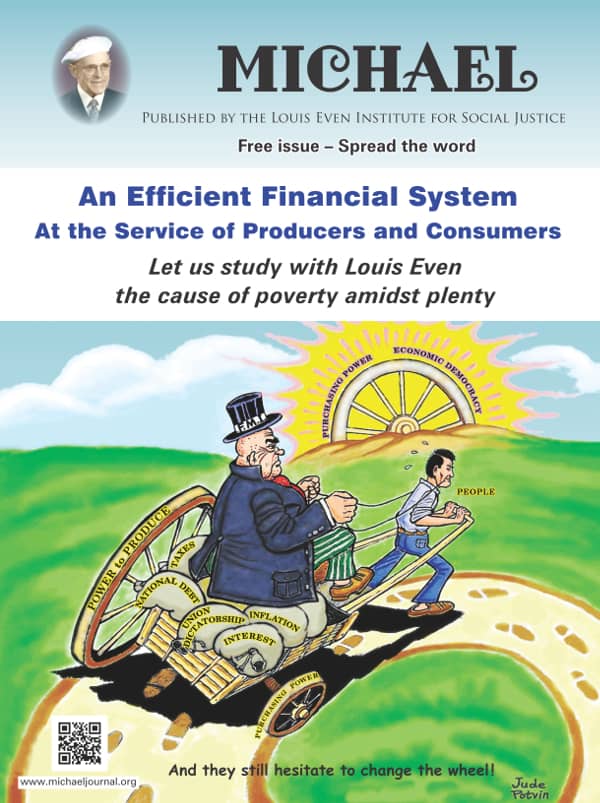 An Efficient Financial System, written by Louis Even, is for the reader who has some understanding of the Douglas Social Credit monetary reform principles. Technical aspects and applications are discussed in short chapters dedicated to the three propositions, how equilibrium between prices and purchasing power can be achieved, the financing of private and public production, how a Social Dividend would be financed, and, finally, what would become of taxes under a Douglas Social Credit economy. Study this publication to better grasp the practical application of Douglas' work.
 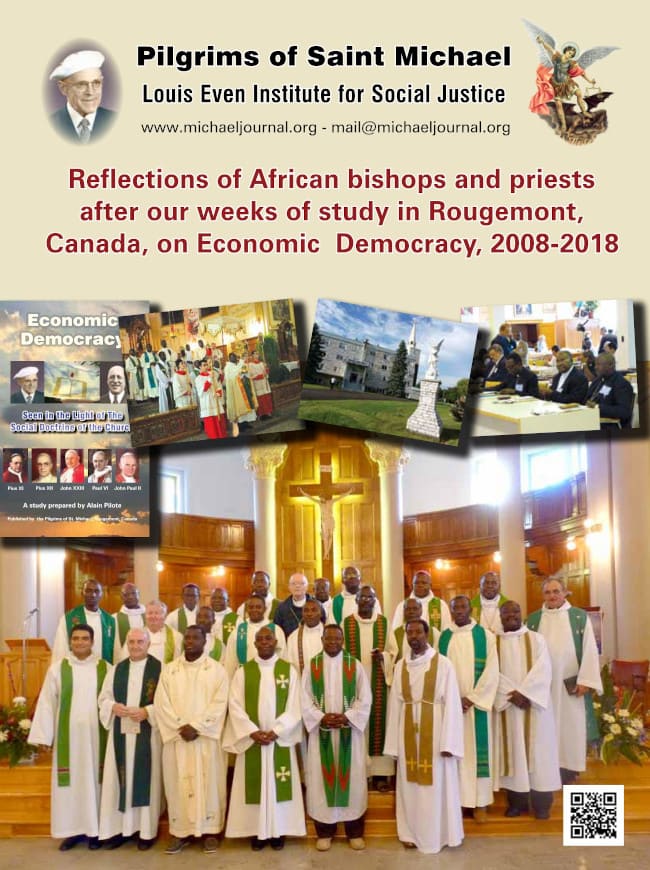 Reflections of African bishops and priests after our weeks of study in Rougemont, Canada, on Economic Democracy, 2008-2018
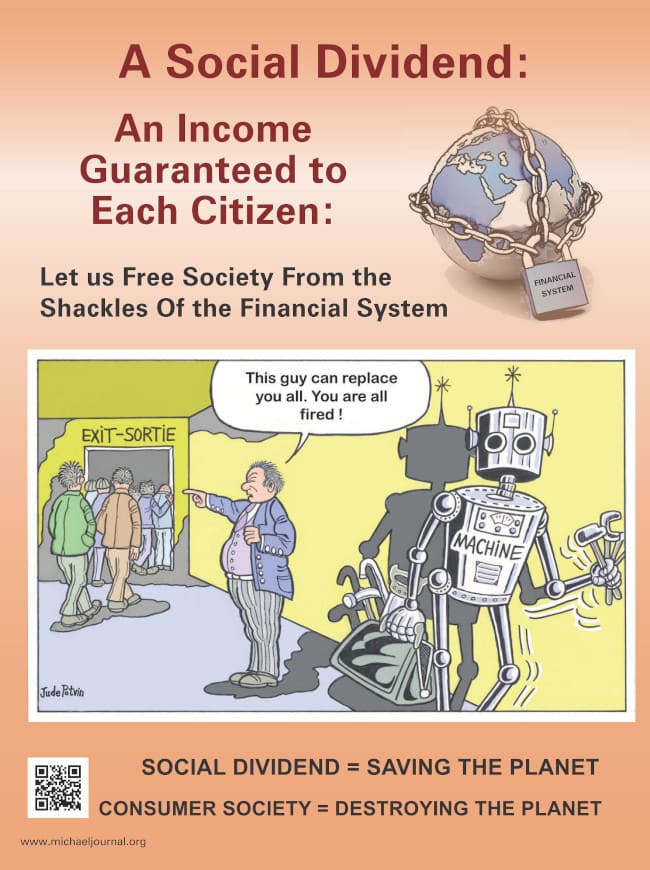 The Social Dividend is one of three principles that comprise the Social Credit monetary reform which is the topic of this booklet. The Social Dividend is an income granted to each citizen from cradle to grave, with- out condition, regardless of employment status.
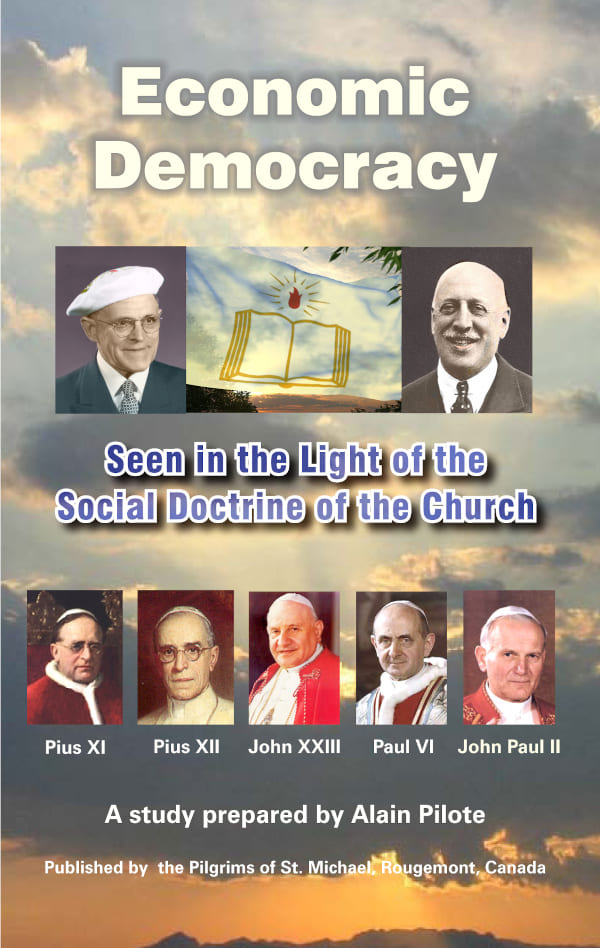 Economic Democracy is a book to explain Social Credit in lessons presented in logical order so it may be easier to the reader to grab the main principles of Social Credit rapidly and somehow easily.
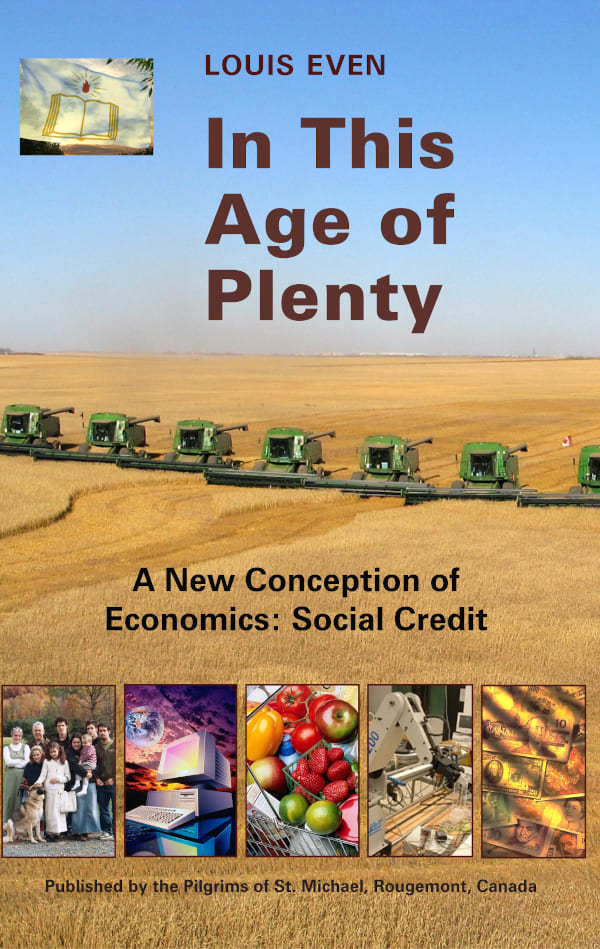 In This Age of Plenty deals with Social Credit, but it does not exhaust the topic. Social Credit principles address social and political matters, as well as, or even more so, than economics and will put civilization on a new course.
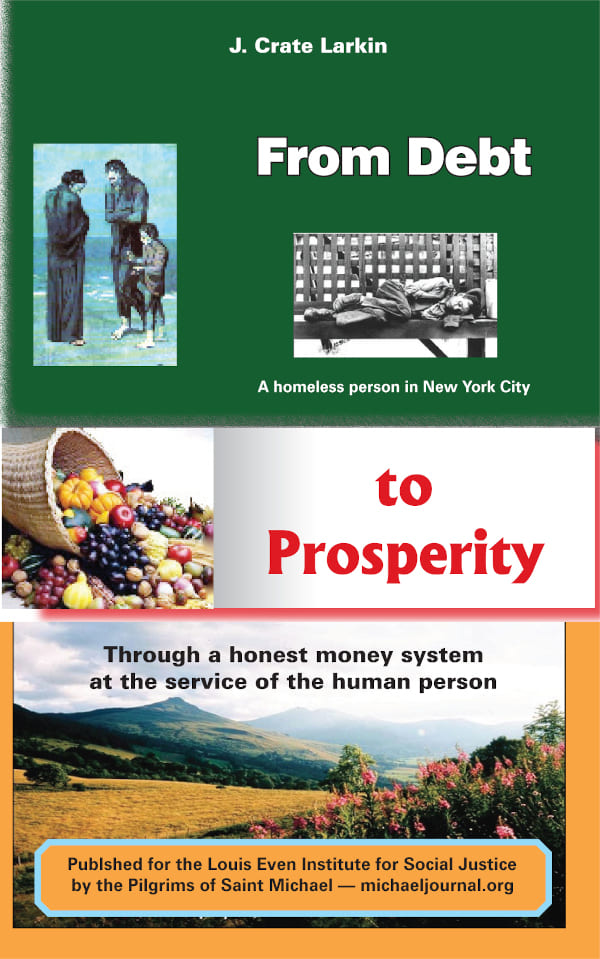 From Debt to Prosperity outlines briefly the economic analysis and constructive proposals known as Social Credit.
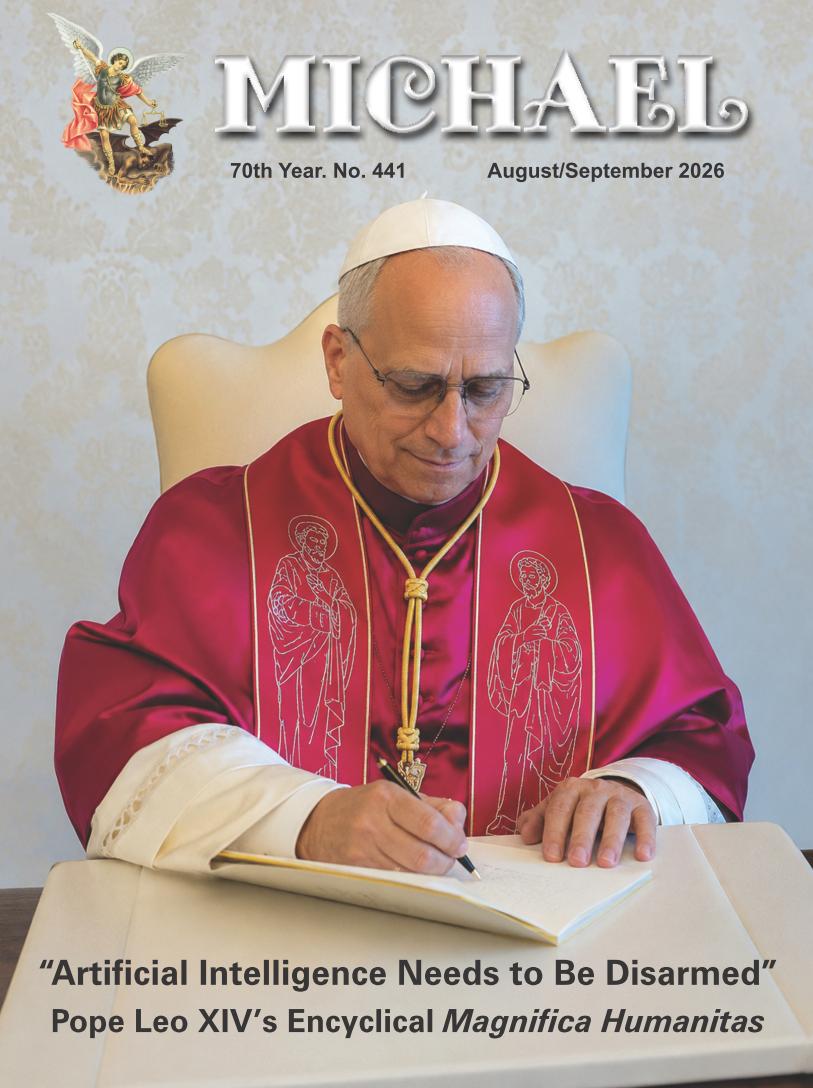 Subscribe