

A QUESTION
As a subscriber to your paper "Social Credit", please advise me if the new party called Poujadism, in the recent election in France, with their battle cry "Away with Taxes", is in any way advancing the ideas of Social Credit as we have it in this country. Can you give me any information on their apparent success? Len Coyne, Bryson, Que.
The Poujadism movement is an anti-tax movement. It is also a rebellion against the parliamentary set-up such as now exists in France.
The personality of the leader, Pierre Poujade, and the general dissatisfaction in France regarding government's actions and the weight of taxation, go far to explain the unforeseen success of his party at the last French election.
Mr. Poujade is very active. He travels all over France, organizing and speaking at mass meetings and establishing action committees to carry on propaganda and carry out such action as is suggested by circumstances. But he has also founded a paper, "L'Union" for the service of his followers, which has already reached a large circulation (I think it is over a million); he also publishes another paper to disseminate among the public, "La Fraternité Française", of which 15 million copies were printed for the electoral campaign. This is surely an efficient weapon when he has men to distribute the literature.
However, we are not sufficiently informed to know exactly what reform Pierre Poujade proposes, particularly in financial matters. Surely it can't be the Social Credit proposals yet, or it would be known by us and by the whole press. We are trying to establish contacts. We have written him, to congratulate him on his fight against growing taxation and to suggest to him the study of Social Credit. We sent him some literature. This was after the election; to this day, we have had no further news from him.
We are under the impression that Mr. Poujade has a good whip in hand with which to castigate the present system, but that he has not as yet made a good analysis of it, nor elaborated an efficient program of financial reform. Does he even know the genesis of money? Does he grasp the fact that the real credit of a country is the rate of its capacity to deliver goods when, where and as wanted? Is he aware that this real credit is an ownership of the community? That the modern capacity to produce arises mostly from the increment of association, and from the inheritance transmitted and accrued from generation to generation? That therefore it should pay dividends to all citizens? We cannot answer these questions. But we believe that his fight against taxation - if it is not the fight of a class of taxpayers against another class of taxpayers - is a good step and may put him on the right road. In fact, under the present financial system, how can a Government administer the country without growing taxation? Placed before this problem, Mr. Poujade would surely seek a solution. As his movement is situated on the extreme right, at the very opposite of communism, the only solution out of the present system would be Social Credit. May he see it in time, before enthusiasm cools, and before the enemy succeeds in splitting his movement from the inside!
--------------------
Mr. Herman Ferguson of Union Corner, Prince county, Prince Edward Island, had one leg amputated and can walk only with crutches. The Canadian parliament has voted a pension of $40 a month for invalids. But Mr. Ferguson gets only $16.90 a month.
A daughter, under six years, adds a family allocation grant of $5 a month to the family budget. Total: $21.90 a month to support four people the father, the mother, the little girl and another daughter of twenty-two years. Mr. Ferguson is obliged to work the farm on crutches and his older daughter must labor like a man to help her father cultivate the land. How reconcile this with the happy song of the politicians - "Canada is prosperous!"
Study Session on Economic Democracy And Annual Congress
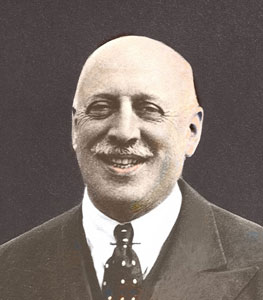
Discover C.H. Douglas’s proposals for economic and social renewal with the Pilgrims of St. Michael in Rougemont, Quebec Canada from Sept. 23 through September 28 2026.
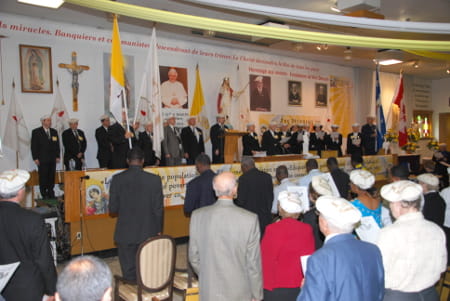
Rougemont Quebec Monthly Meetings
Every 4th Sunday of every month, a monthly meeting is held in Rougemont.
 In this special issue of the journal, MICHAEL, the reader will discover who are the true rulers of the world. We discuss that the current monetary system is a mechanism to control populations. The reader will come to understand that "crises" are created and that when governments attempt to get out of the grip of financial tyranny wars are waged.
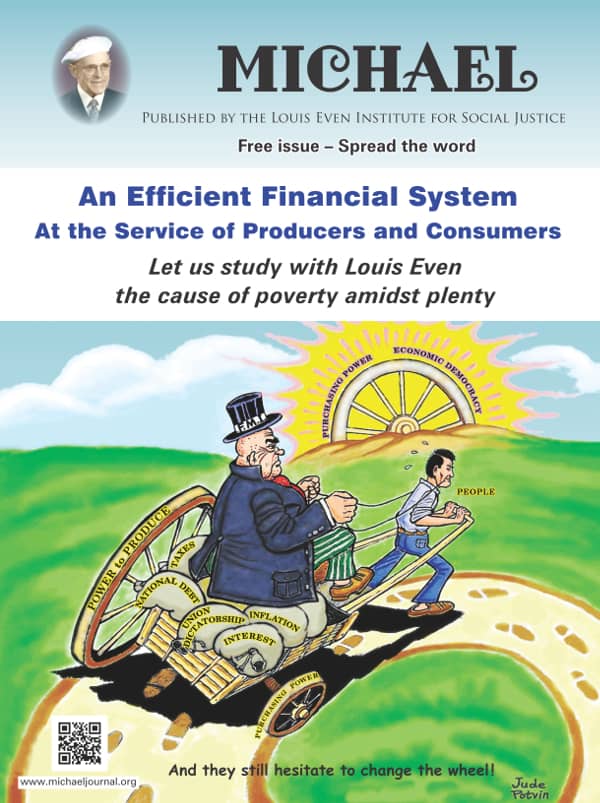 An Efficient Financial System, written by Louis Even, is for the reader who has some understanding of the Douglas Social Credit monetary reform principles. Technical aspects and applications are discussed in short chapters dedicated to the three propositions, how equilibrium between prices and purchasing power can be achieved, the financing of private and public production, how a Social Dividend would be financed, and, finally, what would become of taxes under a Douglas Social Credit economy. Study this publication to better grasp the practical application of Douglas' work.
  Reflections of African bishops and priests after our weeks of study in Rougemont, Canada, on Economic Democracy, 2008-2018
 The Social Dividend is one of three principles that comprise the Social Credit monetary reform which is the topic of this booklet. The Social Dividend is an income granted to each citizen from cradle to grave, with- out condition, regardless of employment status.
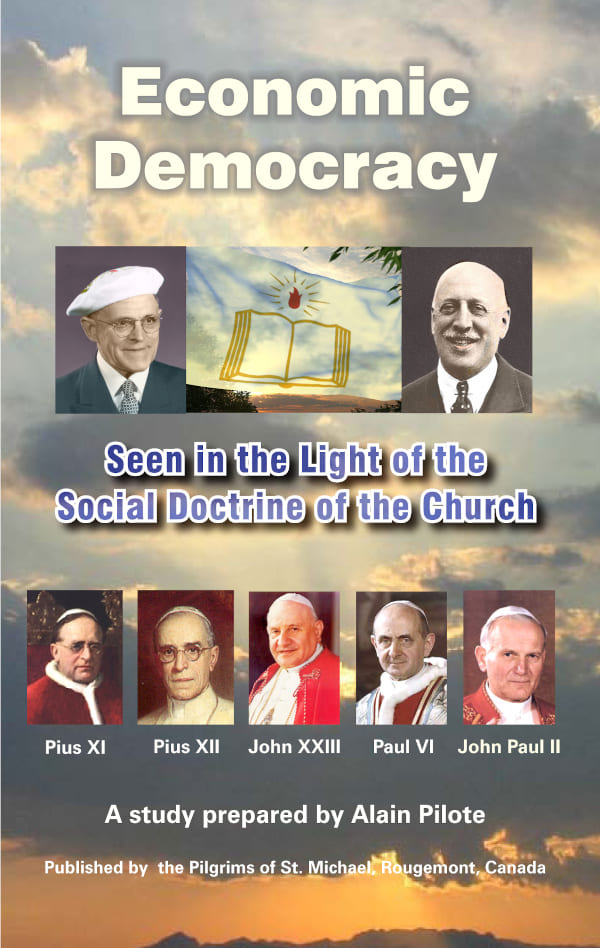 Economic Democracy is a book to explain Social Credit in lessons presented in logical order so it may be easier to the reader to grab the main principles of Social Credit rapidly and somehow easily.
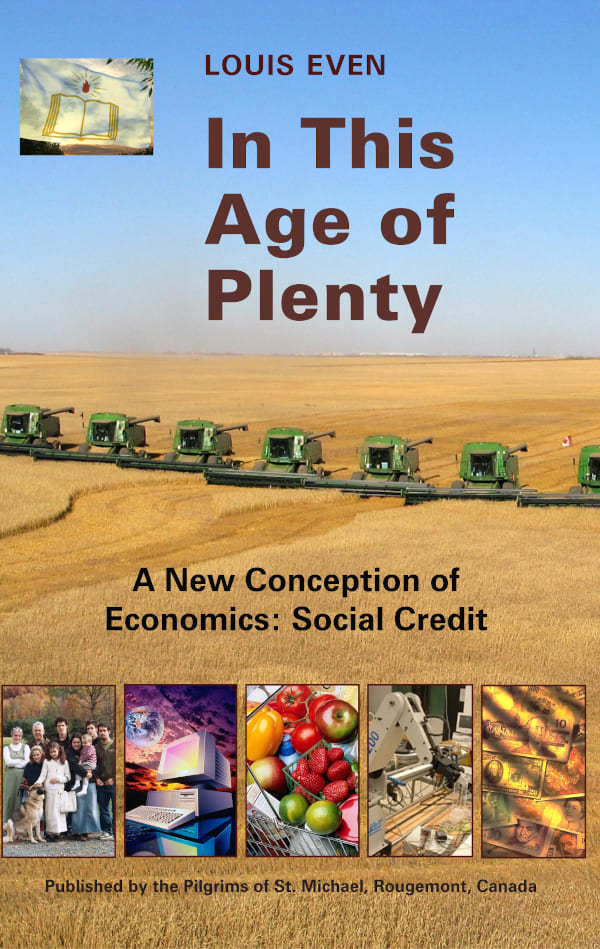 In This Age of Plenty deals with Social Credit, but it does not exhaust the topic. Social Credit principles address social and political matters, as well as, or even more so, than economics and will put civilization on a new course.
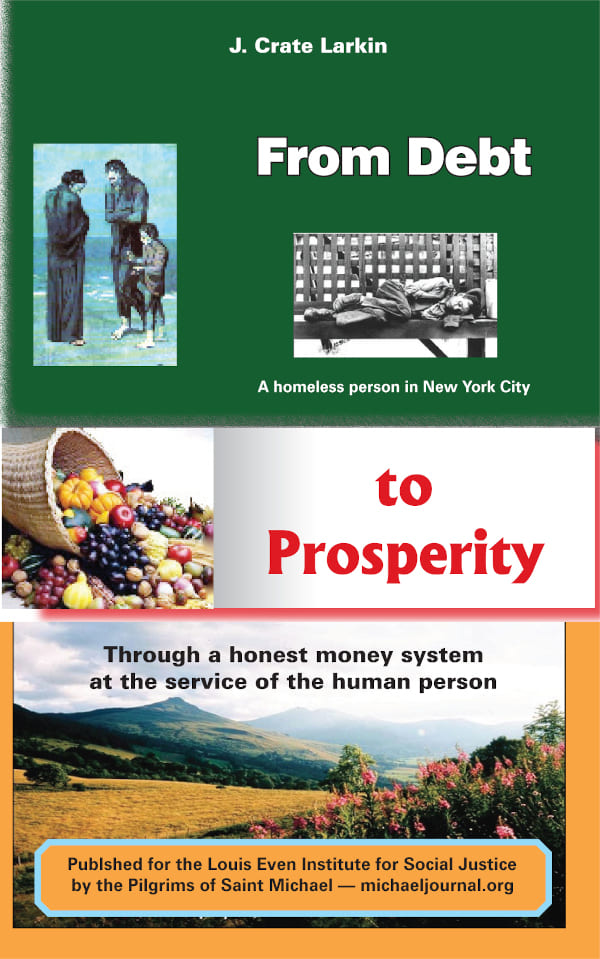 From Debt to Prosperity outlines briefly the economic analysis and constructive proposals known as Social Credit.
 Subscribe