

The April 16, 1999 issue of "The Catholic Observer" of Springfield, MA, published an article about the formal statement of the six Bishops of Connecticut on receiving Holy Communion. Moreover, the Vatican recently deplored that too many Catholics receive Holy Communion without first going to confession (One cannot receive Holy Communion if one has commited a mortal sin and did not confess it). Here are excerpts from this article:
Only those who "accept and believe what the Catholic Church teaches in general, and specifically about the Eucharist" can receive Communion in a Catholic church, they said.
Belief in the real presence of Christ in the Eucharistic bread and wine is essential. "This is a fundamental teaching of the Catholic Faith; anyone who does not believe this teaching may not receive Holy Communion," they said.
The Connecticut Bishops also reminded Catholics of their obligation to "go to confession frequently for the good of our souls" and to fast completely from food and drink, except water, for at least an hour before taking Communion... "It would be inconsistent and disrespectful to the Lord to eat a full meal or drink a significant quantity of alcoholic beverages before receiving Him," they added.
The Bishops also said that:
• Persons who have not yet been baptized should not receive Communion;
• No one who prefers the practice of receiving Communion on the tongue should be obliged to receive in the hand;
• When entering or leaving a church, Latin-rite Catholics should genuflect before the tabernacle.
Study Session on Economic Democracy And Annual Congress
Discover C.H. Douglas’s proposals for economic and social renewal with the Pilgrims of St. Michael in Rougemont, Quebec Canada from Sept. 23 through September 28 2026.
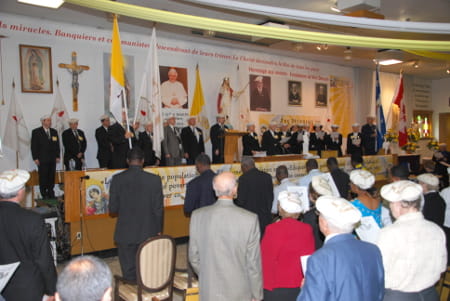
Rougemont Quebec Monthly Meetings
Every 4th Sunday of every month, a monthly meeting is held in Rougemont.
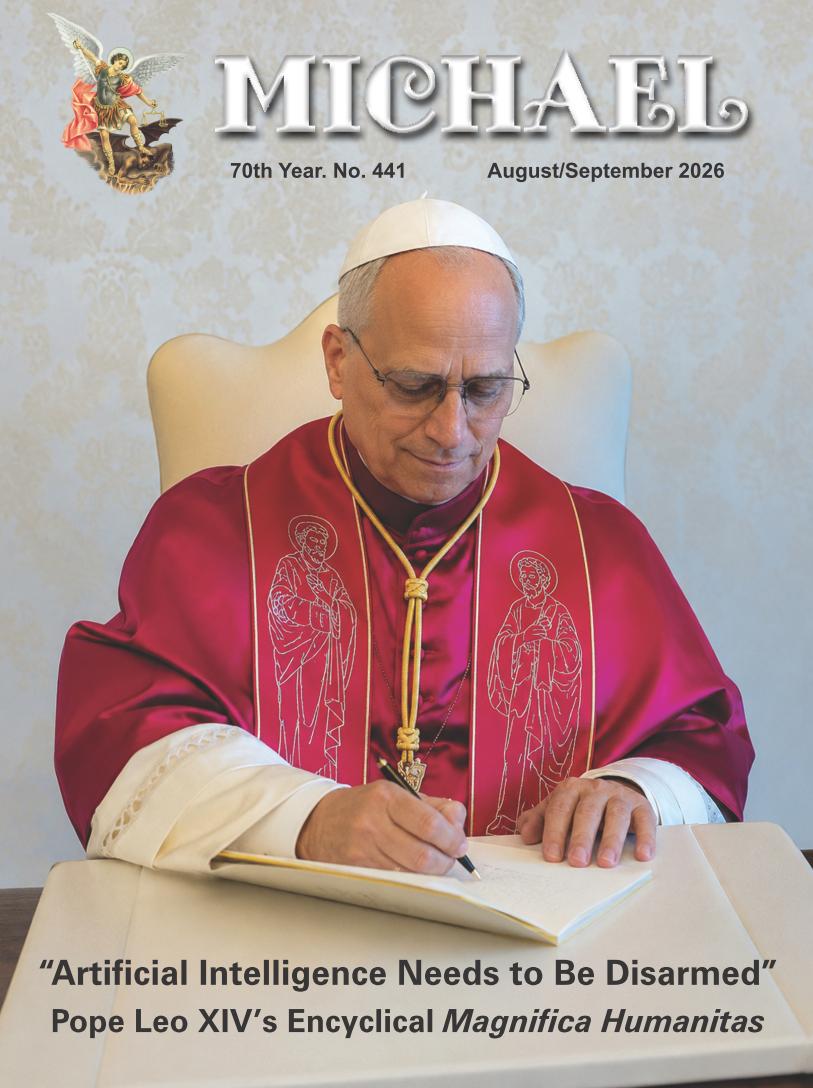
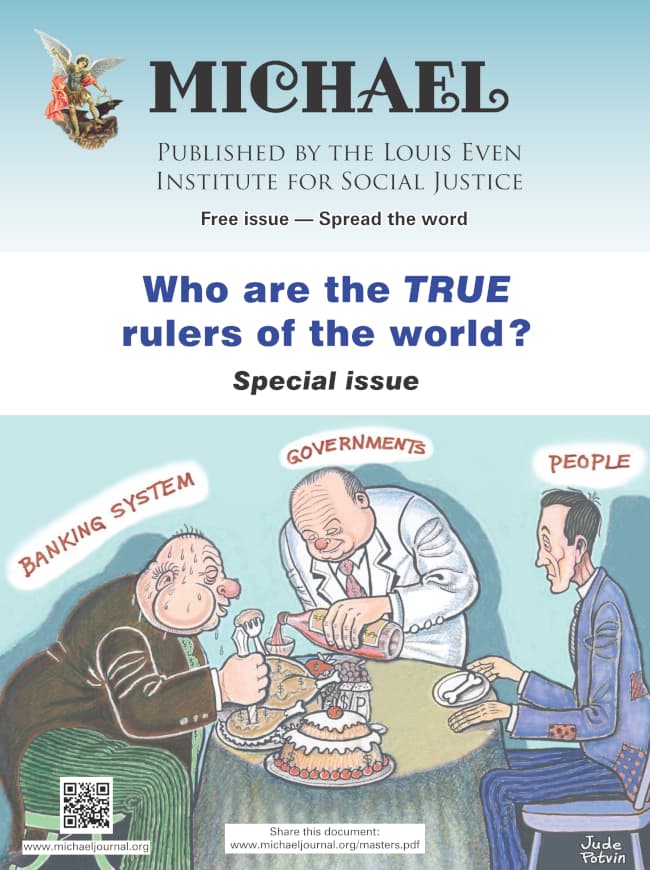 In this special issue of the journal, MICHAEL, the reader will discover who are the true rulers of the world. We discuss that the current monetary system is a mechanism to control populations. The reader will come to understand that "crises" are created and that when governments attempt to get out of the grip of financial tyranny wars are waged.
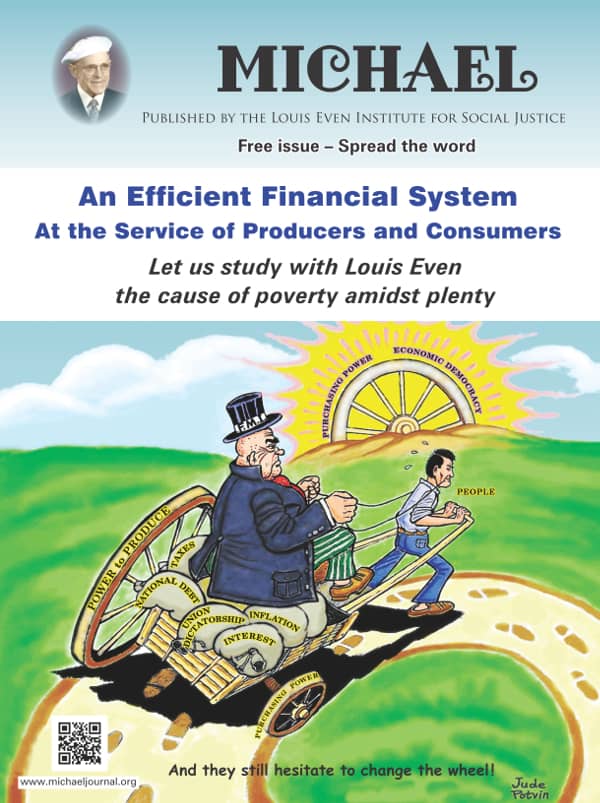 An Efficient Financial System, written by Louis Even, is for the reader who has some understanding of the Douglas Social Credit monetary reform principles. Technical aspects and applications are discussed in short chapters dedicated to the three propositions, how equilibrium between prices and purchasing power can be achieved, the financing of private and public production, how a Social Dividend would be financed, and, finally, what would become of taxes under a Douglas Social Credit economy. Study this publication to better grasp the practical application of Douglas' work.
 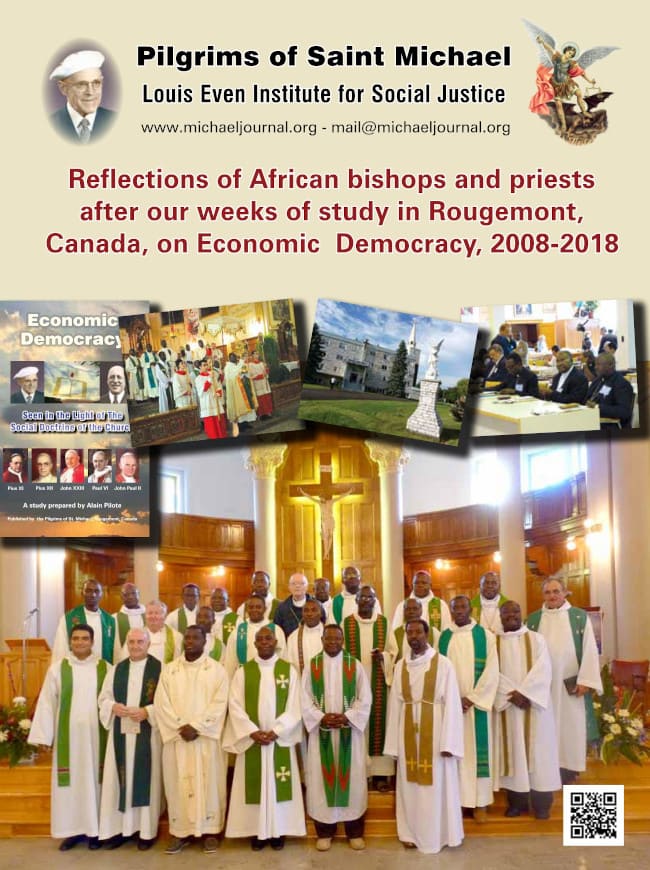 Reflections of African bishops and priests after our weeks of study in Rougemont, Canada, on Economic Democracy, 2008-2018
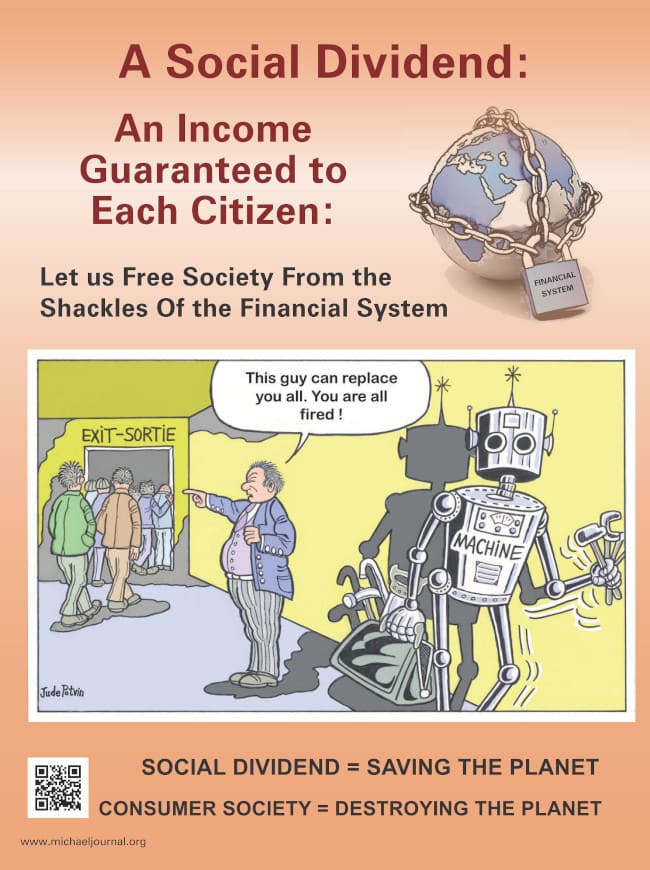 The Social Dividend is one of three principles that comprise the Social Credit monetary reform which is the topic of this booklet. The Social Dividend is an income granted to each citizen from cradle to grave, with- out condition, regardless of employment status.
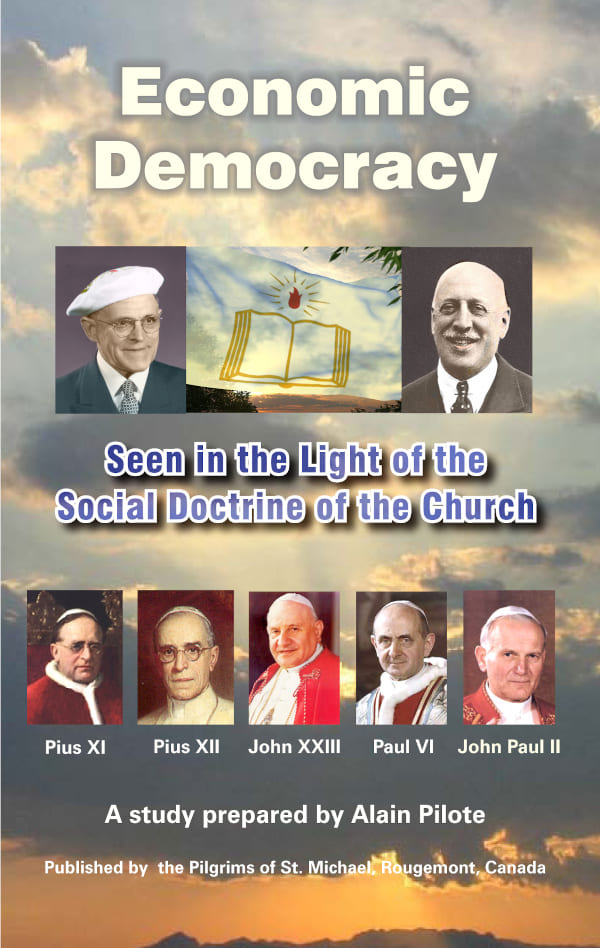 Economic Democracy is a book to explain Social Credit in lessons presented in logical order so it may be easier to the reader to grab the main principles of Social Credit rapidly and somehow easily.
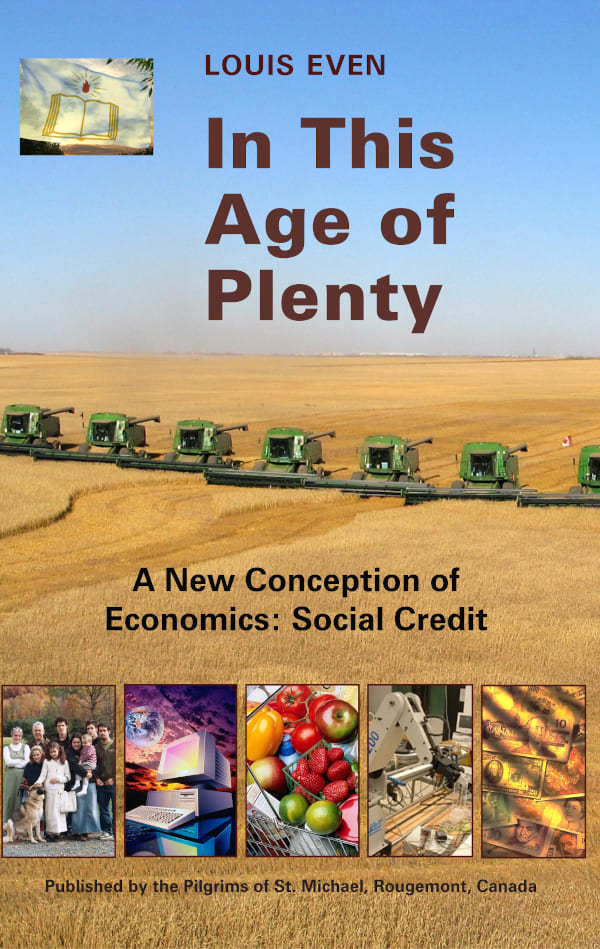 In This Age of Plenty deals with Social Credit, but it does not exhaust the topic. Social Credit principles address social and political matters, as well as, or even more so, than economics and will put civilization on a new course.
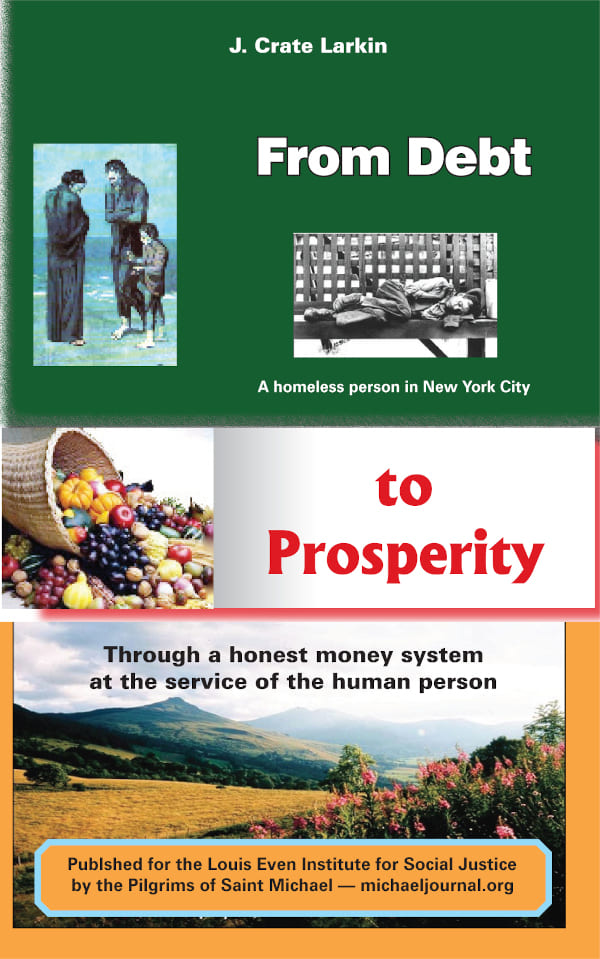 From Debt to Prosperity outlines briefly the economic analysis and constructive proposals known as Social Credit.
 Subscribe