
If Santa Claus is a little late, judging by that big twentieth century pack of his and the old nineteenth century chimney, it would seem that he's had pretty hard going.
And now with the advent of atomic power and increasing automation, Old Santa's troubles would seem to be just beginning, unless — unless that old chimney is enlarged!
Now, there are two approaches to his problem.
First, there are those who would make the pack smaller to fit the old chimney. This was the course pursued during the 'dirty thirties' by all governments. Coffee was burned, cattle and hogs destroyed, cotton ploughed under, milk thrown down the drain, and production restricted in all fields. And all the while, millions wallowed in poverty and want! Santa had a full pack, with a super-abundance of production glutting every factory and shop. But the chimney — the money system, which is the channel by which goods reach the consumer — was too small. And instead of enlarging the chimney, the production and abundance was destroyed.
But that was 20 years ago, you say. It surely couldn't happen today! We know better now! How interesting — especially in view of the fact that only in recent months Brazil has been considering the burning of 6 or 7 million bags of coffee; the US's number one domestic problem is SURPLUSES, which they are now trying to dump abroad at give-away prices as they plan a huge program of paying farmers and producers NOT to produce; and in Canada our most urgent domestic problem is SURPLUSES. We haven't storage space for our mountains of wheat, and in our desperation to get from under pork and butter surpluses we have been subsidizing their sale to Red-controlled countries at a fraction of the price our own housewives have to pay.
It is ridiculous, with surplus butter in Canada, that many Canadians, unable to afford butter, have to eat a substitute, while footing the bill to ship it off to Poland or Czechoslovakia at a price which, if sold at in Canada, we COULD afford. If the consumption of butter must be subsidized, why not subsidize its consumption right here in Canada and give our own people the benefit of the cheaper prices?
But there is another approach than Restriction and Destruction: REMODEL AND ENLARGE THAT CHIMNEY.
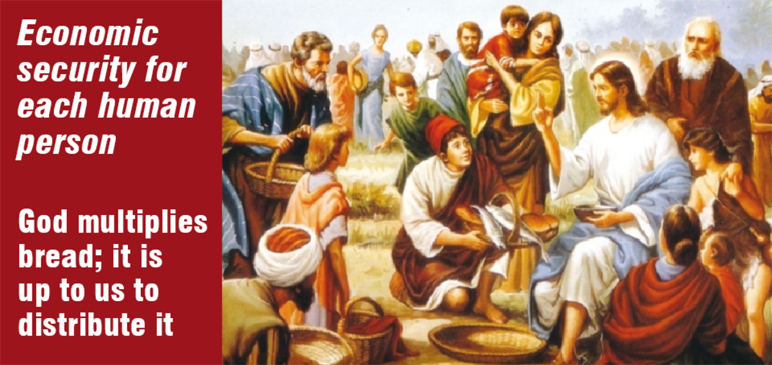
Money is really only a ticket to claim goods and services. The financial system should reflect physical facts. And today the physical facts in this country add up to ABUNDANCE. But an abundance of wealth, be it butter or medical services, is of little use to our people unless they have enough purchasing power to claim and consume it. The Social Credit approach to this problem is not to restrict and destroy the abundance of the Creator, but to so adjust our financial system that it will enable our people to consume and enjoy the abundance. There must be a dollar in purchasing-power in the pockets of the consumer for every dollar in price tags on goods and services for sale.
This would solve the problem of both consumer and producer.
Open up the financial bottleneck and give Old Santa a chance. Santa or no Santa, this is just plain common sense.
Study Session on Economic Democracy And Annual Congress
Discover C.H. Douglas’s proposals for economic and social renewal with the Pilgrims of St. Michael in Rougemont, Quebec Canada from Sept. 23 through September 28 2026.
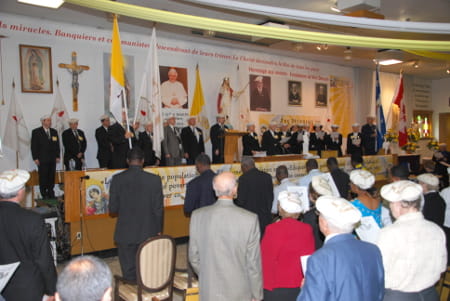
Rougemont Quebec Monthly Meetings
Every 4th Sunday of every month, a monthly meeting is held in Rougemont.
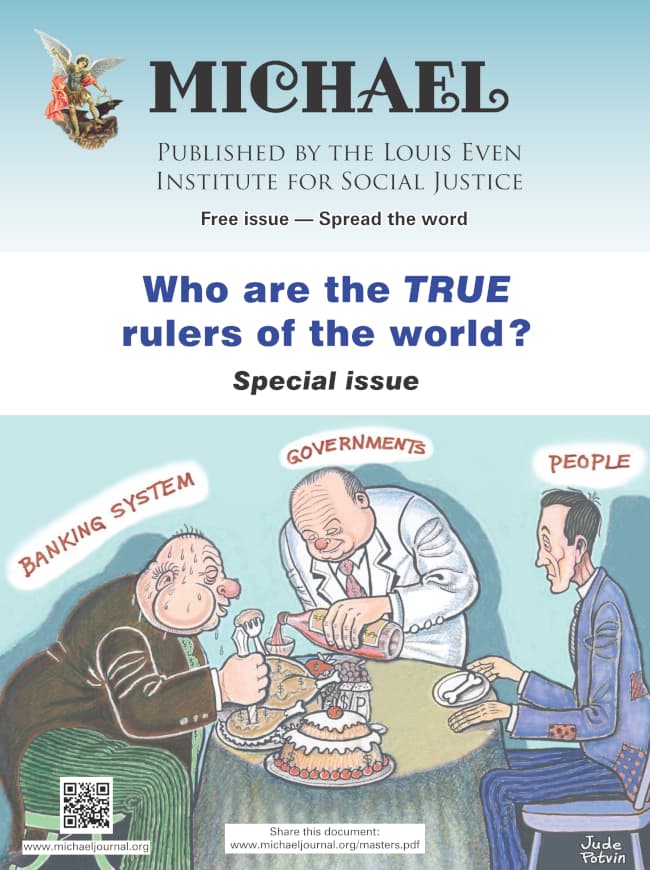 In this special issue of the journal, MICHAEL, the reader will discover who are the true rulers of the world. We discuss that the current monetary system is a mechanism to control populations. The reader will come to understand that "crises" are created and that when governments attempt to get out of the grip of financial tyranny wars are waged.
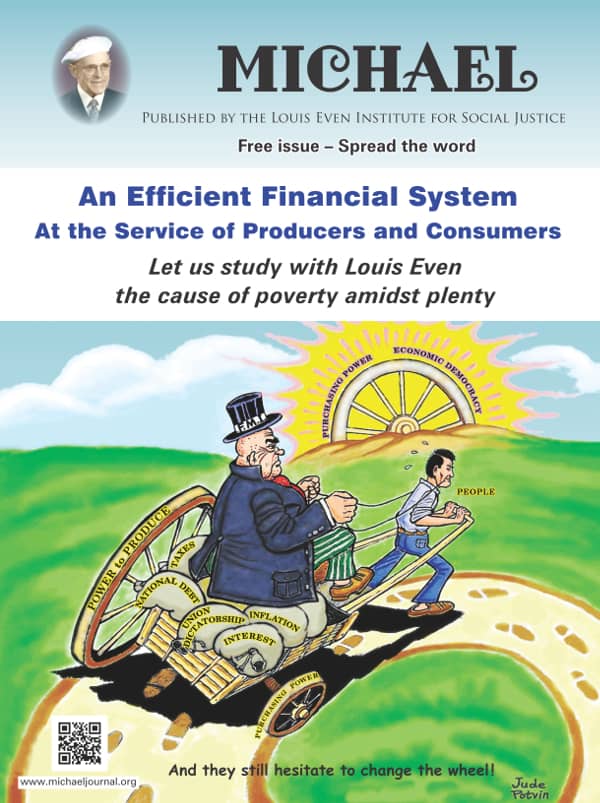 An Efficient Financial System, written by Louis Even, is for the reader who has some understanding of the Douglas Social Credit monetary reform principles. Technical aspects and applications are discussed in short chapters dedicated to the three propositions, how equilibrium between prices and purchasing power can be achieved, the financing of private and public production, how a Social Dividend would be financed, and, finally, what would become of taxes under a Douglas Social Credit economy. Study this publication to better grasp the practical application of Douglas' work.
 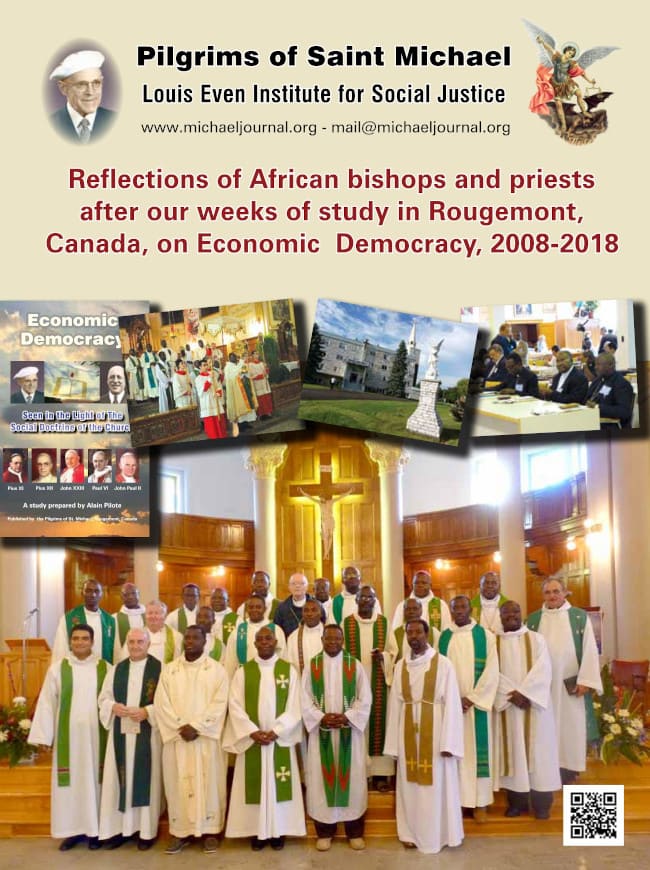 Reflections of African bishops and priests after our weeks of study in Rougemont, Canada, on Economic Democracy, 2008-2018
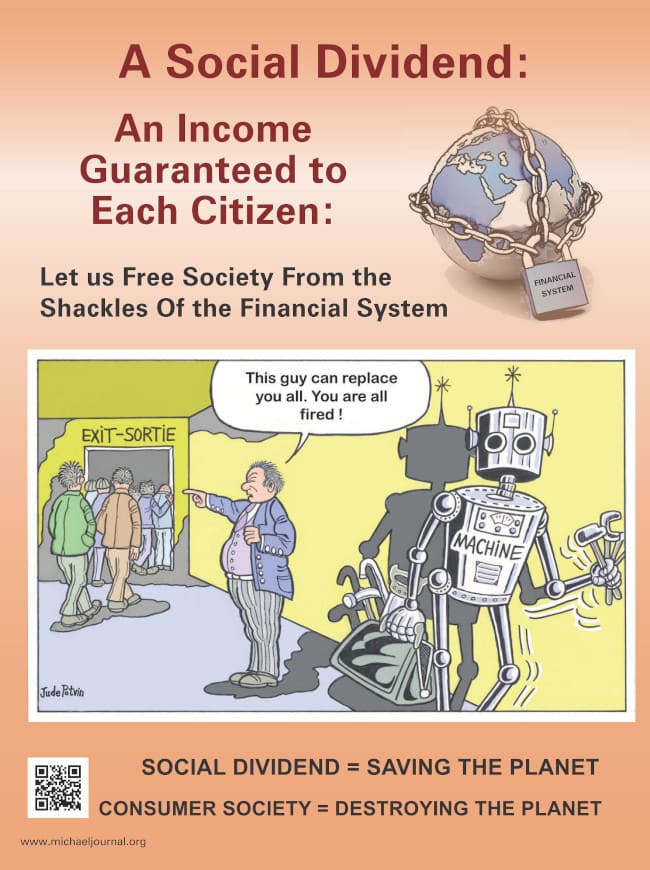 The Social Dividend is one of three principles that comprise the Social Credit monetary reform which is the topic of this booklet. The Social Dividend is an income granted to each citizen from cradle to grave, with- out condition, regardless of employment status.
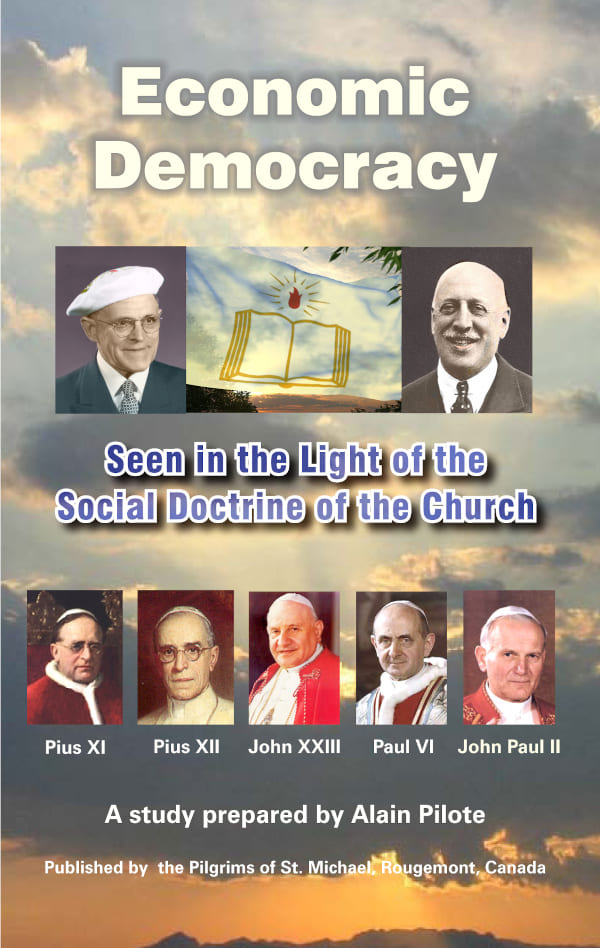 Economic Democracy is a book to explain Social Credit in lessons presented in logical order so it may be easier to the reader to grab the main principles of Social Credit rapidly and somehow easily.
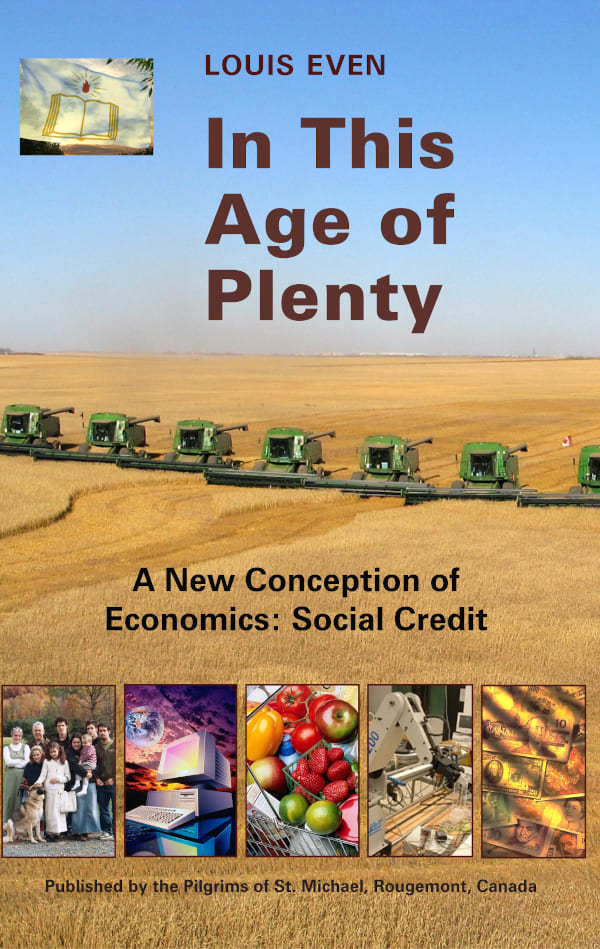 In This Age of Plenty deals with Social Credit, but it does not exhaust the topic. Social Credit principles address social and political matters, as well as, or even more so, than economics and will put civilization on a new course.
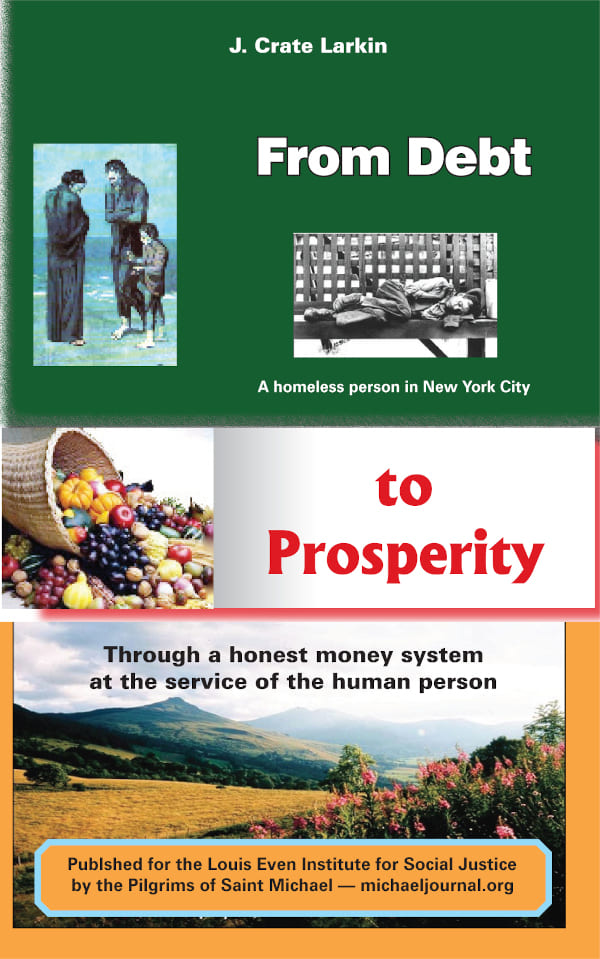 From Debt to Prosperity outlines briefly the economic analysis and constructive proposals known as Social Credit.
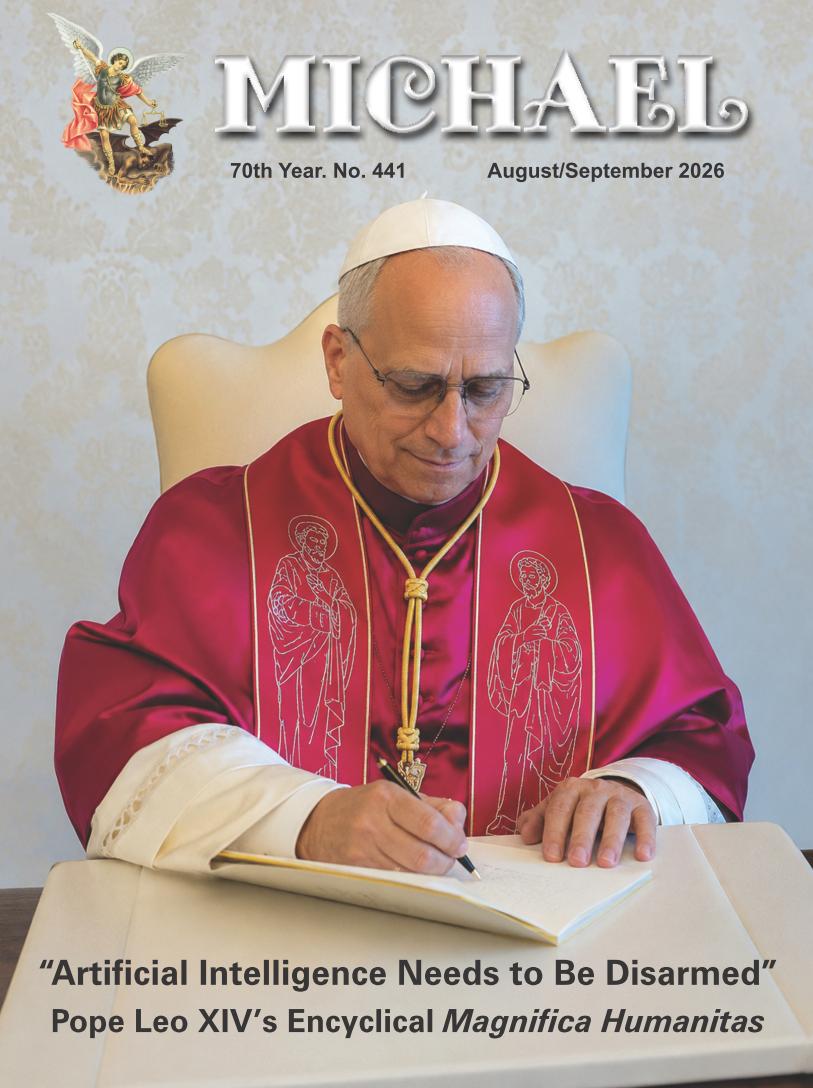 Subscribe