



In Time magazine for March 9, 1959, we read: "This week... a new law (signed by President Eisenhower six months ago) becomes effective. Its burden: before processors may add any chemical to food; its safety must be proved to the satisfaction of the Food and Drug Administration."
Food is becoming increasingly impregnated with chemicals (some 400, estimates Time) used as "preservatives, coloring agents, antioxidants, mold inhibitors, bleaches, thickners, thinners, emulsifiers, etc." The long-range effects of these and many other newly synthesized chemicals on the body is not yet known. So the U. S. government is taking the obvious step to try and cut down on the risk involved in this wholesale dosing of society with chemicals.
But then, what about fluoridation? Here certainly is a chemical. In fact, it is a chemical which is also a highly violent poison. Yet politicians of all hues and colors, professional men of dubious standards or questionable intelligence are busy all over the land lauding the mixture of fluoride with drinking water and pushing it for all they are worth. And there is no law to check them. This mixture does not affect the water, does not treat it; it affects only the boby, specifically and more restrictedly, the teeth of very young children!
And what is known about the long-range effect of this deadly poison upon the body? Nothing! How carefully are the dosages of this deadly poison regulated? They are not regulated. How can they be? The stuff is poured into the water in certain quantities, but there is no way of regulating the amount of water each and every citizen should drink daily.
This food law requires that the chemical producer do the testing since the food manufacturer has neither the time nor the facilities for such tests. A minimum of two years try-out on animals is required. If there is any suspicion of cancer the tests may be prolonged for as long as seven years. Testing will cost industry millions and the Food and Drug Administration will need an additional $1,000,000 a year to check the test methods and data, says Time.
How much has been provided for fluoridation? How much money is spent on checking its possible effects? Or rather, how much money was spent since some cities have had it for a number of years now?
And in view of the ugly hints contained in some medical reports coming in from long-time fluoridated areas, it might have been a fatal oversight that such a check was not provided a long time ago.
This law of the U. S. A. is highly commendable and should have been legislated into existence a long time ago. But at the same time the law makers should have had the foresight, intelligence and gumption to include fluoride among those chemicals which must be tested exhaustively before they are administered to human beings.
E. M.
Study Session on Economic Democracy And Annual Congress
Discover C.H. Douglas’s proposals for economic and social renewal with the Pilgrims of St. Michael in Rougemont, Quebec Canada from Sept. 23 through September 28 2026.

Rougemont Quebec Monthly Meetings
Every 4th Sunday of every month, a monthly meeting is held in Rougemont.
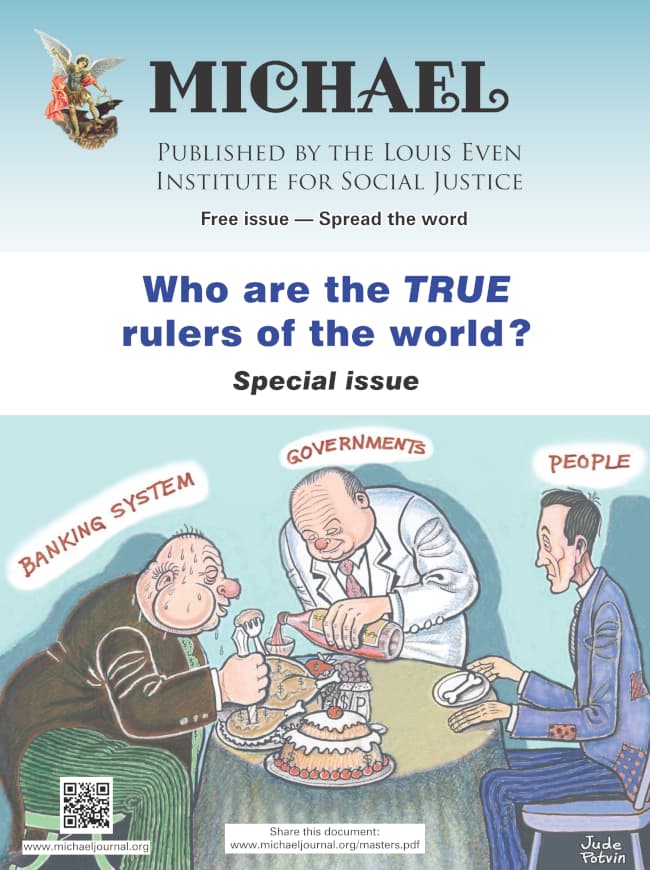 In this special issue of the journal, MICHAEL, the reader will discover who are the true rulers of the world. We discuss that the current monetary system is a mechanism to control populations. The reader will come to understand that "crises" are created and that when governments attempt to get out of the grip of financial tyranny wars are waged.
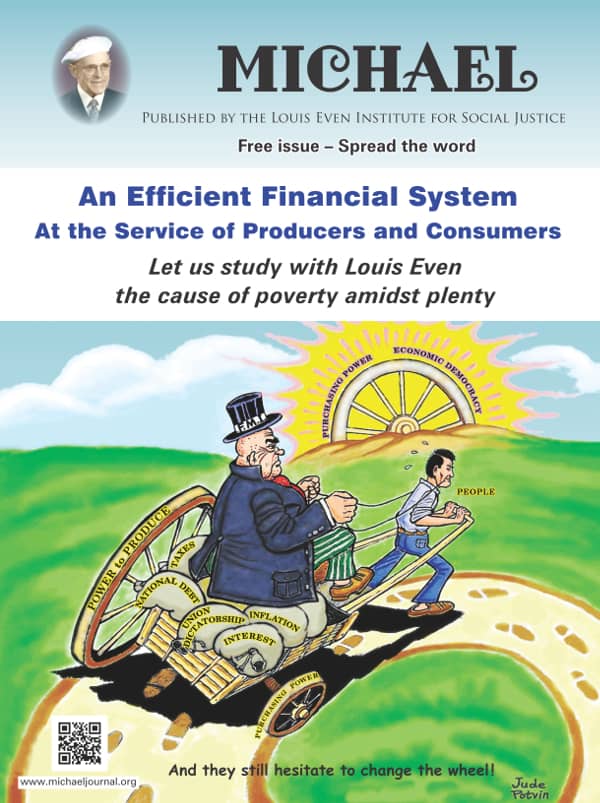 An Efficient Financial System, written by Louis Even, is for the reader who has some understanding of the Douglas Social Credit monetary reform principles. Technical aspects and applications are discussed in short chapters dedicated to the three propositions, how equilibrium between prices and purchasing power can be achieved, the financing of private and public production, how a Social Dividend would be financed, and, finally, what would become of taxes under a Douglas Social Credit economy. Study this publication to better grasp the practical application of Douglas' work.
  Reflections of African bishops and priests after our weeks of study in Rougemont, Canada, on Economic Democracy, 2008-2018
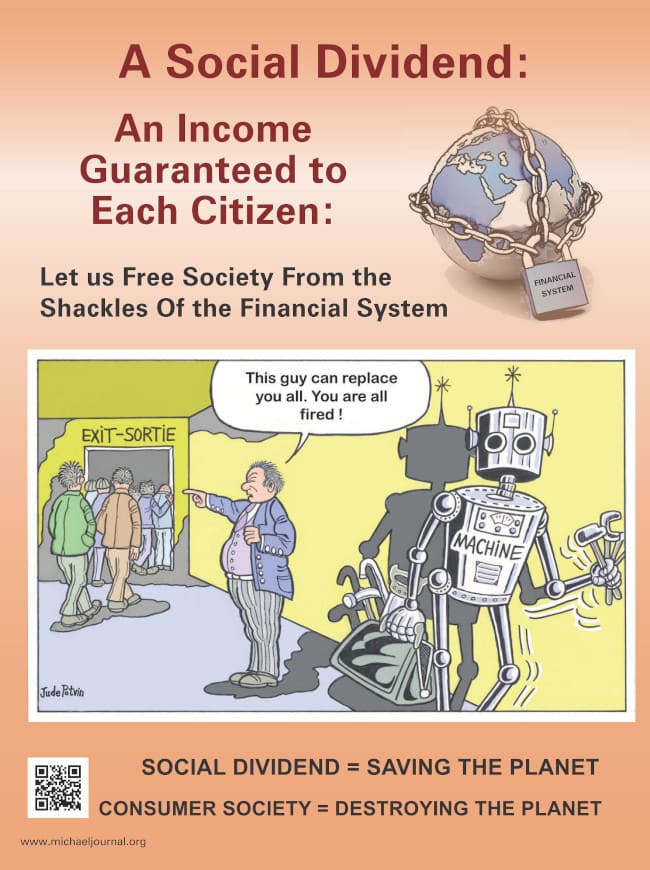 The Social Dividend is one of three principles that comprise the Social Credit monetary reform which is the topic of this booklet. The Social Dividend is an income granted to each citizen from cradle to grave, with- out condition, regardless of employment status.
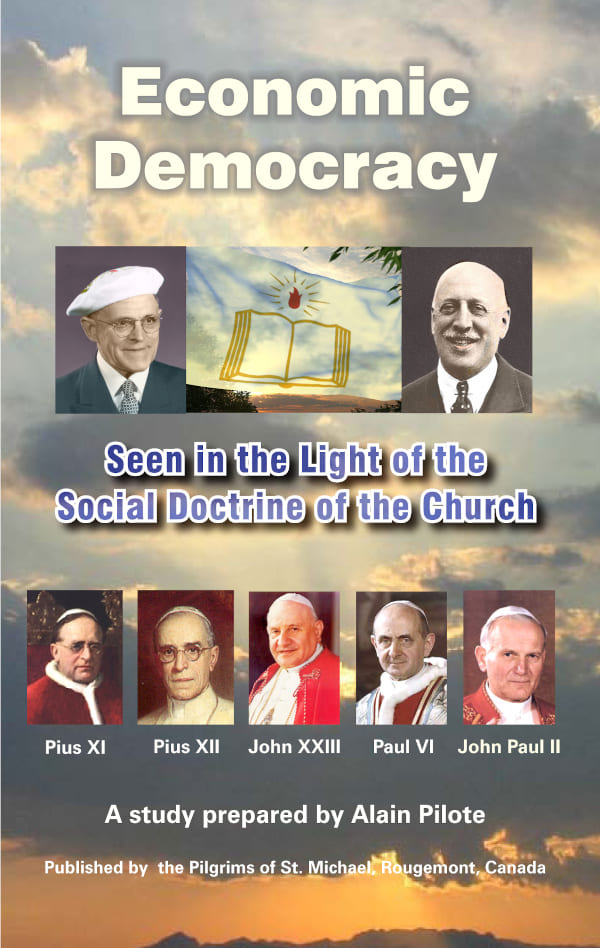 Economic Democracy is a book to explain Social Credit in lessons presented in logical order so it may be easier to the reader to grab the main principles of Social Credit rapidly and somehow easily.
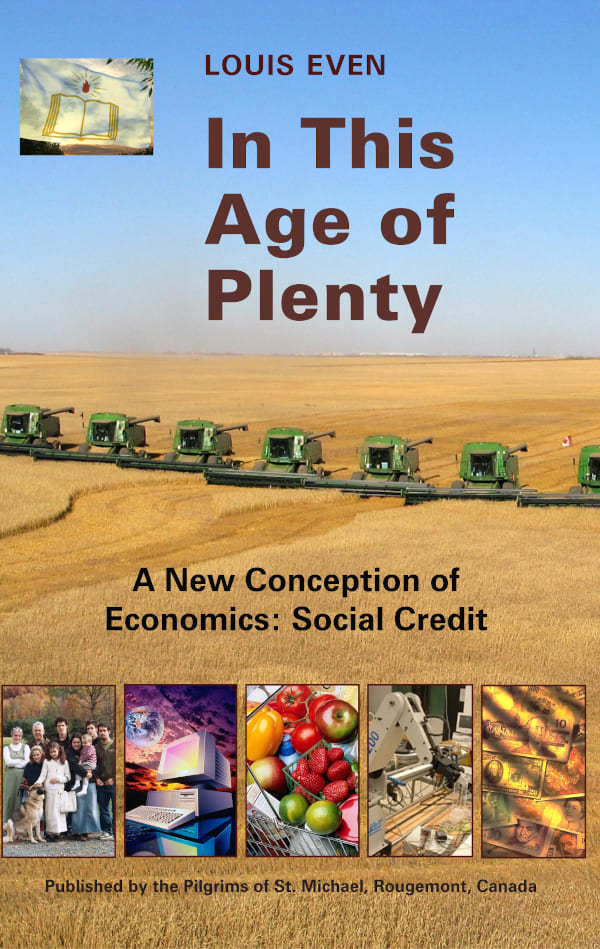 In This Age of Plenty deals with Social Credit, but it does not exhaust the topic. Social Credit principles address social and political matters, as well as, or even more so, than economics and will put civilization on a new course.
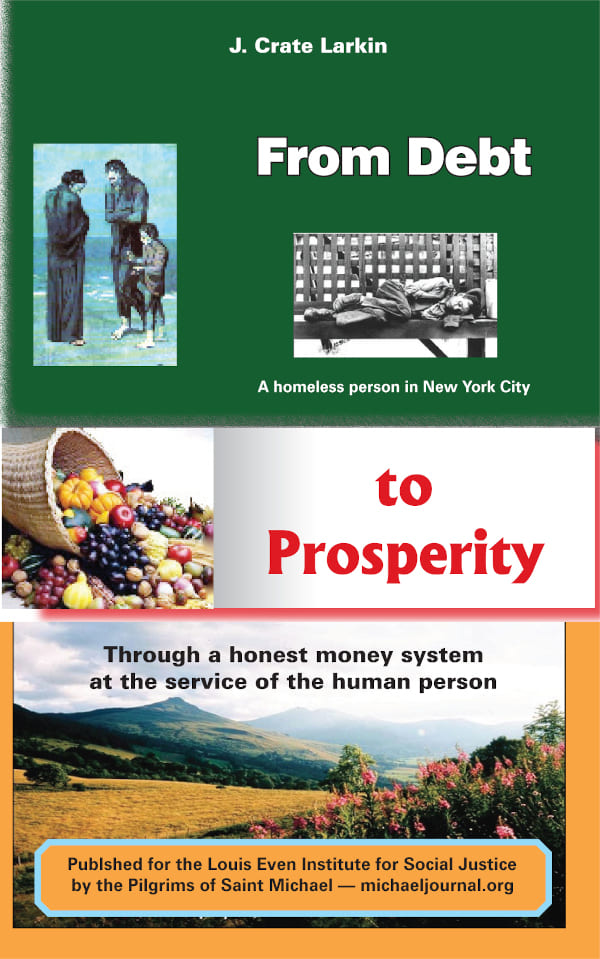 From Debt to Prosperity outlines briefly the economic analysis and constructive proposals known as Social Credit.
 Subscribe