

Urbain Lajeunesse, one of the full-time workers of the Union of Electors, has been working in New Brunswick the last few months. He wrote to us from the town of Juniper in that province, describing conditions as he saw them: "I realize every day that we are living in a country of plenty. I also realize that the individual Canadian, the little fellow, is doing his job perfectly. If I need potatoes I can see that in New Brunswick, the farmers are doing a swell job of raising potatoes — good potatoes and lots of them. In the stores up here we can find everything that one needs, from pins to bulldozers; there is furniture, clothing, housing material, everything you need. Which only goes to show that Canadians are doing their job of producing efficiently and well. But it is very sad to see how lazy, short-sighted and cold-hearted the Bank of Canada is. It's duty is to see that there is money to make all these good things meet the needs of Canadians. It isn't doing this. At Limestone Siding, on September 18, they were throwing out meat, vegetables, fruit, etc. That very night, in the same district, I saw people going to bed without supper. Had they had money they would most certainly have bought up all that food which was thrown out because it was on the point of rotting. It is terrible the way the people here are being taxed. And as for the hospital plan (the state obligatory health insurance plan which is in force in New Brunswick — Ed.). -- how the people are protesting against it! They are refusing to sign and those who were influenced or forced to sign, are now refusing to pay. People here are very poor. At the present time they are starting to pick potatoes. This work will last for approximately two or three weeks. They get an average of eighteen, twenty or twenty five cents for a 165-pound barrel. And believe me, it is no easy job picking potatoes. It is incredible that women should be obliged to pick potatoes, some of them even being sick. But it is their one hope of getting a little money. They won't see any again until next Fall. It is too bad that Mr. Coyne, the governor of the Bank of Canada, isn't around here.
A lot of the women would like to set him to work picking potatoes. He might learn something. A great part of the people suffer from want of clothing and food. Some children cannot attend school regularly because they haven't the proper clothing or shoes. And yet the New Brunswick government can find the money to send beauty queen, Miss Fredericton, down south to attend the beauty contest, and also pay for an escort of two Mounties. As far as work or jobs are concerned, they're very hard to find. We meet men all along the roadsides, travelling about looking for work."
The vice-president of the H.J. Heinz Company, writing to a concerned consumer on April 22, 1958, stated:
"For many years we have been using water from our own deep wells (in the production of Heinz foods). While it is true that until three years ago we also used some of the city water supply (Pittsburgh water is fluoridated), beginning in 1955, we had sufficient wells available that we no longer used any of the city supply; therefore we are not using any fluoridated water in the production of Heinz products. This, of course, ties in closely with the recommendation of the Federal Food and Drug Administration. Their statement is somewhat along the line that at no time should the food manufacturers use fluoridated water if they are concentrating any part of their recipe operation. This particularly applied to precooked cereals for babies. I can assure you that we never used any fluoridated water in this variety."
Prevention magazine, for October, 1959
On Thursday, October 15, the Hon. Jean-Paul Sauvé, premier of Quebec, was present at a conference of the Ministers of Finance in Ottawa. Here is what he said to reporters, on the subject of state hospital insurance.
"Quebec, up to the present, has refused to adopt the plan of hospital insurance – because of very practical difficulties in applying this program. You must remember that there are in the province of Quebec, three types of hospitals; those depending upon the provincial government, private institutions and institutions run by religious groups. Before making ony changes in Quebec's system, which is rendering immense service, the application of this new plan must be carefully studied. For us in Quebec, the formula is much more complex than it is elsewhere. Now, in other provinces the new program has created problems which had not been foreseen, and has caused very considerable headaches. And there are some provinces which regret having undertaken it too soon."
Yes, Mr. Premier, there are provincial govem ments which regret having adopted the Federal government's plan for hospital insurance. And we can tell you that the people of these provinces regret it even more, because they are the ones who must suffer; the governments are only slightly aware of what they are undergoing. If ever a premier were to take the trouble to visit the country district of Robertville in New Brunswick or Notre Dames des Erables, or walk the streets of New Castle or Campbelton, he would soon learn what the tax imposed in the name of hospital insurance really meant. And the same can be said with regard to other provinces.
We are going to study the federal plan" - said Premier Sauvé. But surely everyone knows that it is simply another step along the road to complete centralization. And anyone professing autonomy cannot accept it! Surely everyone knows that it is a Socialist measure with no other end but to regent the people, to enslave them to a system of bureaucracy and controls. Obligatory hospital insurance is nothing more or less than one more tax imposed at a time when all taxes should be abolished in favor of the dividend.
It is not an obligatory hospital insurance plan that should be studied by the premiers, but rather the principles and policies of Social Credit and that as quickly as possible. When families are unable to meet hospital expenses, even when the hospitals are only too ready to render all the services needed, it is a sign that the purchasing power of families is not sufficient to make use of the country's wealth; it is a sign that the financial system is not filling its role of financing the country.
The financial system should be studied. It should be changed with all speed possible. If not, we are going to wake up some day tightly bound in the chains of complete Socialism. Our financial problems will not have been solved and, in addition, we shall have fallen into slavery...
Study Session on Economic Democracy And Annual Congress
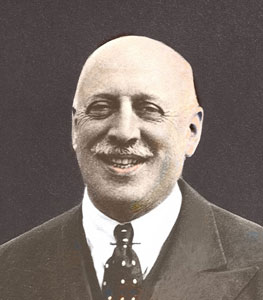
Discover C.H. Douglas’s proposals for economic and social renewal with the Pilgrims of St. Michael in Rougemont, Quebec Canada from Sept. 23 through September 28 2026.
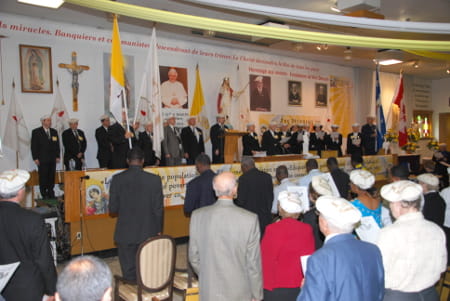
Rougemont Quebec Monthly Meetings
Every 4th Sunday of every month, a monthly meeting is held in Rougemont.
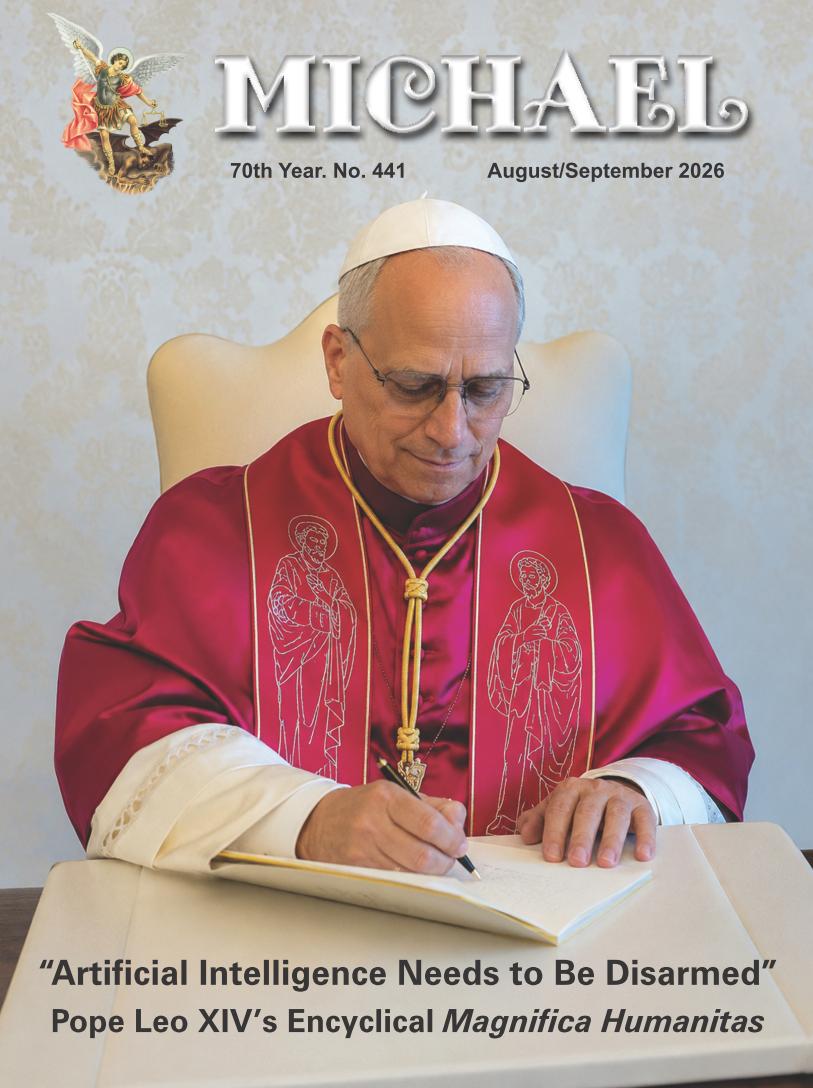
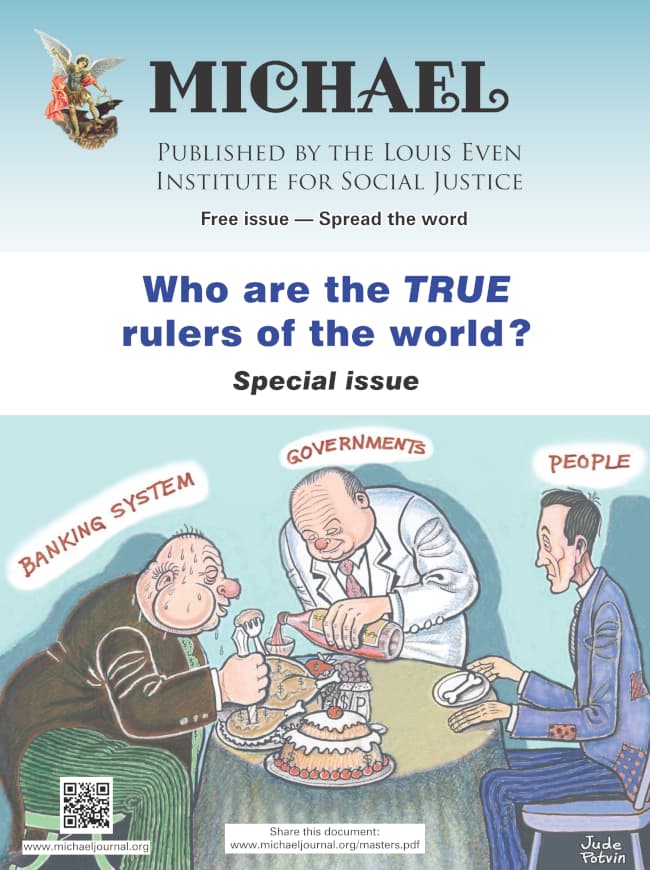 In this special issue of the journal, MICHAEL, the reader will discover who are the true rulers of the world. We discuss that the current monetary system is a mechanism to control populations. The reader will come to understand that "crises" are created and that when governments attempt to get out of the grip of financial tyranny wars are waged.
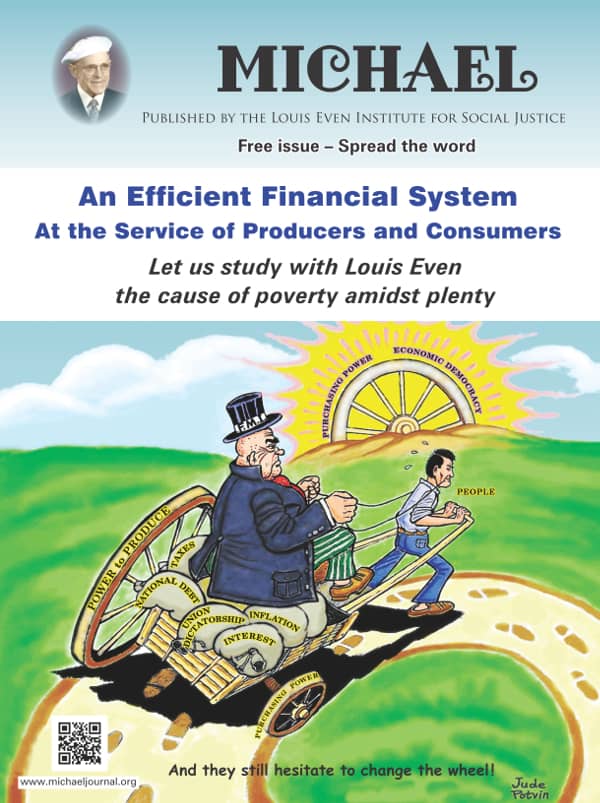 An Efficient Financial System, written by Louis Even, is for the reader who has some understanding of the Douglas Social Credit monetary reform principles. Technical aspects and applications are discussed in short chapters dedicated to the three propositions, how equilibrium between prices and purchasing power can be achieved, the financing of private and public production, how a Social Dividend would be financed, and, finally, what would become of taxes under a Douglas Social Credit economy. Study this publication to better grasp the practical application of Douglas' work.
 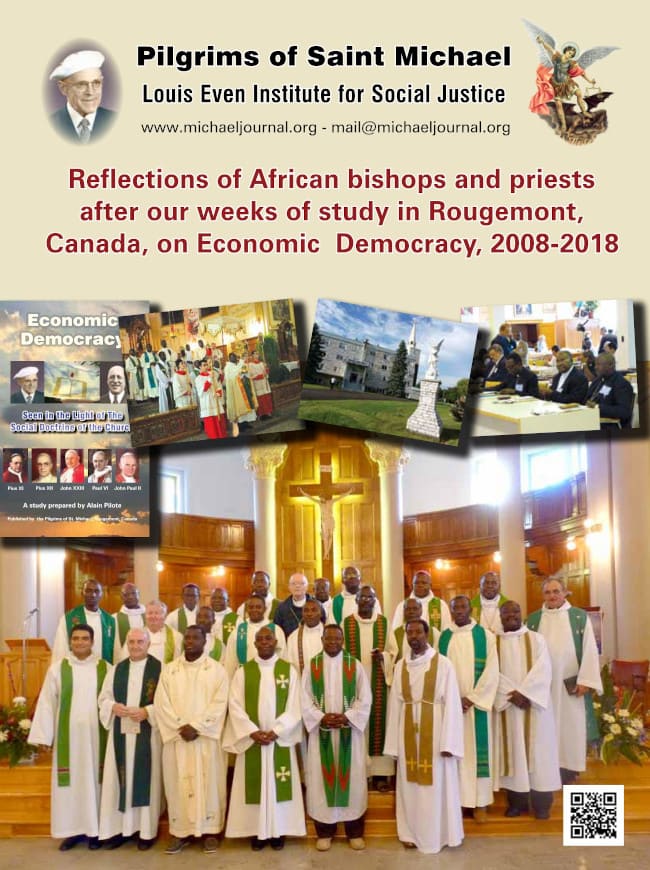 Reflections of African bishops and priests after our weeks of study in Rougemont, Canada, on Economic Democracy, 2008-2018
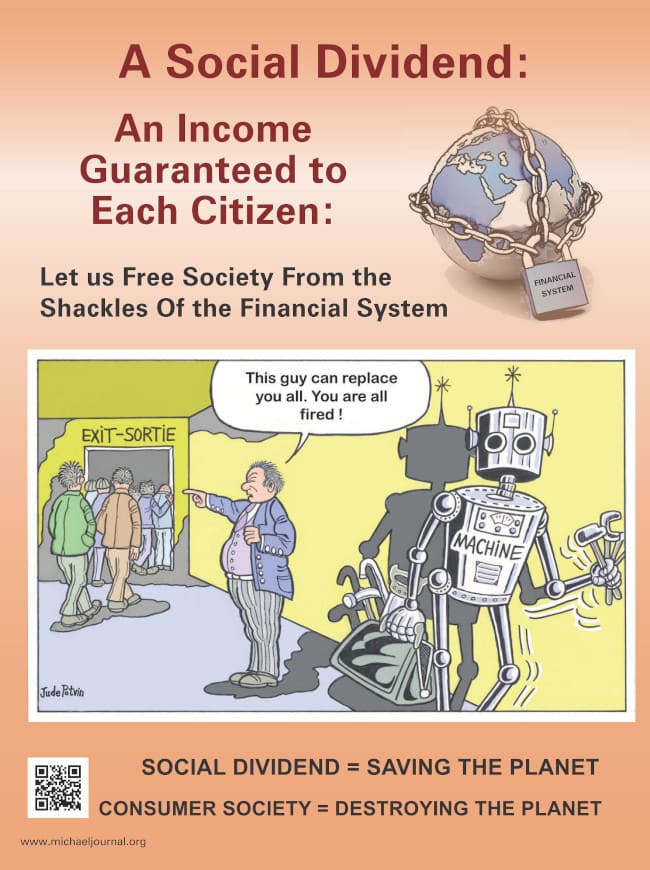 The Social Dividend is one of three principles that comprise the Social Credit monetary reform which is the topic of this booklet. The Social Dividend is an income granted to each citizen from cradle to grave, with- out condition, regardless of employment status.
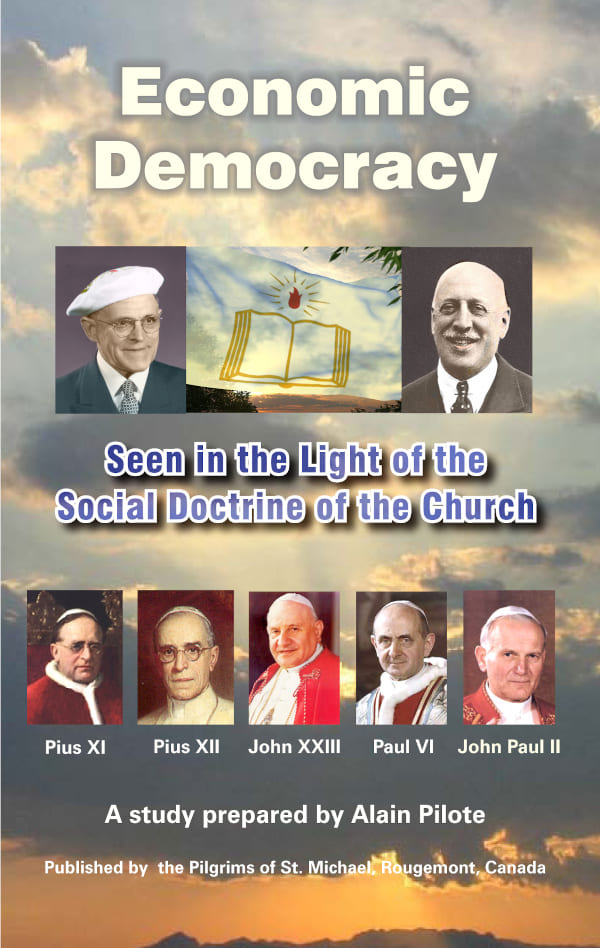 Economic Democracy is a book to explain Social Credit in lessons presented in logical order so it may be easier to the reader to grab the main principles of Social Credit rapidly and somehow easily.
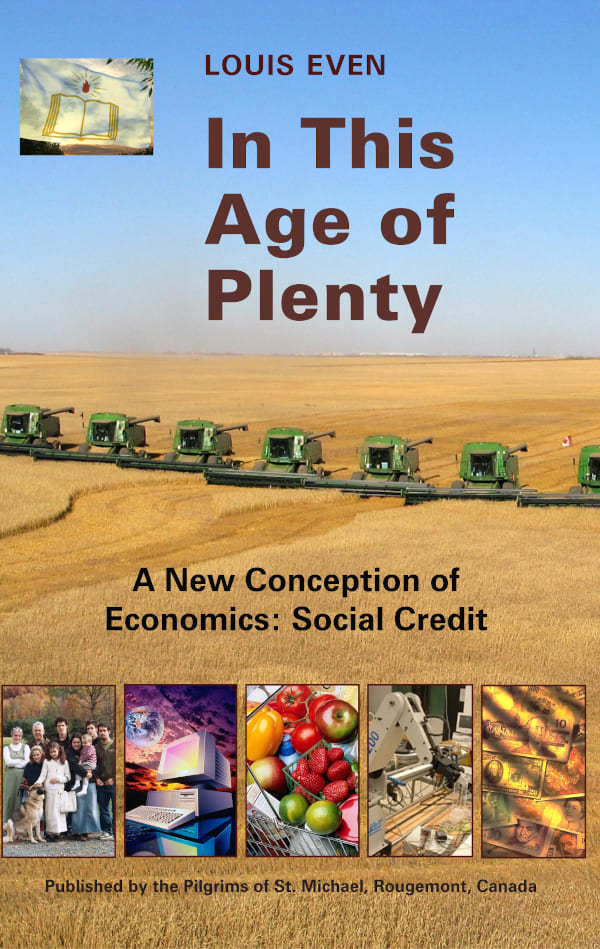 In This Age of Plenty deals with Social Credit, but it does not exhaust the topic. Social Credit principles address social and political matters, as well as, or even more so, than economics and will put civilization on a new course.
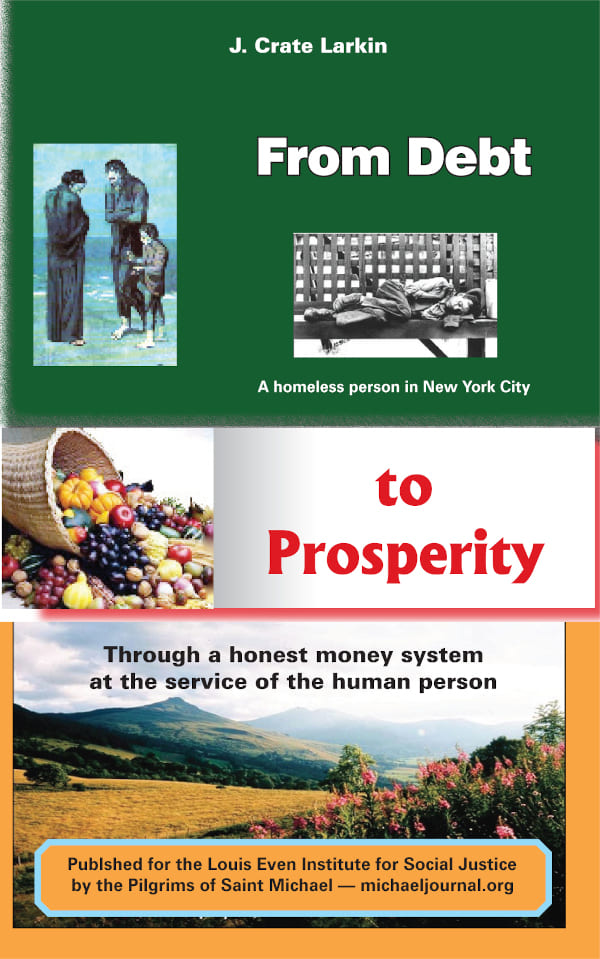 From Debt to Prosperity outlines briefly the economic analysis and constructive proposals known as Social Credit.
 Subscribe