
This new monthly, The Union of Electors, is a successor to Social Credit Service, produced from the same source and serving the same purpose. The subscribers to Social Credit Service automatically become subscribers to The Union of Electors, until the expiration of their running subscription which we sincerely hope they will renew.
This is a Social Credit organ, just as was Social Credit Service. Why the change of name? Because we want to make it plain that this is not a party organ. The two noble words "Social Credit', primarily used to identify a doctrine of great import, have been dragged down to designate also a political party, especially so in Canada. This is most unfortunate, not only because it leads to confusion and places adherents of other parties in guard against the very message of Social Credit, but because the philosophy of genuine Social Credit is in diametrical opposition to party politics.
The Union of Electors is published by the Institute of Political Action. And the Institute believes that political results for the good of all can best be obtained by uniting the citizens on policies agreed in common, not by dividing them into parties, each one striving for power.
The Institute therefore promotes a union of the electors, conscious of their common desires, to give orders to the people's representatives in Parliament. It places the importance on the people outside Parliament rather than on those who occupy or aspire to occupy seats in Parliament. It seeks to return the sovereign power to the people, of whom the elected M.P.'s must only be faithful spokesmen to transmit orders to experts and institutions whose only right function is to serve the people's will.
In this and in its opposition to party politics, the Institute may not be in accord with the leaders of the so-called Social Credit party of Canada, but we believe it is in accord with the master mind to whom the world owes the great truth of Social Credit, Major C. H. Douglas. Speaking at Liverpool in 1935, Douglas said:
"The people's sovereignty, their effective ability to give orders, would increase with their unanimity; and if people all wanted a uniform result there could be no possibility of parties, and there could be no resistance to their demand."
In another instance, at Newcastle-on-Tyne, in 1937, Douglas mentioned, as first of the two main obstacles to a genuine democracy, "the party system".
If you ask electors who, in their constituency, should best represent them in Parliament, some will say they prefer Mr. A., others, Mr. B.; some, a candidate of the liberal party; others, a candidate of the conservative party; and so on; many may even answer they do not care a whit, as any change has proved no change. And if only that question is placed before them, you may be sure they cannot all agree, and you may be sure also that they will have no say in what will be done by the party invested with power.
But ask the people if they want security, a sufficiency of good food, clothing, shelter, freedom, lower taxation, lower prices for what they have to pay — you will find them in common agreement. As Major Douglas remarked, "even if there were anyone who did not want any of these things for other people, there was no one who did not want it for himself".
Then, why raise one group of electors against other groups, as political parties do — instead of having them unite to demand together what each one wants for himself and which modern production makes quite possible?
But, even if that can be shown to be an efficient way of making democracy work, such a union of the electors won't spring up spontaneously. A preliminary education of the electors along this new line is necessary. They must first be made aware of the fact that they all want the same general things; aware that their government exists to serve them, and not they to serve the government; aware that the division and party fights have been the greatest obstacle to their banding together for common results. They must also learn to join into cells, the cells into larger groups, not to dismiss the members from their individual responsibilities, but as a means of concerted action by all these groups, and by all the individuals in these groups, to press specific demands for definite results in accord with their recognized common policy.
This educational work, this enlightening of the minds and their training to action, is carried on by the Institute of Political Action. The Institute thus helps to give birth to a union of the electors. And as it grows, The Union of Electors, acting on its own, presses public bodies for the results which the people have a right to expect from them.
More about the build-up of The Union of Electors will be exposed in a future issue of this paper.
Study Session on Economic Democracy And Annual Congress
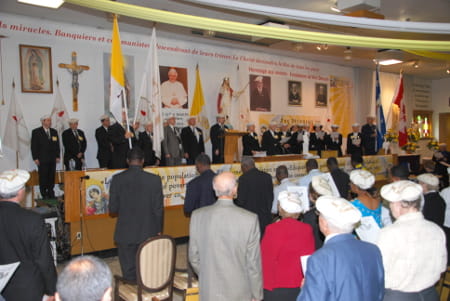
Discover C.H. Douglas’s proposals for economic and social renewal with the Pilgrims of St. Michael in Rougemont, Quebec Canada from Sept. 23 through September 28 2026.
Rougemont Quebec Monthly Meetings
Every 4th Sunday of every month, a monthly meeting is held in Rougemont.
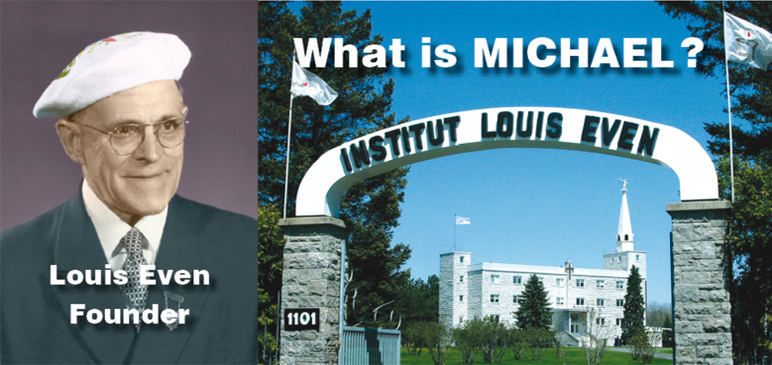
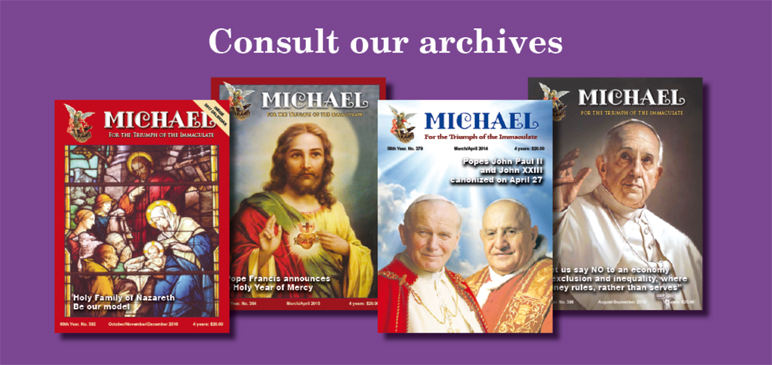
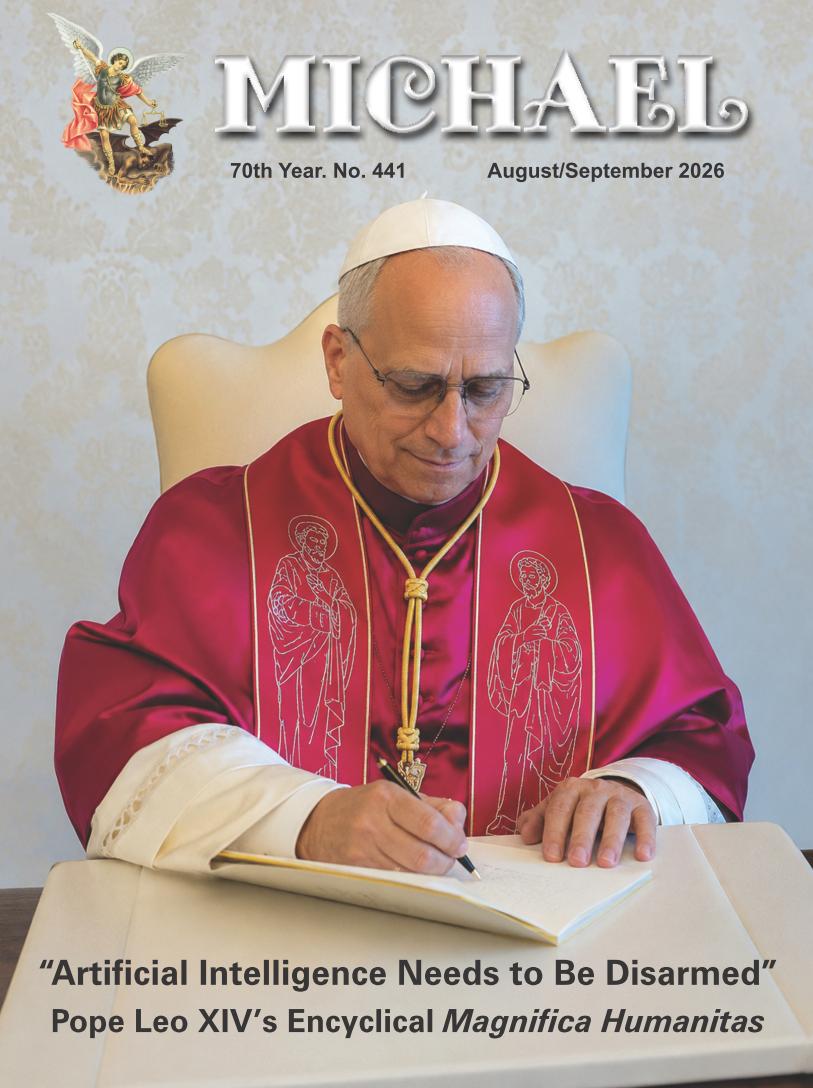
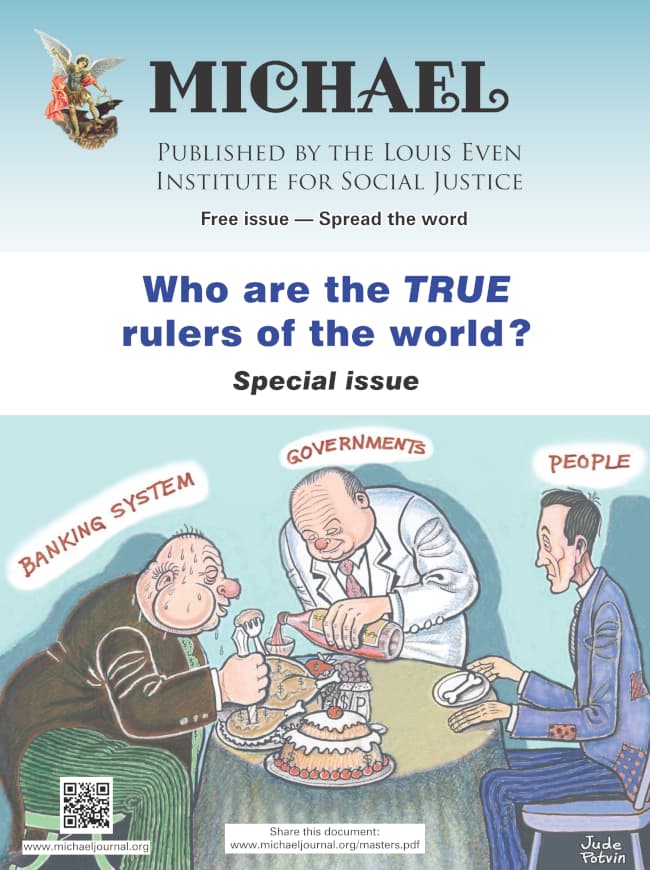 In this special issue of the journal, MICHAEL, the reader will discover who are the true rulers of the world. We discuss that the current monetary system is a mechanism to control populations. The reader will come to understand that "crises" are created and that when governments attempt to get out of the grip of financial tyranny wars are waged.
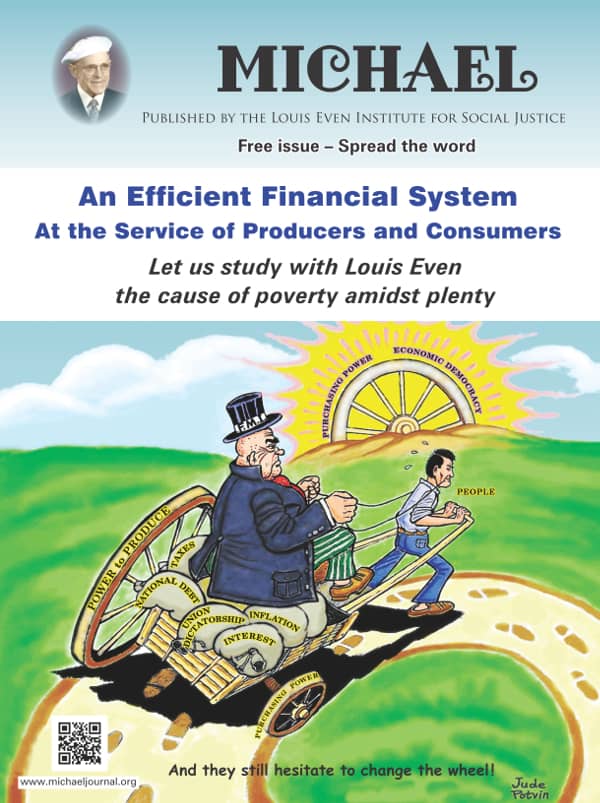 An Efficient Financial System, written by Louis Even, is for the reader who has some understanding of the Douglas Social Credit monetary reform principles. Technical aspects and applications are discussed in short chapters dedicated to the three propositions, how equilibrium between prices and purchasing power can be achieved, the financing of private and public production, how a Social Dividend would be financed, and, finally, what would become of taxes under a Douglas Social Credit economy. Study this publication to better grasp the practical application of Douglas' work.
 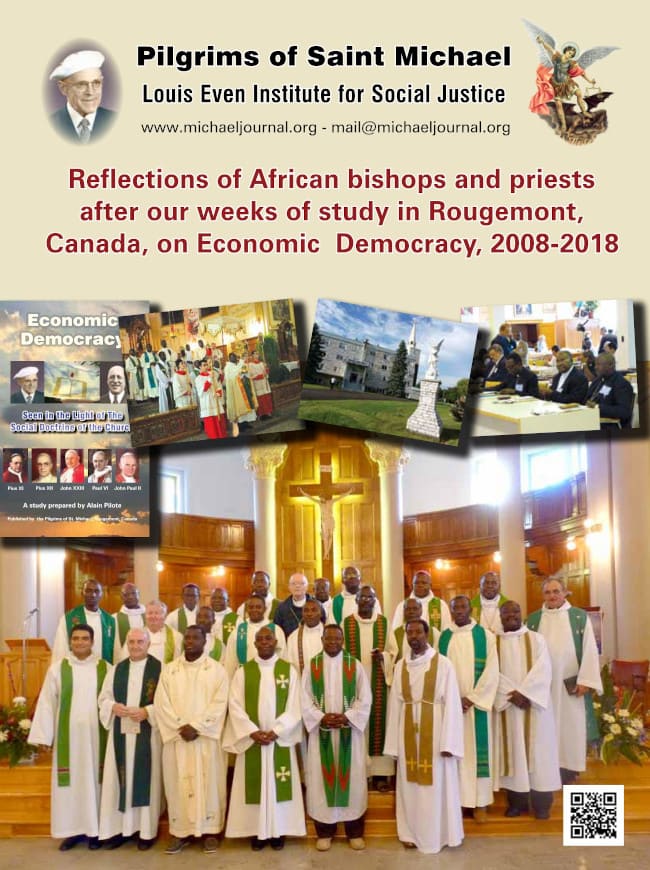 Reflections of African bishops and priests after our weeks of study in Rougemont, Canada, on Economic Democracy, 2008-2018
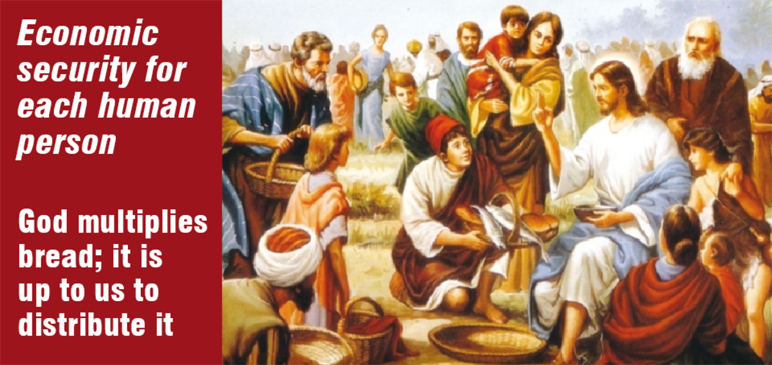
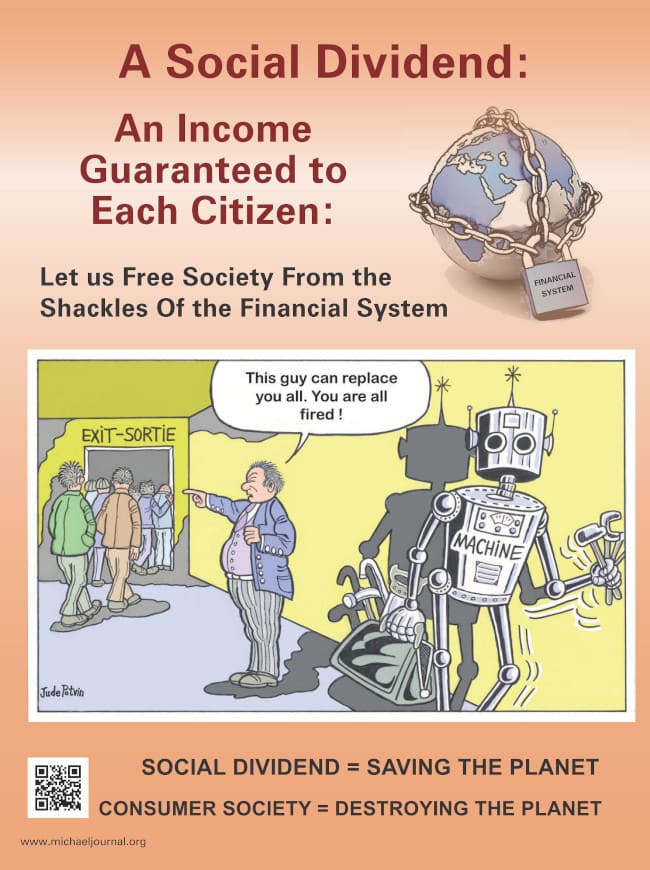 The Social Dividend is one of three principles that comprise the Social Credit monetary reform which is the topic of this booklet. The Social Dividend is an income granted to each citizen from cradle to grave, with- out condition, regardless of employment status.
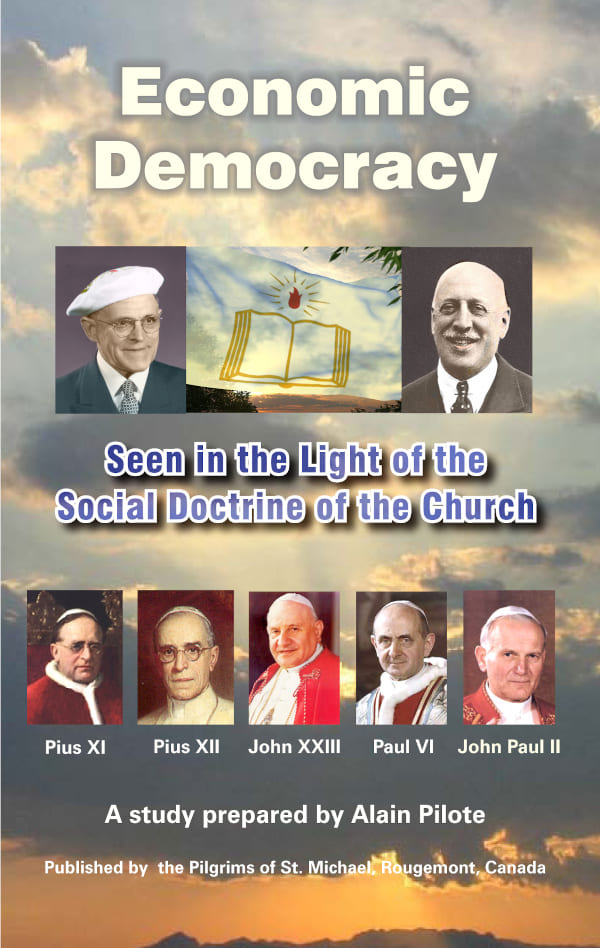 Economic Democracy is a book to explain Social Credit in lessons presented in logical order so it may be easier to the reader to grab the main principles of Social Credit rapidly and somehow easily.
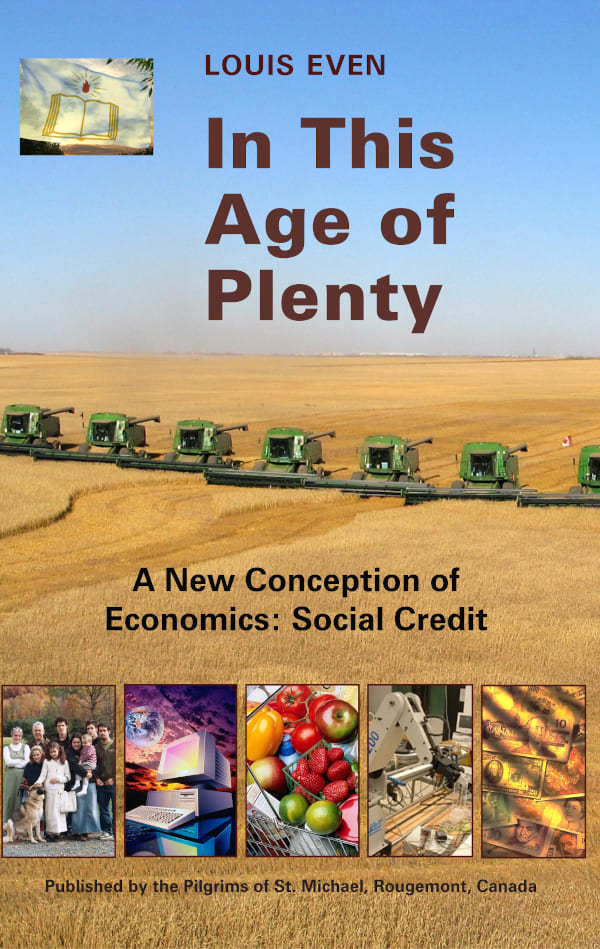 In This Age of Plenty deals with Social Credit, but it does not exhaust the topic. Social Credit principles address social and political matters, as well as, or even more so, than economics and will put civilization on a new course.
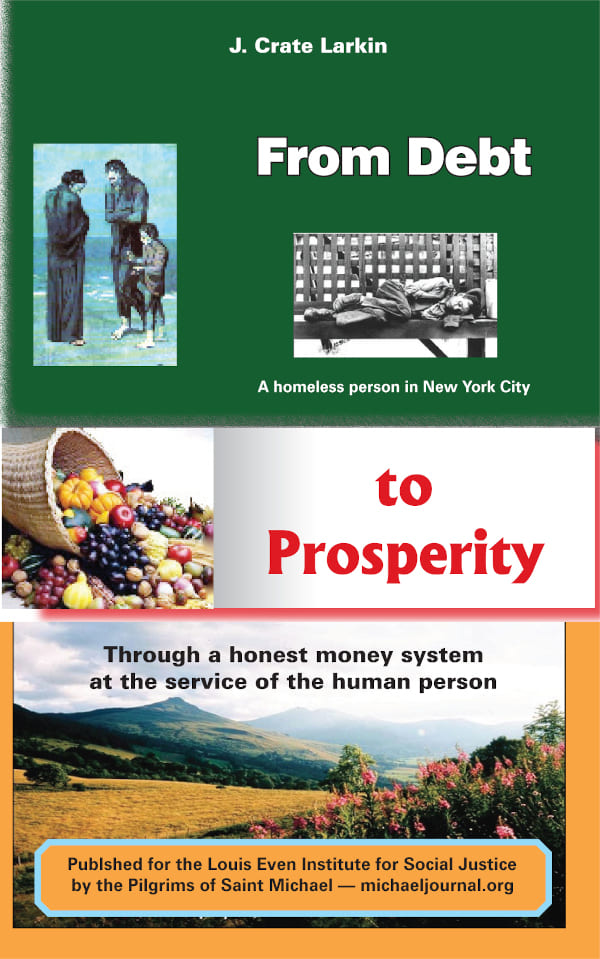 From Debt to Prosperity outlines briefly the economic analysis and constructive proposals known as Social Credit.
 Subscribe