


Here we come up against a problem which is really the root problem of politics in general, and that is that the greater the number of individuals involved, the more difficult it becomes to define a policy acceptable to all, because the desires of individuals are not uniform and standardised. What we rather vaguely understand as democracy is an attempt at a solution of this difficulty. I think that the only conception of democracy which makes sense is that it is the choice of objectives which meet the desires of as large a majority of the members of an association as possible, without penalizing minorities. If we accept this as a definition, we can see that it has nothing to do with the methods by which choices are made. Different methods are appropriate to various objectives, and to make one method cover all contingencies will defeat any true democracy. The essential notion to grasp is the relationship of democracy to policy.
Party politics capitalize disagreements about objectives, and enable interested outsiders to despoil both sides.The present fantastic rates of taxation are sanctioned by the envy of the less well-off. The B.M.A. (The British Medical Association) would not last two years if its affairs were conducted on party-political lines. And I doubt if free society will last another two years if the same methods are continued.
The problem of politics is easier to solve when we realise that there are only two major policies in the world, the policy of freedom of the individual, and the policy of subordination of the individual to the group, the policy of servitude. Particular problems resolve themselves into special cases of those opposed policies, usually in the sense that the premises of a particular problem are, either openly, or more often implicitly, drawn from the objective of freedom or of servitude.
Dr. BRYAN MONAHAN New Times 13-11-59.
Study Session on Economic Democracy And Annual Congress
Discover C.H. Douglas’s proposals for economic and social renewal with the Pilgrims of St. Michael in Rougemont, Quebec Canada from Sept. 23 through September 28 2026.

Rougemont Quebec Monthly Meetings
Every 4th Sunday of every month, a monthly meeting is held in Rougemont.
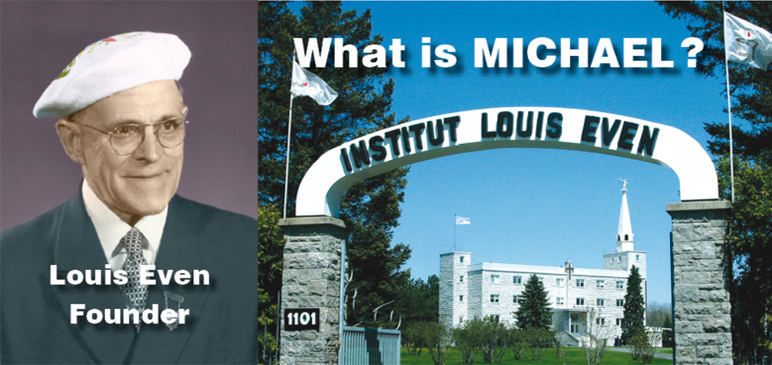
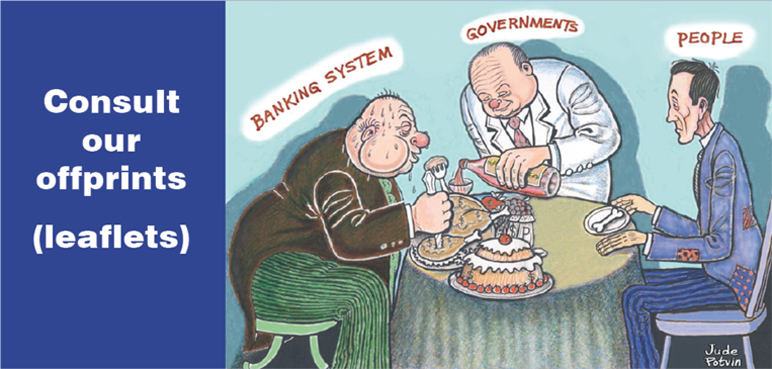
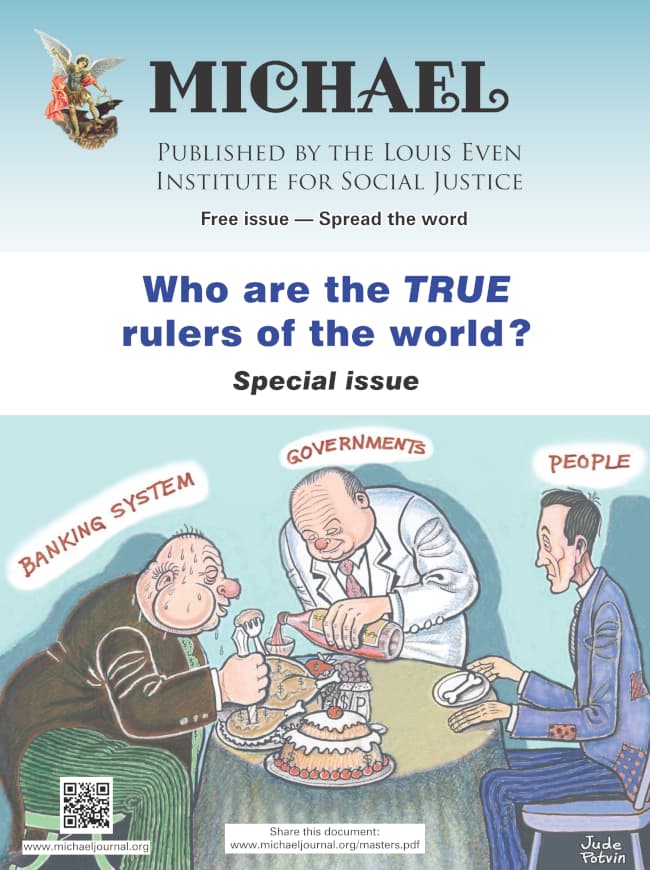 In this special issue of the journal, MICHAEL, the reader will discover who are the true rulers of the world. We discuss that the current monetary system is a mechanism to control populations. The reader will come to understand that "crises" are created and that when governments attempt to get out of the grip of financial tyranny wars are waged.
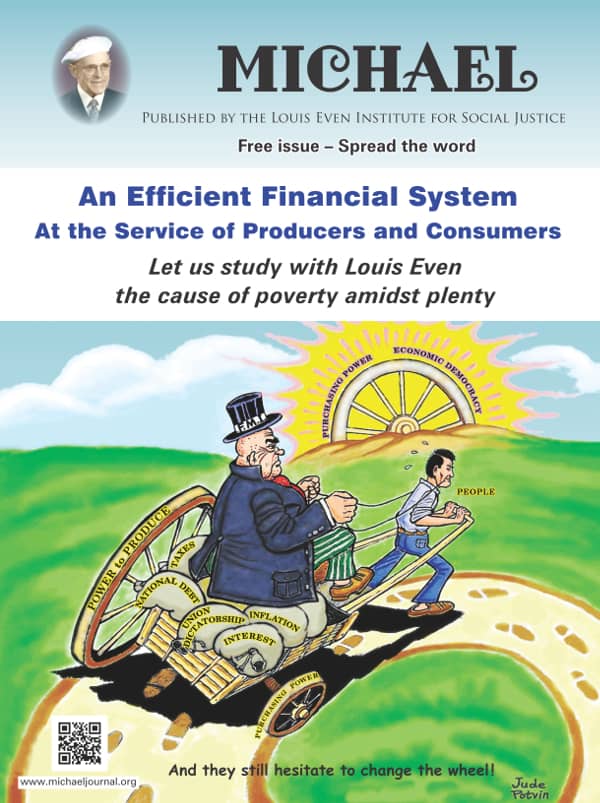 An Efficient Financial System, written by Louis Even, is for the reader who has some understanding of the Douglas Social Credit monetary reform principles. Technical aspects and applications are discussed in short chapters dedicated to the three propositions, how equilibrium between prices and purchasing power can be achieved, the financing of private and public production, how a Social Dividend would be financed, and, finally, what would become of taxes under a Douglas Social Credit economy. Study this publication to better grasp the practical application of Douglas' work.
  Reflections of African bishops and priests after our weeks of study in Rougemont, Canada, on Economic Democracy, 2008-2018
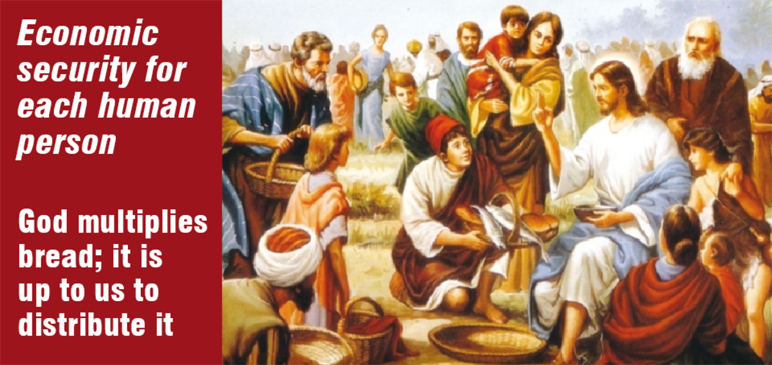
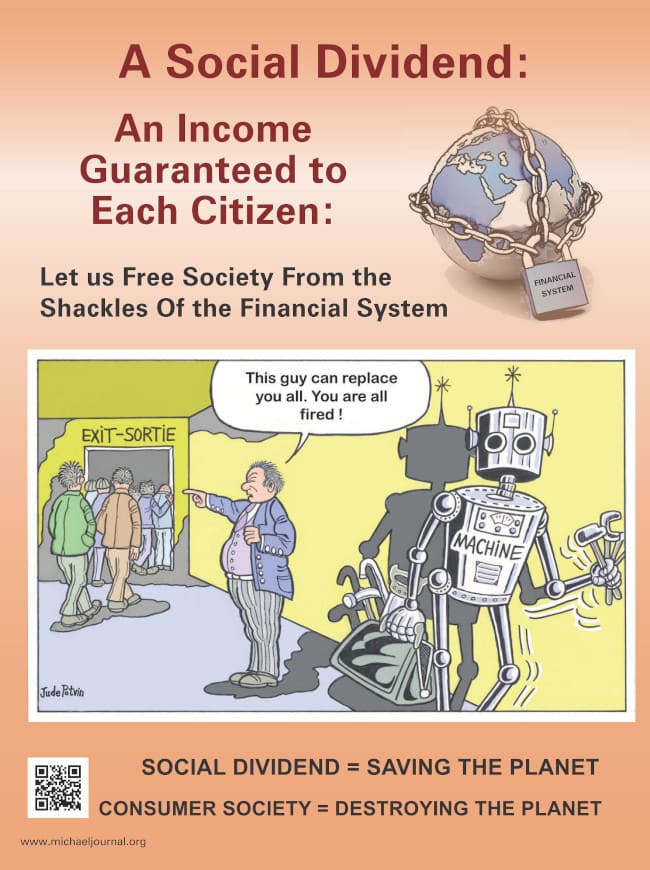 The Social Dividend is one of three principles that comprise the Social Credit monetary reform which is the topic of this booklet. The Social Dividend is an income granted to each citizen from cradle to grave, with- out condition, regardless of employment status.
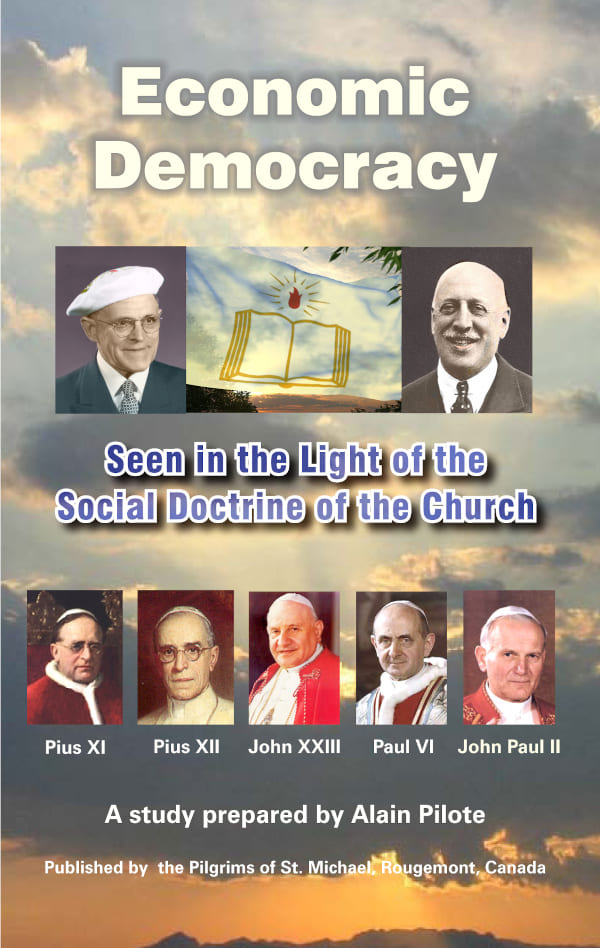 Economic Democracy is a book to explain Social Credit in lessons presented in logical order so it may be easier to the reader to grab the main principles of Social Credit rapidly and somehow easily.
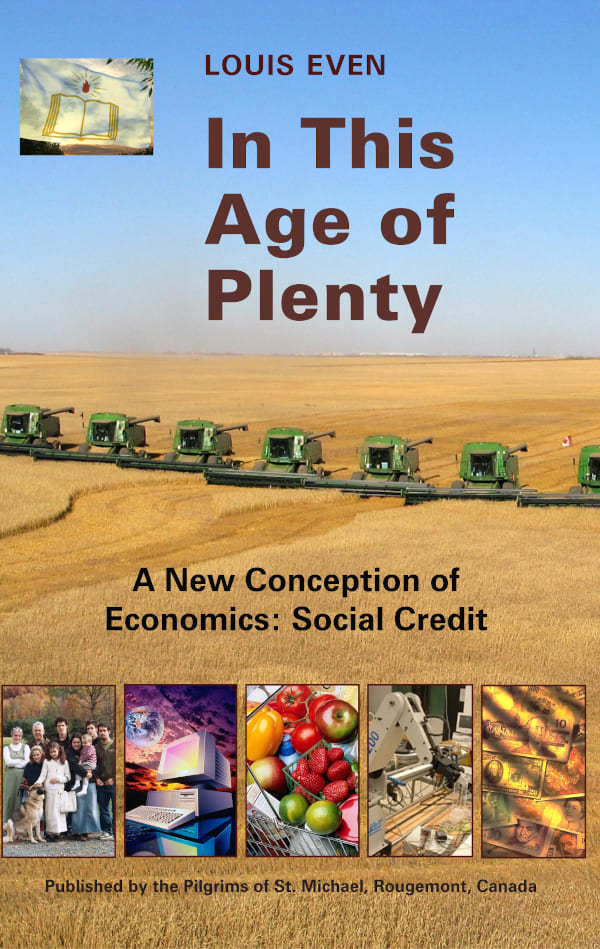 In This Age of Plenty deals with Social Credit, but it does not exhaust the topic. Social Credit principles address social and political matters, as well as, or even more so, than economics and will put civilization on a new course.
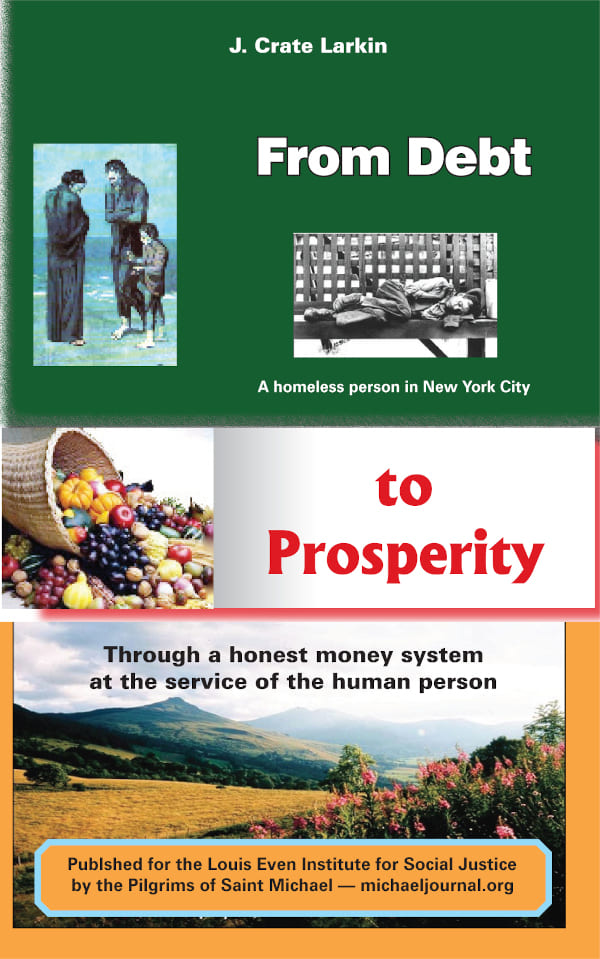 From Debt to Prosperity outlines briefly the economic analysis and constructive proposals known as Social Credit.
 Subscribe