
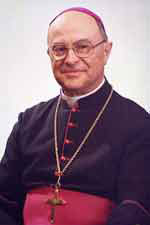
 The oldest Roman Catholic Bishop in Canada, Most Reverend Albert Sanschagrin, O.M.I., Bishop emeritus of St. Hyacinthe, Quebec, died on April 2, 2009 at the age of 97. Born on August 5, 1911 in Saint-Tite, Quebec, Bishop Sanschagrin was ordained to the priesthood on May 24, 1936, as a member of the Oblates of Mary Immaculate. In 1947, at the request of the Bishops of Chile, Bishop Sanschagrin traveled there to assist with the Young Christian Workers movement. While in Latin America, he founded Oblate missions in Chile, Bolivia and Surinam.
 |
After returning to Canada in 1953, he was named Provincial Superior for the Oblates of Eastern Canada, a position he held until his appointment on August 14, 1959 as Coadjutor Bishop of Amos. He subsequently participated in the Second Vatican Council (1962-1965). Bishop Sanschagrin was named the ninth Bishop of St. Hyacinthe on June 13, 1967. He became Bishop emeritus of St. Hyacinthe on July 18, 1979.
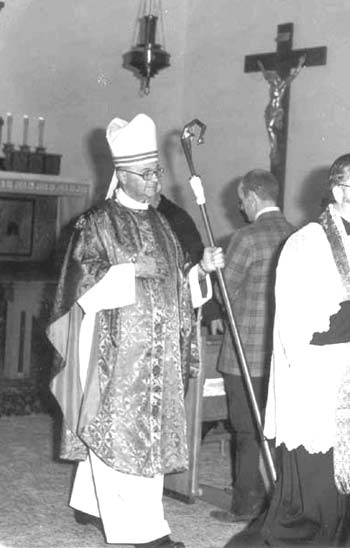
Our headquarters are based in Rougemont, Quebec, which is part of the Diocese of St. Hyacinthe. It is Bishop Sanschagrin who gave us the permission to keep the Blessed Sacrament in the chapels of our two houses. He even came to celebrate the first Holy Mass himself in the chapel of the House of the Immaculate in 1976. (Photo on the left.) He also gave us invaluable advice. We thank him, and we pray to him to continue to watch over his diocese, all the clergy and the faithful. May he rest in peace!
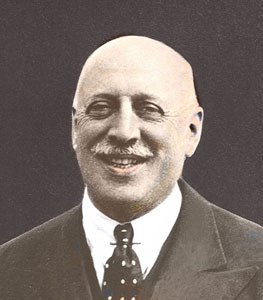
First International Conference on Douglas Social Credit and Catholic Social Teaching
On May 21st and 22nd, 2026.
Scholars, students, clergy and the public who are interested in the renewal of economic thought are invited to the 1st International Conference on Douglas Social Credit and Catholic Social Teaching
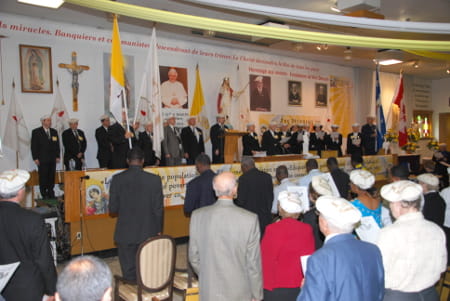
Rougemont Quebec Monthly Meetings
Every 4th Sunday of every month, a monthly meeting is held in Rougemont.
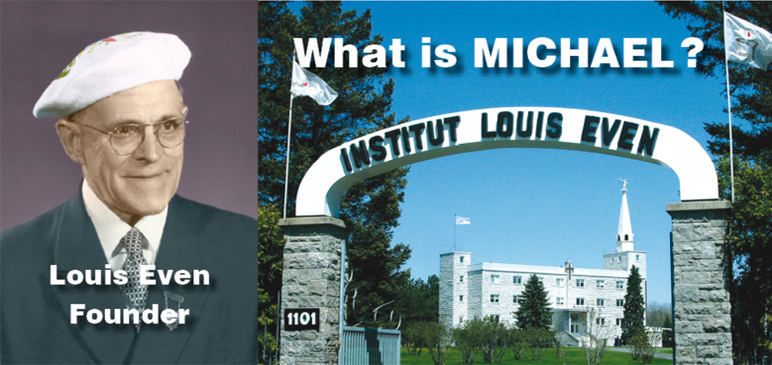
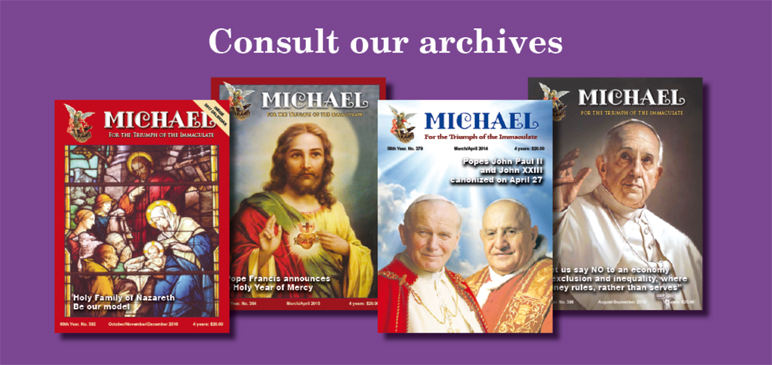
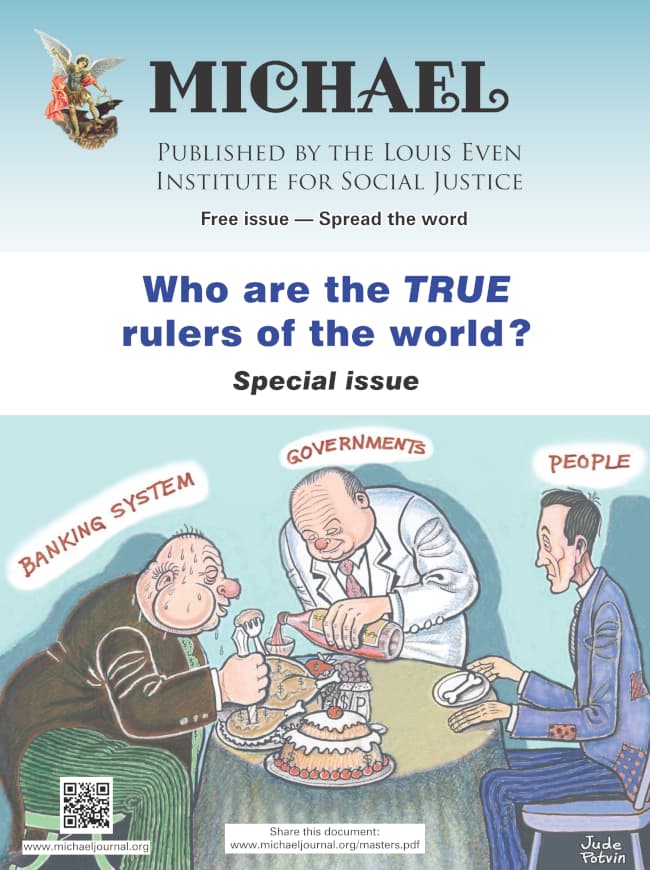 In this special issue of the journal, MICHAEL, the reader will discover who are the true rulers of the world. We discuss that the current monetary system is a mechanism to control populations. The reader will come to understand that "crises" are created and that when governments attempt to get out of the grip of financial tyranny wars are waged.
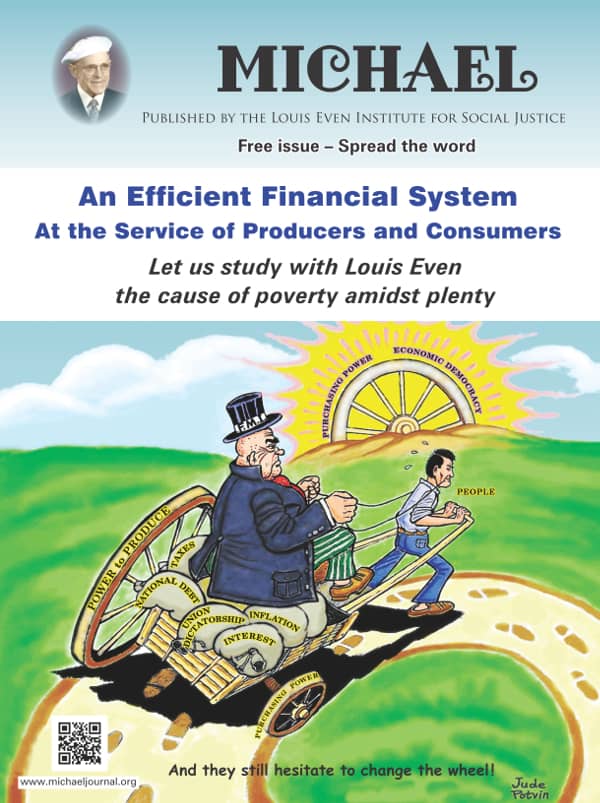 An Efficient Financial System, written by Louis Even, is for the reader who has some understanding of the Douglas Social Credit monetary reform principles. Technical aspects and applications are discussed in short chapters dedicated to the three propositions, how equilibrium between prices and purchasing power can be achieved, the financing of private and public production, how a Social Dividend would be financed, and, finally, what would become of taxes under a Douglas Social Credit economy. Study this publication to better grasp the practical application of Douglas' work.
 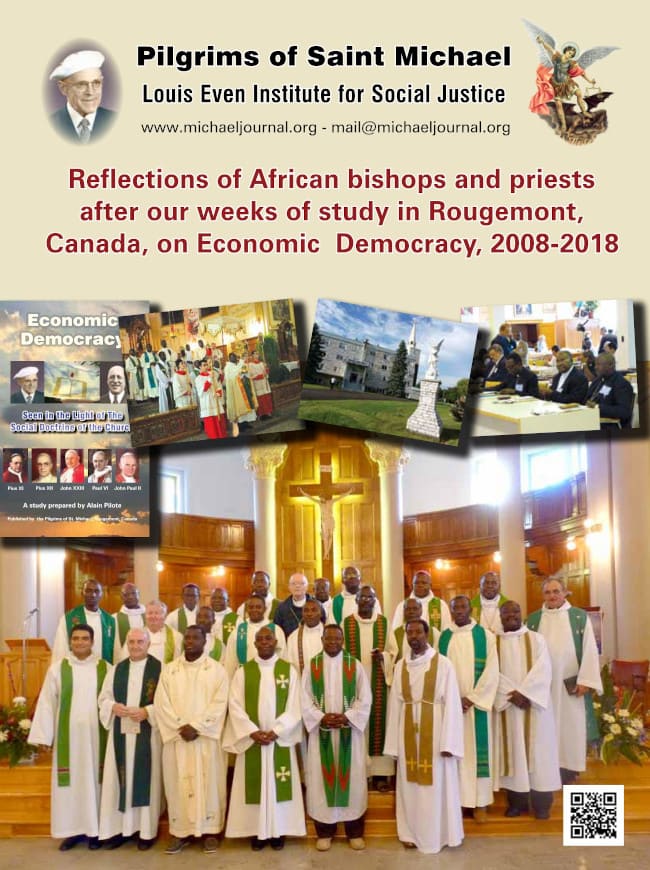 Reflections of African bishops and priests after our weeks of study in Rougemont, Canada, on Economic Democracy, 2008-2018
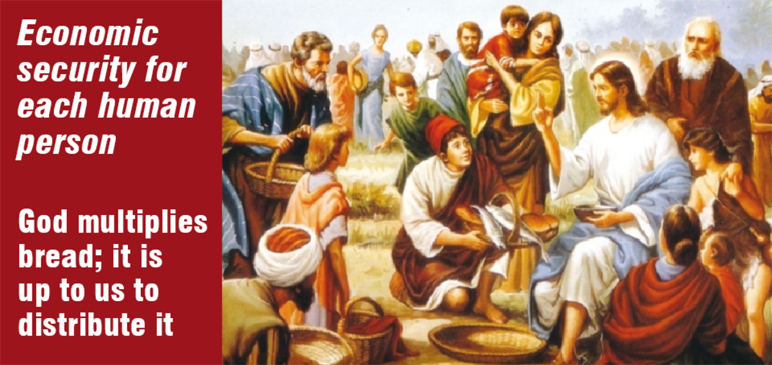
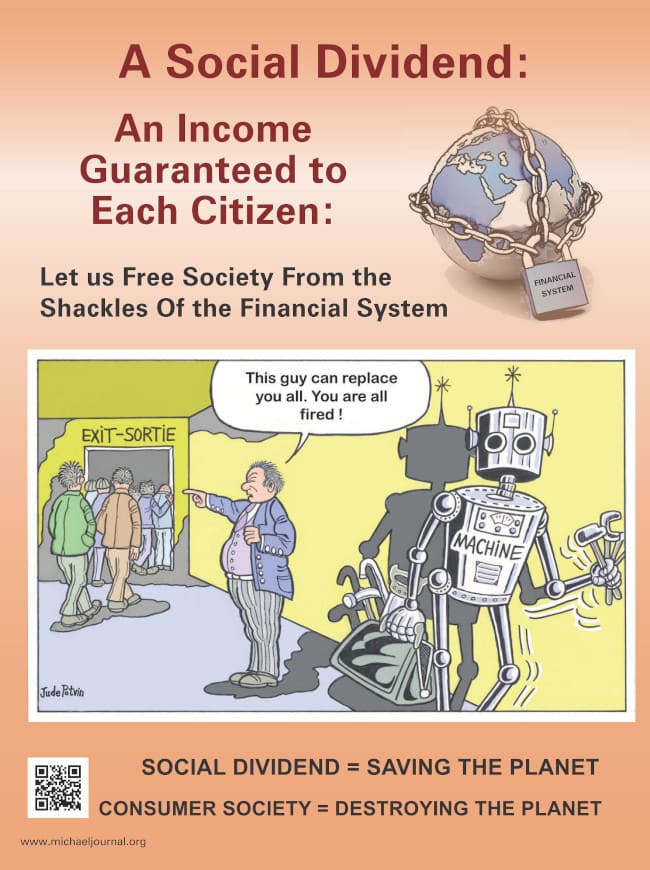 The Social Dividend is one of three principles that comprise the Social Credit monetary reform which is the topic of this booklet. The Social Dividend is an income granted to each citizen from cradle to grave, with- out condition, regardless of employment status.
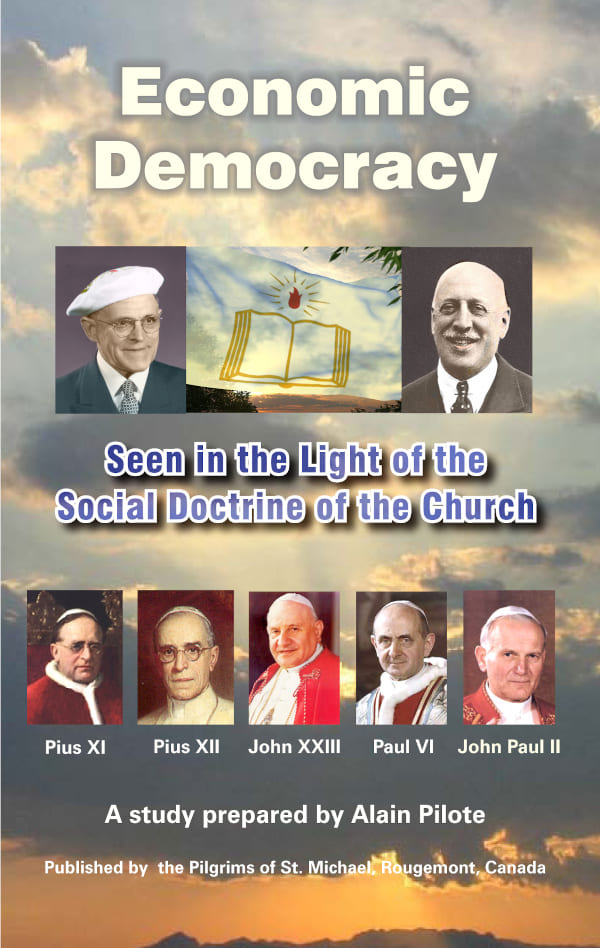 Economic Democracy is a book to explain Social Credit in lessons presented in logical order so it may be easier to the reader to grab the main principles of Social Credit rapidly and somehow easily.
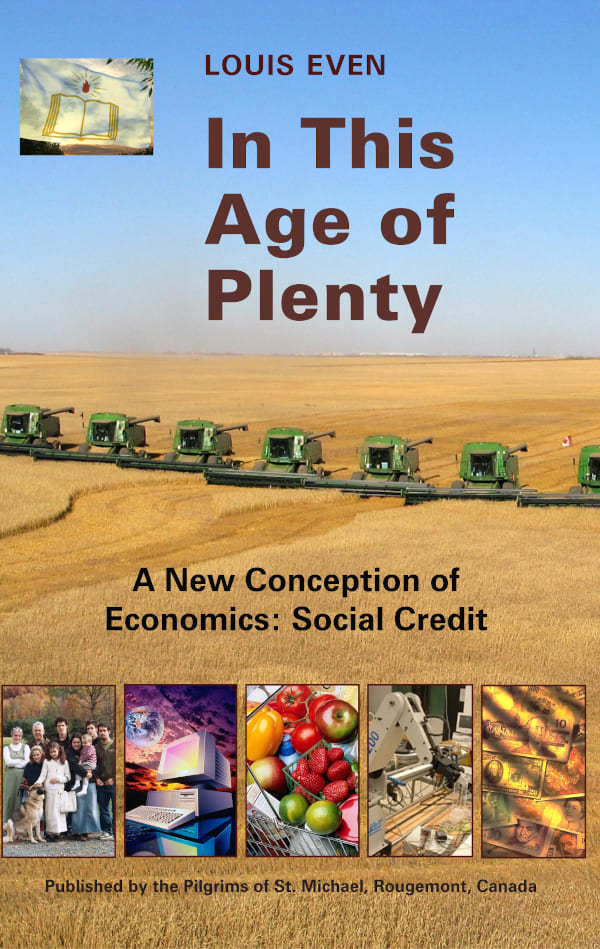 In This Age of Plenty deals with Social Credit, but it does not exhaust the topic. Social Credit principles address social and political matters, as well as, or even more so, than economics and will put civilization on a new course.
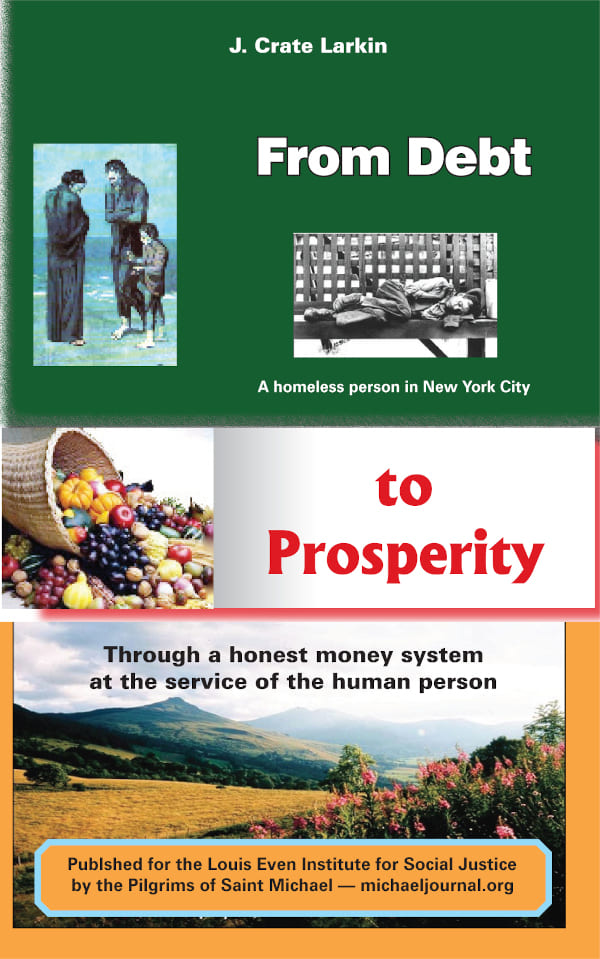 From Debt to Prosperity outlines briefly the economic analysis and constructive proposals known as Social Credit.
 Subscribe