
Are taxes robbery ? A writer sends us a newspaper clipping which deals with this question. In this article the author attempts to justify taxes. He defends them by quotations from Scripture to which he adds what he calls "arguments from reason".
Taxes must be paid, he says, because Holy Scripture says; "Render unto Caesar the things that are Caesar's". Of course he makes no mention of that modern Caesar which has seized the credit which is the rightful due of Society and, using the government as its tool, taxes the people for the use of that same credit. Are we obliged to "render" to this Caesar that which rightfully belongs to the people?
We cannot resist the temptation to recall the manner in which our Divine Master made St. Peter pay a tax. He sent him first to catch a fish. In the mouth of the fish was a coin which He gave to the tax collector. If money came into existence in the same measure as produce, as it should, then those who produce would have no difficulty paying their taxes. But it so happens that while the people of New Brunswick, for example, grow potatoes, the government demands of them money. And these people are not fortunate enough to find dollar bills in the bottom of their potato sacks.
However it is a delicate business to try and use texts from Scripture in support of arguments relating to purely temporal things. We prefer to leave such problems to the experts in Scriptural interpretation. There are already too many such would-be experts who would do well to revise their own interpretations; such as those, for example, who insist absolutely that a woman in child-birth should go through her ordeal without any of the aids modern medicine offers her to minimize her sufferings, And likewise those who preach that man, in this day and age, should labor with the same amount of toil as in other ages to gain his daily bread.
***
The author of the article treads on ground more familiar to laymen like ourselves when he brings up his "arguments from reason". These arguments can be summed up thus: the people demand public improvements; consequently the government has to tax the people in order to pay for the public works involved.
This argument presupposes that the amount of money in existence is fixed and that the government cannot increase it, cannot create one cent more. Since we do not admit this premise we reject his conclusion.
If there could not possibly be more money than that which is actually in the hands of the people, and if the government were utterly incapable of doing anything without first getting this money, then the Mackenzie King government could never have brought this country into the last war. Nor could any of the other governments have done so with their respective countries since they had all been in the grip of a money shortage for some ten years.
Following Douglas, the Crediters insist that: "Modern taxation is legalized robbery."
Every word in this sentence is significant, even the words "modern" and "legalized".
We are not here concerned with the question of whether or not taxation is moral or immoral. We are simply establishing one solid fact: "Modern taxation is legalized robbery".
The author of the article mentioned above can strive to justify taxes. He can bless and laud to his heart's content those who impose taxes while roundly denouncing citizens who dare fight the present system of taxation. Let him esteem taxes to be moral, even the source of righteousness, if he so wishes. We shall not take him to task for that. To repeat ourselves, it is not this aspect of taxes which concerns us. What concerns us is the stark fact that modern taxation is legalized robbery. It is the fact itself, not the morality or immorality of the fact, which here concerns us.
And that fact alone is sufficient to provoke action.
If a thief enters my house and starts making off with my possessions I do not stop to ask myself whether or not he is justified in the act, whether what he is doing is moral or immoral, whether he'll get absolution from the priest or be refused. I'm not concerned with these questions. I set about getting rid of the fellow as quickly as possible by every means in my power.
So too for modern taxation if it is robbery even legalized robbery. I'll do all that I can to see to it that it and its "legality" vanishes from society.
But is modern taxation really legalized robbery? Can this be proven? Yes, it can - providing we keep in mind the facts, the realities of the system, and providing we do not stop with a consideration of the superficial signs and symbols which do not truly reflect the genuine nature of the thing.
It can be proven, if we admit that the act of depriving people of the fruits of their labor is robbery. It can be proven, if we admit that to make the people work twice to pay for something they have already produced, is robbery. It can be proven if we concede that to deprive the people of the means of purchasing what they produce is robbery. It can be proven if we admit that it is robbery to cripple, without good reason, the production of goods which are needed by the people.
But if all the regulations of modern finance, which guide the creation, circulation and cancellation of money, and especially of credit which is the chief means of paying today, are to be held as things almost divine — unchangeable, untouchable then we have no hope of arriving at a clear understanding of the problem.
The Canadian people waged war for six years, from 1939 to 1945. They did this with their own resources. They themselves produced everything that was necessary to conduct their share of this war. With the war a thing accomplished, why are the Canadian people told that they must bear a war debt? Why are they asked every year to provide hundreds of millions of dollars to pay the interest on this debt? They are being forced to work every year to pay for a war which they themselves not somebody else conducted. Whatever the Canadians are taxed each year, under the pretense of paying off the war debt, of so much are they annually robbed.
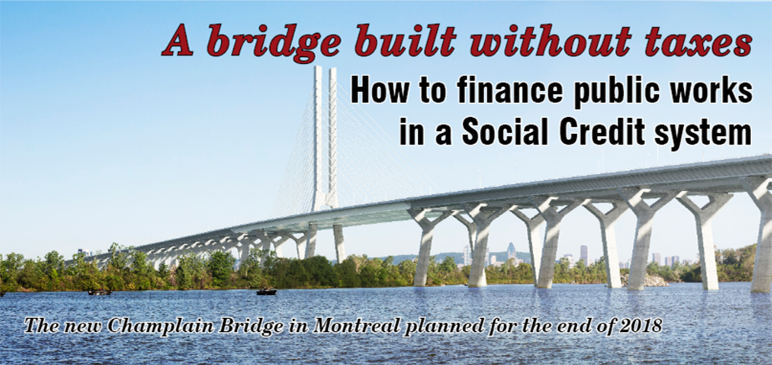
Canadians build roads, canals, bridges, aqueducts, public buildings, schools, etc. They are building up their country. It is they who accomplish these things. Then why, once finished, are these works recorded as debts to be borne by Canadians? Every year Canadians are taxed to pay for the goods produced by the labor of their own hands and from the resources of their own country. In other words, they are being robbed.
These undertakings have already been paid for by the mere fact of their having been realized. Not alone by the act of producing a road, a bridge or a public building, but likewise through the production of those who have supplied what was necessary to the workers on these projects. And to carry it even further, they were paid for by the produce necessary to those producing what was demanded by the needs of the workers. Now it is the entire population of a country which builds up that country. Yet it is the total population of the country which is taxed because it is considered to have contracted a debt in producing something for itself. These taxes are sheer robbery. They force the people of a country to work a second time to earn money to pay for what they themselves have already produced. Legalized robbery, but robbery all the same.
The term, "public debt", is a deceit and a pretext for robbery except when it applies to goods due to a foreign country.
Taxes lessen the purchasing power of the citizens, result in produce being left in the stores and warehouses, or cause the stoppage of production because of the lack of markets. Such taxes are robbery. They steal from the people of a country the actual or potential produce of that country. Such taxes, even when destined for public works, are robbery if the community is capable of producing for the public while still continuing to produce what is necessary for the individual.
- But, you will say, we must have the money to pay those working on public projectsי
- No doubt. But that is a matter for the accountants. Modern money is only another form of accountancy. The trouble is, those who control this accountancy wish to make of it a commerce in itself, to turn accountancy into a commodity instead of using it for what it really is, a means of symbolizing and recording concrete goods.
Money is, of its nature, a social instrument. That is to say, by reason of the particular monetary unit he possesses, an individual has the right to purchase any service or produce from whomever he pleases. Money is a claim on all the community's goods and services. This instrument cannot be left under the control of profit-making organizations.
Under a sound system, such as that proposed by Social Credit, money, purchasing power, comes into being at the rate of production and disappears at the rate of consumption. When the public surrenders its money it obtains produce in exchange for private produce, public produce (that which the country produces). It incurs no debt.
In other words, this system begins by distributing the means of paying for both types of produce, private and public. Then the system withdraws these means of payment as produce is delivered. But the public has been served and owes nothing. There is no robbery.
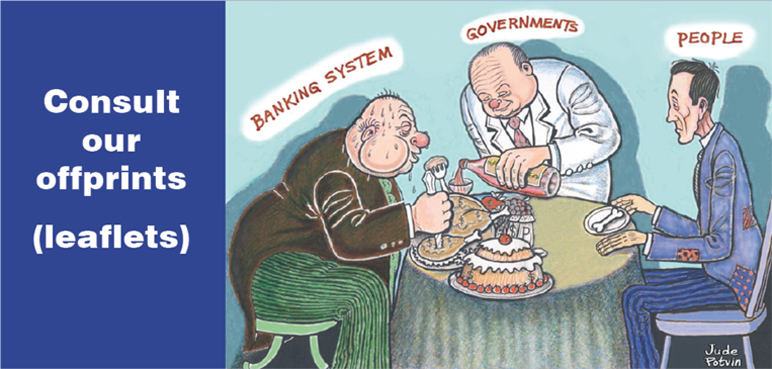
Modern taxation is legalized robbery because the system of modern finance is completely out of step with the capacity of modern production. It is robbery because the real credit of society, which is social credit, has been surrendered into the hands of an oligarchy of financiers who use this privilege to dominate instead of serving. Obviously, machinery must be set up not only to liberate financial credit and attune it to the pace of private and public production, but also to withdraw this credit at the same rate as private and public consumption. And Social Credit provides this machinery by its adjusted and compensated price system - a system infinitely more simple, just and efficient than the present complex tax machinery which afflicts individuals and corporations at every step.
Study Session on Economic Democracy And Annual Congress
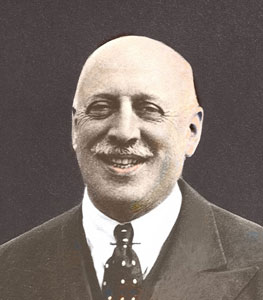
Discover C.H. Douglas’s proposals for economic and social renewal with the Pilgrims of St. Michael in Rougemont, Quebec Canada from Sept. 23 through September 28 2026.
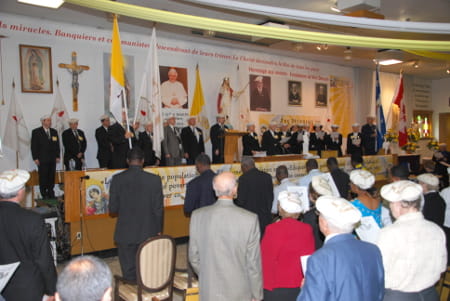
Rougemont Quebec Monthly Meetings
Every 4th Sunday of every month, a monthly meeting is held in Rougemont.
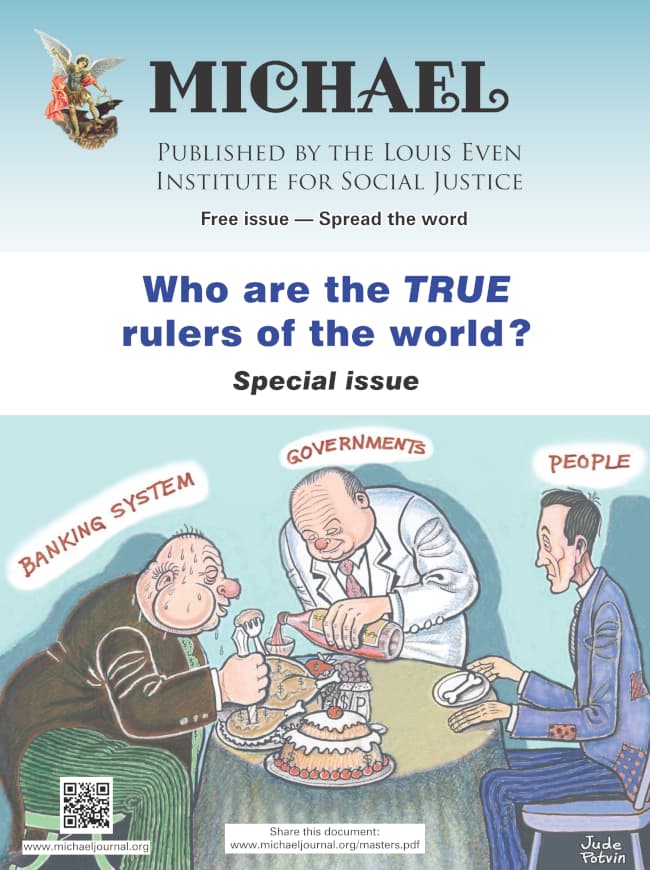 In this special issue of the journal, MICHAEL, the reader will discover who are the true rulers of the world. We discuss that the current monetary system is a mechanism to control populations. The reader will come to understand that "crises" are created and that when governments attempt to get out of the grip of financial tyranny wars are waged.
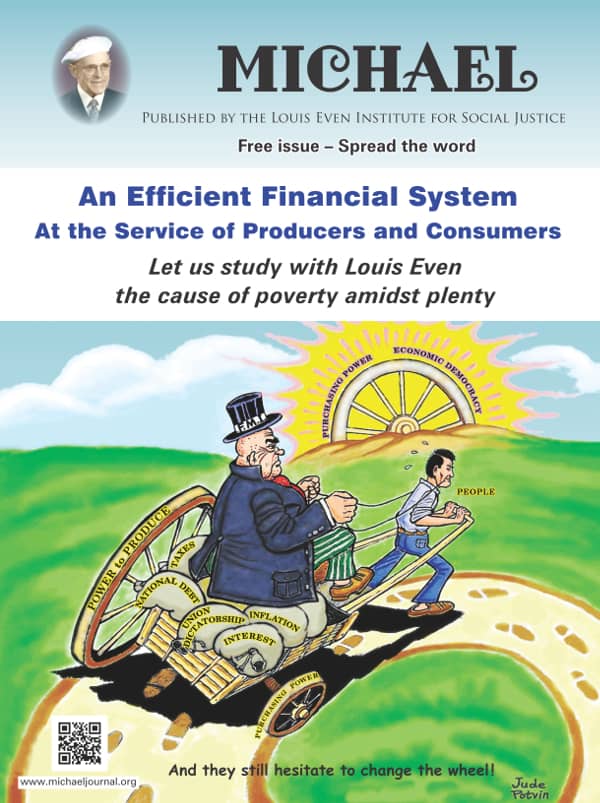 An Efficient Financial System, written by Louis Even, is for the reader who has some understanding of the Douglas Social Credit monetary reform principles. Technical aspects and applications are discussed in short chapters dedicated to the three propositions, how equilibrium between prices and purchasing power can be achieved, the financing of private and public production, how a Social Dividend would be financed, and, finally, what would become of taxes under a Douglas Social Credit economy. Study this publication to better grasp the practical application of Douglas' work.
 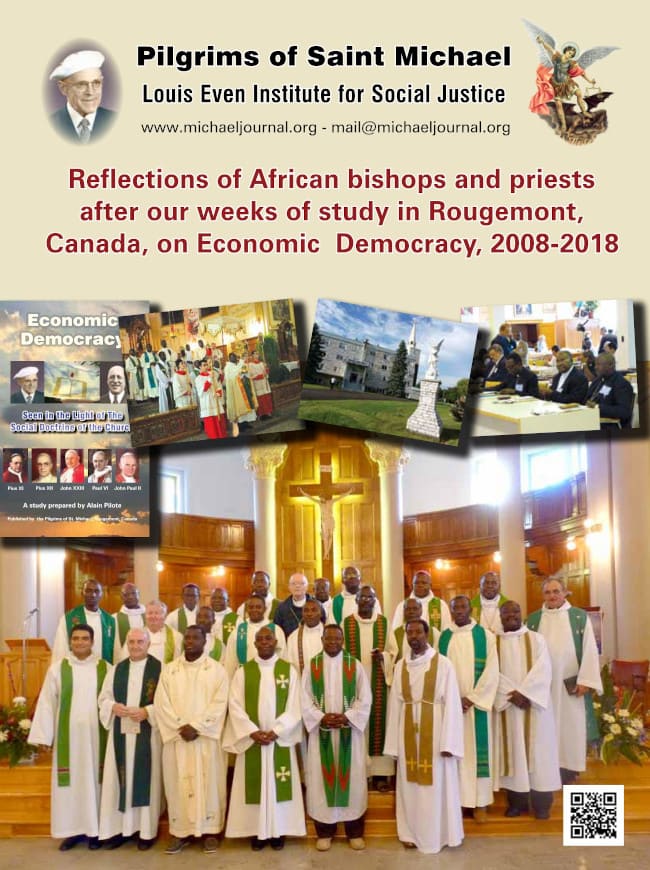 Reflections of African bishops and priests after our weeks of study in Rougemont, Canada, on Economic Democracy, 2008-2018
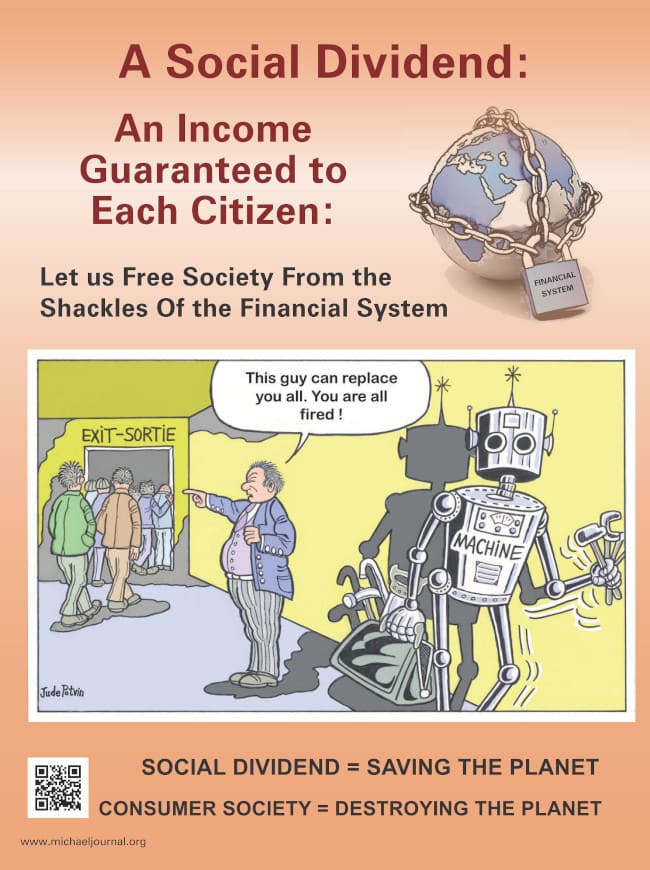 The Social Dividend is one of three principles that comprise the Social Credit monetary reform which is the topic of this booklet. The Social Dividend is an income granted to each citizen from cradle to grave, with- out condition, regardless of employment status.
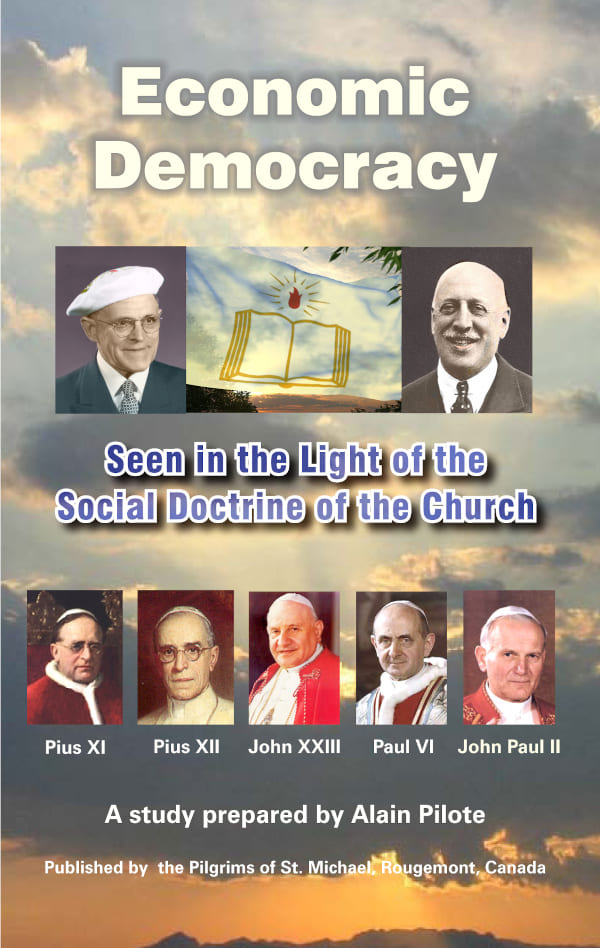 Economic Democracy is a book to explain Social Credit in lessons presented in logical order so it may be easier to the reader to grab the main principles of Social Credit rapidly and somehow easily.
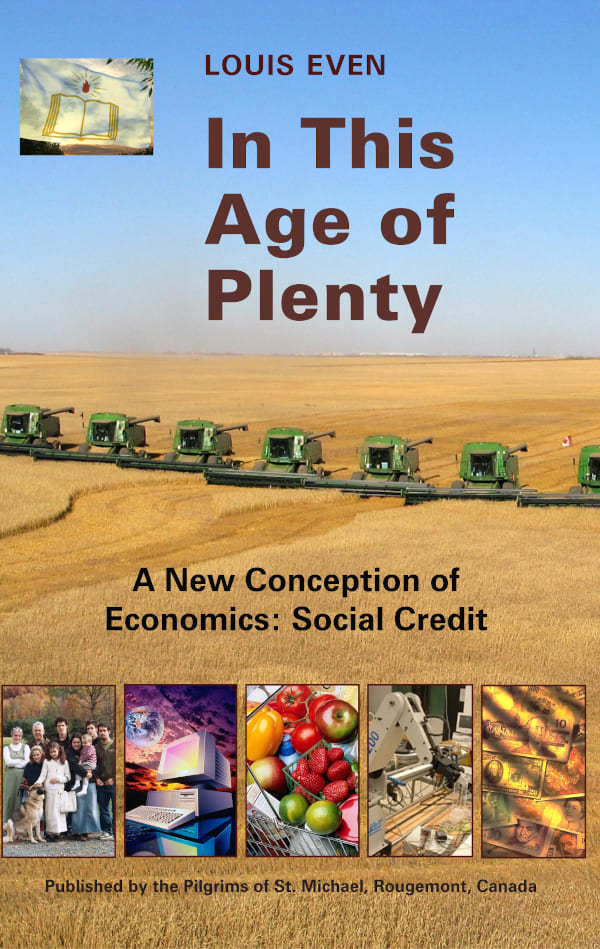 In This Age of Plenty deals with Social Credit, but it does not exhaust the topic. Social Credit principles address social and political matters, as well as, or even more so, than economics and will put civilization on a new course.
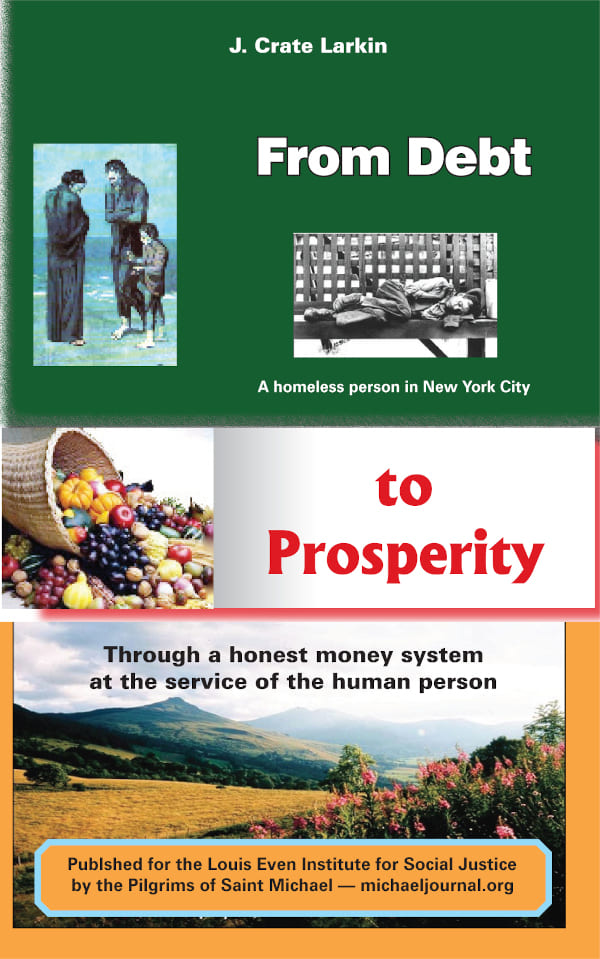 From Debt to Prosperity outlines briefly the economic analysis and constructive proposals known as Social Credit.
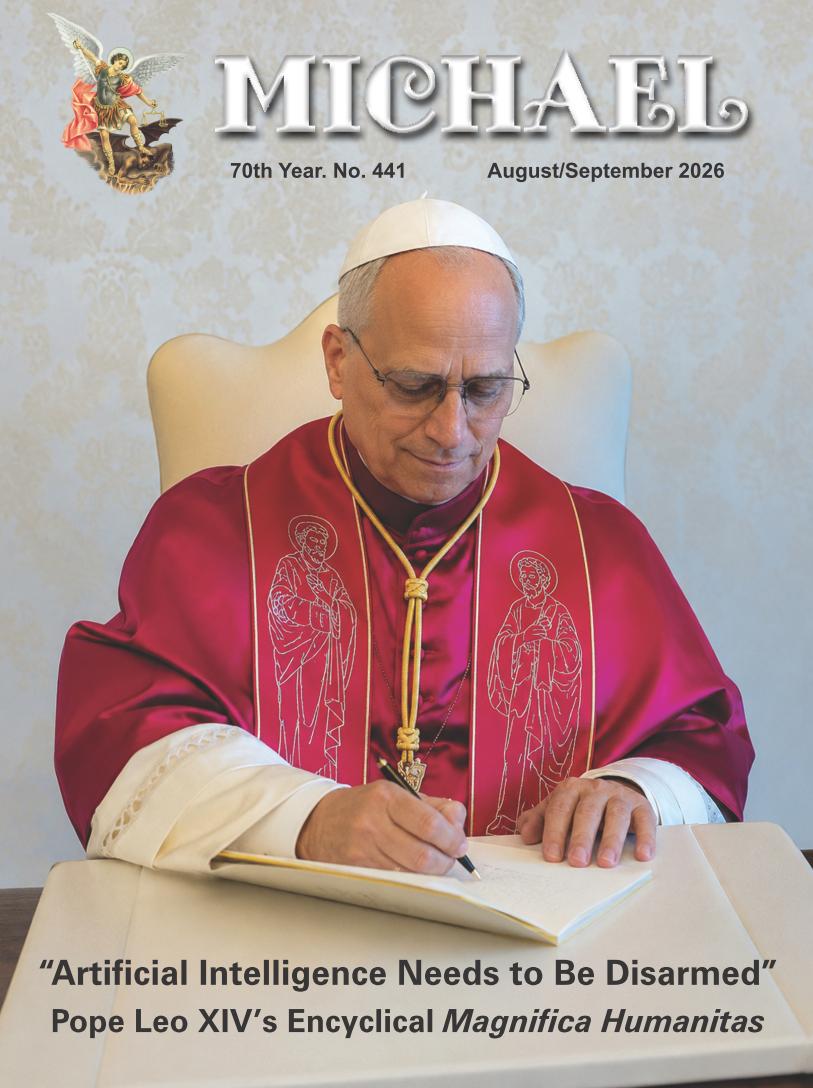 Subscribe