



Colin Barclay-Smith is an Australian journalist who started studying Douglas's Social Credit proposals during the first years of the Depression. He was so convinced of the value of this doctrine that he founded, in 1932, a journal to diffuse it, the New Era, which had at one time over 30,000 subscribers. In 1934, Barclay-Smith accompanied Douglas in his tour of Australia and New Zealand. Barclay-Smith died on May 19, 1957 in Sydney, at the age of 64. A brilliant writer, Barclay-Smith wrote several booklets on various aspects of Social Credit. The last one, It's time they knew, was published a few months before his death. This booklet was republished and updated several times under the title The Money Trick. (This book is available from our office, in English or in Polish, for $9, postage included.) Here are excerpts from this booklet:
by Colin Barclay-Smith
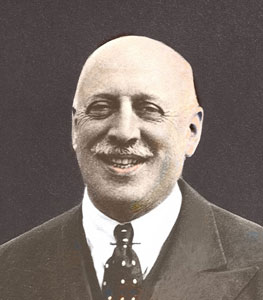
 Colin Barclay-Smith Colin Barclay-Smith |
It's time the people of Australia knew the alarming facts. Test your own knowledge of these facts by the following questions:
Do you know that no bank lends money deposited with it?
Do you know that when a bank lends money it CREATES it out of nothing?
Do you know that bank loans are merely pen and ink entries in the credit columns of a bank's ledger? They have no other existence.
Do you know that practically all the money in the community comes into circulation as a debt to the banks?
Do you know that money loaned by a Government bank is just as much a debt to the people as if it were loaned from a private bank?
Do you know that “fixed deposits” are a plausible screen to hide the creation of credit?
Did it ever occur to you that the banks enjoy this unique facility of creating credit and putting the nation progressively into debt-bondage because they create FINANCIAL credit against the REAL credit created by the people?
Do you realize that every time a Government borrows money for a public work, the people are debited with the liability (in perpetuity), but are never credited with the value of the asset?
Do you know that every repayment of a bank loan cancels the amount of the loan out of existence?
Do you know that Treasury Notes are Government I.O.U.'s — national pawn tickets for pledging the assets of the country to the banks for the loan of OUR OWN financial credit?
Do you know that banks purchase bank sites, build premises, and acquire assets at no real cost whatever to themselves — by the simple process of honoring their own checks?
You may dismiss these affirmations as “incredible”, or “absurd”, but if you will read on, each one will be proved beyond all shadow of doubt.
Most of us have grown up with only the vaguest notions of money. We are fairly certain that it is the Government's right to print notes and mint coins. For the rest, our knowledge is distinctly foggy.
Most people, for example, labor under the impression that the only money in the community is notes, silver, and copper. But this is a very, very small part of the community's money.
In fact, notes, silver, and copper — legal tender — is used for less than five per cent of the total purchases made. Over 95 per cent of all business is done by checks.
This check currency is really bank-created money — bank credit — but it functions exactly the same as legal tender money. Banking authorities of world-wide repute state that banks can and do create credit up to nine or ten times their cash resources.
Banks go to great pains to perpetuate the fiction that they are merely “the custodians of their customers' deposits” — that they lend these deposits, and that their profit consists of the difference in the rate of interest which they pay to depositors, and the interest they receive from borrowers. Such an idea is quite wrong, and it is the popular acceptance of this major monetary fallacy which gives rise to most of the false notions upon the subject of money.
The facts about money are as follows: —
 All that a bank does in lending anybody, say $1,000, is to open an account in the borrower's name — if he hasn't already got an account — and write Limit: $1,000, across the top of the ledger. The borrower is now free to operate and overdraw on this account to the limit indicated.
When the account is drawn on the check, and in turn the check is lodged in another account at the same or another bank, a “deposit” is thus created, and the supply of money increased. Thus bank loans create “deposits”, which plainly are not the source of loan money but, rather, the other way around, they are the outcome of loans.
Now for the unassailable authorities on this matter of the creation of credit by the banks.
Governor Eccles, a one-time head of the Federal Reserve Bank Board of the United States, said: “The banks can create and destroy money. Bank credit is money. It's the money we do most of our business with, not with that currency which we usually think of as money.” (Given in evidence before a Congressional Committee)
Mr. R.G. Hawtrey, previously Assistant Under-Secretary to the British Treasury, in his Trade Depression and the Way Out, says: “When a bank lends, it create money out of nothing.”
In his book, The Art of Central Banking, Hawtrey also wrote: “When a bank lends, it creates credit. Against the advance which it enters amongst its assets, there is a deposit entered in its liabilities. But other lenders have not this mystical power of creating the means of payment out of nothing. What they lend must be money that they have acquired through their economic activities.”
Lord Keynes, the economist and one-time Board Member of the Bank of England, states: “There can be no doubt that all deposits are created by the banks.”
Professor Frederick Soddy, the eminent physicist of Oxford University, wrote: “Is it possible in these days of disbelief in physical miracles really to caricature institutions which pretend to lend money, and do not lend it but create it? And when it is repaid them, de-create it? And who have achieved the physically impossible miracle thereby, not only of getting something for nothing, but also of getting perennial interest from it?”
The business world cannot function without bank credit, and every person in the community is equally dependent upon it.
Stop, or even restrict, bank overdrafts for one week, and there would be a nation-wide crisis. Continue the restriction for three months, and this nation would be plunged into a depression, with unemployment and bankruptcy for thousands.
Such a crisis happened in the early thirties, as millions of the older generation remember with sorrow and bitterness. You may remember that during the Depression, there was no shortage of goods. The shops and stores were full. But credit had been restricted by the banks. The life blood did not flow freely, and industry died, and unemployment was staggering.
Bank credit is the life blood of the community, and if the flow of blood is restricted, the patient's life is jeopardized.
Now let us look at this credit business a little more closely. How does it come about?
There is an old economic tag that money originates in production, and is cancelled in consumption. Practically all the community's money has its roots in production. Most money sees the light of day as a “producer credit”. In other words, it begins its life as a debt to a bank, and from the moment it is released as a book entry in a bank's ledger, the credit created by the bank and loaned to a company or individual travels through the production system, much of it being used for consumption, and is finally cancelled when the debt is repaid to the bank by the borrower.
That industry — both primary and secondary — cannot function on its own resources which is proven by the universal need it has of bank overdraft accommodation (i.e., bank loans).
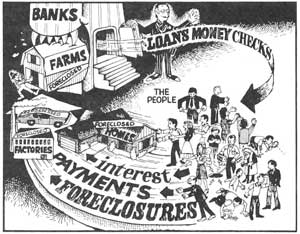 In other words, this huge total of assets is in pawn to the banks, and in the event of any individual or company defaulting in its loan obligations, the individual or the firm would probably be put into liquidation in satisfaction of the banks' claims.
That's fair enough, you might say. But wait. The banks lend money against the assets of the community. These assets were created by the total efforts of the community. They were created by the resources of enterprising individuals, skilled executives, and adventurous management, in producing articles or services to satisfy a public need.
The banks made no contribution whatever to the development of a farm, a business, or a manufacturing company in its early formative years. The bank comes into the picture when most of the hard pioneering work is done, and by granting a loan — a costless and effortless procedure — it merely monetizes the READ CREDIT created by a functioning industry and a consuming public.
In other words, the banks merely create — by the stroke of a pen, mark you, or figures in a bank ledger — the financial credit which is backed by the real credit created by the joint operations of producers and consumers. The people do all the work and run all the risks. The bank does nothing — nothing to create the assets — and runs no risk whatever with the credit it lends.
Real credit may be defined as the faith or belief (credo, I believe) that a free community has the knowledge, energy, and capacity to co-operate in satisfying its needs. This is its power in association, and the end product is the sum total of the community's real credit.
We see, therefore, that the real credit of a nation is created by the people through their abundant and many-sided energies — what economic textbooks refer to as "the increment of association".
Now, the financial credit of a nation should be a reasonably correct reflection of its real credit. Since money is merely a convenient token system to enable the people to purchase goods and services, it should be issued at the same rate that goods and services are produced, neither more nor less.
But even more important is this point: Since the community creates all real credit, the ownership of the financial credit which should reflect the real credit — the goods and services — also belongs to the people. But it doesn't! It belongs to the banks! Or rather, it has been appropriated by the banks.
The banks are really financial cuckoos in the community's nest. The banks issue and cancel money without any regard to the total production of goods and services. They cancel financial credit arbitrarily, unscientifically, sometimes causing deflation and depression.
As we go on, we shall see that the ownership of the real credit of the community is the great issue that must be solved if Australia — and all nations which work under the same monetary system — is to survive as a free democracy or as a slave state.
Today, the banks enjoy a monopoly of the public credit. They create and cancel (destroy) money as though the real credit was created by them. Whereas they haven't lifted a little finger in its creation.
But by usurping the nation's sovereign prerogative to issue all its monetary requirements — not merely the small change (the legal tender) — the banks have established a powerful monopoly of credit by which they wield the greatest power without any responsibility whatsoever.
This monopoly of credit by the banks is not new. It has been going on for over 100 years, and during that time, the banks have consolidated their position to one of almost unassailable power.
It charges interest upon this credit creation, and when the loan is repaid, both the debt and the money used in payment of the debt are automatically cancelled. (Their cancellation, of course, does not apply to any cash or legal tender used in the repayment of the bank's loan, but legal tender usually represents no more than a very small percentage of bank transactions.)
The banks have the power to call up the overdraft partly or wholly at any time they decide. The fate of companies and individuals — and governments — is entirely at their mercy. Their power is stupendous, both in the creating and granting of loans, and in their arbitrary recall, with or without notice!
The banks give, and the banks taketh away. They hold the power of life and death over the whole economy.
The lengthened shadow of debt is taxation. As debt waxes fat with every loan, so taxation casts a larger shadow and a deeper gloom over the lives and liberties of the people. Debt is what governments sow. Taxation is the bitter harvest the people reap.
Taxation reduces the living standard of every man, woman and child, and is therefore a frontal attack, backed by all the sanctions of the State, on the personal freedom of the individual.
As practically all money issued has its origin in interest-bearing debt, it follows that all forms of taxation must increase, inevitably, mathematically, and remorselessly. As taxation increases, so individual security decreases.
It is not so very long ago since taxation was a puling infant. But what an alarming change twenty or thirty years has wrought! The child has grown to a man, and the man has become a conscienceless thug who forces his way into every home, grabs what he can with impunity, and waylays rich and poor alike.
The taxation tug is the terror of the neighbourhood, holding the whole community to ransom. And the irony of the situation is it is no use calling the police, for the police, and all the sanctions of the State, are his aiders and abettors.
Does it not occur to you as preposterous that private institutions — as private as a butcher's shop or a chain store — should have the sole right to create and issue money as a debt, thus making tax bondage inevitable?
Just imagine if the Water Board issued all water for human requirement as an interest-bearing debt, and that, in order to meet our interest obligations on the water we used, we had to go back to the Water Board to borrow more water to pay the Board for the water we had already used. What a fantastic situation! And yet, that is precisely what the banks do with money. They monopolize its creation, issue it only as a debt, and oblige us to go back to the same polluted source — the only source — to borrow the money to pay interest on the debt already incurred!
It is the most tragic irony of our civilization today that although man has solved the age-old problem of dire poverty and scarcity, although his inventive genius has given the world an age of plenty, we have become individually more and more enmeshed in the heavy chains of debt. Progress has been purchased by tax bondage — and quite needlessly.
Instead of being more free, man is enfettered. Instead of enjoying better health with shorter hours, labor-saving devices, and social services, many diseases, and especially diseases of the nervous system, are more widespread then ever before.
We have dwelt at some length on confiscatory taxation and the social evils it spawns. But worse is to come. There is on the horizon a dark cloud slowly but surely assuming menacing proportions. We refer to automation.
Don't misunderstand us. Automation is inevitable. It will quicken the tempo of change in lifting the burden of monotonous types of work from the backs of men to the backs of electronic, manless machines. Automation will put the coping stone on this age of plenty by increasing the plenty, and do it with less and less human effort.
But let us be under no illusions. Where labor-saving inventions in the past have meant a steady reduction of working hours, automation will mean a steady reduction of working men — and women.
By that time — the next five or ten years — the taxation load will have grown very much heavier, and the number of taxpayers to carry the onerous burden will have grown fewer. If now taxpayers are at the staggering point, automation will bring the declining number of taxpayers to the point of complete collapse.
If the people displaced by automation are to live, and live as this age of plenty entitles them to live, whether employed or not, then it becomes even more imperative for the Government to assert and exercise its sovereign prerogative to create its monetary requirements instead of borrowing them. It must become master in its own house if all the stupendous problems that are now taking grotesque and frightening shape are to be resolved in sanity and common sense.
The money-creation and debt story is the same all over. Nations are now wallowing in crisis, through a sea of debt and usury.
Colin Barclay-Smith
Study Session on Economic Democracy And Annual Congress
Discover C.H. Douglas’s proposals for economic and social renewal with the Pilgrims of St. Michael in Rougemont, Quebec Canada from Sept. 23 through September 28 2026.
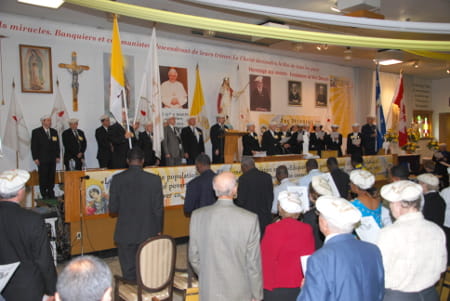
Rougemont Quebec Monthly Meetings
Every 4th Sunday of every month, a monthly meeting is held in Rougemont.

 Subscribe