



 Anne Catherine Emmerich was an Augustinian nun who was born September 8, 1774 at Flamsche, in the Diocese of Münster, in Germany and who died at Dulmen on February 9, 1824. During her life, she experienced the mystical phenomenon of the stigmata, the wounds of Christ, which, after a study ordered by her Bishop, were judged by a panel of physicians and clergy to be authentic. She had mystical visions, the content of which came to be written down by Clemens Brentano, a man who served as her secretary in this regard. Among the most famous of her writings is The Dolorous Passion of Our Lord Jesus Christ. She recently attained to the title of Venerable, indicating Rome's recognition that she lived a life of heroic virtue. On July 2, 2003, a decree of a miracle was promulgated by the Congregation for the Causes of the Saints, opening the way for her beatification. (She will be beatified by Pope John Paul II in October, 2004.) Here are excerpts from Chapter I of “The Dolourous Passion”, “Jesus in the Garden of Olives”:
When Jesus left His disciples, I saw a number of frightful figures surrounding Him in an ever-narrowing circle. His sorrow and anguish of soul continued to increase, and He was trembling all over when He entered the grotto to pray, like a wayworn traveller hurriedly seeking shelter from a sudden storm, but the awful visions pursued Him even there, and became more and more clear and distinct. Alas! this small cavern appeared to contain the awful picture of all the sins which had been or were to be committed from the fall of Adam to the end of the world, and of the punishment which they deserved. It was here, on Mount Olivet, that Adam and Eve took refuge when driven out of Paradise to wander homeless on earth, and they had wept and bewailed themselves in this very grotto.
I felt that Jesus, in delivering Himself up to Divine Justice in satisfaction for the sins of the world, caused His divinity to return, in some sort, into the bosom of the Holy Trinity, concentrated Himself, so to speak, in His pure, loving and innocent humanity, and strong only in His ineffable love, gave it up to anguish and suffering. He fell on His face, overwhelmed with unspeakable sorrow, and all the sins of the world displayed themselves before Him, under countless forms and in all their real deformity. He took them all upon himself, and in His prayer offered His own adorable Person to the justice of His Heavenly Father, in payment for so awful a debt. But Satan, who was enthroned amid all these horrors, and even filled with diabolical joy at the sight of them, let loose his fury against Jesus, and displayed before the eyes of His soul increasingly awful visions, at the same time addressing His adorable humanity in words such as these: “Takest thou even this sin upon thyself? Art thou willing to bear its penalty? Art thou prepared to satisfy for all these sins?”
At first Jesus looked calm, as He kneeled down and prayed, but after a time his soul became terrified at the sight of the innumerable crimes of men, and of their ingratitude towards God, and His anguish was so great that He trembled and shuddered as He exclaimed: “Father, if it is possible, let this chalice pass from Me! Father, all things are possible to Thee, remove this chalice from Me!” But the next moment He added: “Nevertheless, not my will but thine be done.” His will and that of His Father were one, but now that His love had ordained that He should be left to all the weakness of His human nature, He trembled at the prospect of death. (...)
When Jesus, unrelieved of all the weight of His sufferings, returned to the grotto, He fell prostrate, with His face on the ground and his arms extended, and prayed to His Eternal Father; but His soul had to sustain a second interior combat, which lasted three-quarters of an hour. Angels came and showed Him, in a series of visions, all the sufferings that He was to endure in order to expiate sin; how great was the beauty of man, the image of God, before the fall, and how that beauty was changed and obliterated when sin entered the world... They showed Him the satisfaction which He would have to offer to Divine Justice, and how it would consist of a degree of suffering in His soul and body which would comprehend all the sufferings due to the concupiscence of all mankind, since the debt of the whole human race had to be paid by that humanity which alone was sinless — the humanity of the Son of God... No tongue can describe what anguish and what horror overwhelmed the soul of Jesus at the sight of so terrible an expiation — His sufferings were so great, indeed, that a bloody sweat issued forth from all the pores of His sacred body...
The soul of Jesus beheld all the future sufferings of His Apostles, disciples, and friends; after which He saw the primitive Church, numbering but few souls in her fold at first, and then in proportion as her numbers increased, disturbed by heresies and schisms breaking out among her children, who repeated the sin of Adam by pride and disobedience. He saw the tepidity, malice, and corruption of an infinite number of Christians, the lies and deceptions of proud teachers, all the sacrileges of wicked priests, the fatal consequences of each sin, and the abomination of desolation in the kingdom of God, in the sanctuary of those ungrateful human beings whom He was about to redeem with His blood at the cost of unspeakable sufferings. The scandals of all ages, down to the present day and even to the end of the world — every species of error, deception, mad fanaticism, obstinacy, and malice — were displayed before His eyes...
Bearing a prominent place in these mournful visions which were beheld by the soul of Jesus, I saw Satan, who dragged away and strangled a multitude of men redeemed by the blood of Christ and sanctified by the unction of His Sacrament. Our Divine Saviour beheld with bitterest anguish the ingratitude and corruption of the Christians of the first and of all succeeding ages, even to the end of the world, and during the whole of this time the voice of the tempter was incessantly repeating: “Canst thou resolve to suffer for such ungrateful reprobates?” while the various apparitions succeeded each other with intense rapidity, and so violently weighed down and crushed the soul of Jesus, that His sacred humanity was overwhelmed with unspeakable anguish.
The frightful visions of the future ingratitude of the men whose debt to Divine Justice He was taking upon Himself, continued to become more and more vivid and tremendous. Several times I heard Him exclaim: “0 My Father, can I possibly suffer for so ungrateful a race? 0 My Father, if this chalice may not pass from Me, but I must drink it, Thy will be done!”
I saw the blood flowing in large drops down the pale face of our Saviour, His hair matted together, and His beard bloody and entangled. After the vision which I have last described, He fled, so to speak, out of the cave, and returned to His disciples. But He tottered as He walked; His appearance was that of a man covered with wounds and bending beneath a heavy burden, and He stumbled at every step.
When, by the light of the moon, they saw Him standing before them, His face pale and bloody, and His hair in disorder, their weary eyes did not at the first moment recognize Him, for He was indescribably changed. He clasped His hands together, upon which they arose and lovingly supported Him in their arms, and He told them in sorrowful accents that the next day He should be put to death, — that in one hour's time He should be seized, led before a tribunal, maltreated, outraged, scourged, and finally put to a most cruel death. He besought them to console His Mother, and also Magdalen. They made no reply, for they knew not what to say, so greatly had His appearance and language alarmed them, and they even thought His mind must be wandering.
I saw Jesus still praying in the grotto, struggling against the repugnance to suffering which belonged to human nature, and abandoning Himself wholly to the will of His Eternal Father. Here the abyss opened before Him, and He had a vision of the first part of Limbo. He saw Adam and Eve, the patriarchs, prophets, and just men, the parents of His Mother, and John the Baptist, awaiting His arrival in the lower world with such intense longing, that the sight strengthened and gave fresh courage to His loving heart. His death was to open Heaven to these captives — His death was to deliver them out of that prison in which they were languishing in eager hope! When Jesus had, with deep emotion, looked upon these saints of antiquity, angels presented to Him all the bands of saints of future ages, who, joining their labours to the merits of His Passion, were, through Him, to be united to His Heavenly Father. Most beautiful and consoling was this vision, in which He beheld salvation and sanctification flowing forth in ceaseless streams from the fountain of redemption opened by His death...
But these consoling visions faded away, and the angels displayed before Him the scenes of His Passion quite close to the earth, because it was near at hand. I beheld every scene distinctly portrayed, from the kiss of Judas to the last words of Jesus on the cross, and I saw in this single vision all that I see in my meditations on the Passion. The treason of Judas, the flight of the disciples, the insults which were offered our Lord before Annas and Caiphas, Peter's denial, the tribunal of Pilate, Herod's mockery, the scourging and crowning with thorns, the condemnation to death, the carrying of the cross, the linen cloth presented by Veronica, the crucifixion, the insults of the Pharisees, the sorrows of Mary, of Magdalen, and of John, the wound of the lance in His side, after death — in one word, every part of the Passion was shown to Him in the minutest detail. He accepted all voluntarily, submitting to everything for the love of man. He saw also and felt the sufferings endured at that moment by His Mother, whose interior union with His agony was so entire that She had fainted in the arms of Her two friends.
Study Session on Economic Democracy And Annual Congress
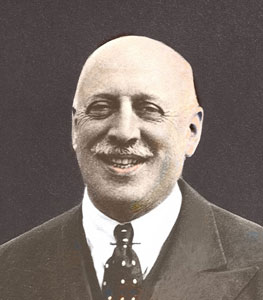
Discover C.H. Douglas’s proposals for economic and social renewal with the Pilgrims of St. Michael in Rougemont, Quebec Canada from Sept. 23 through September 28 2026.
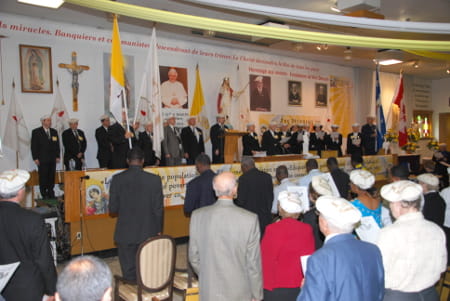
Rougemont Quebec Monthly Meetings
Every 4th Sunday of every month, a monthly meeting is held in Rougemont.

 Subscribe